- 1
Book the Vegan & Halal-friendly Ramen option, then put your exact requirements to the host before you pay.
- 2
Reach the Ohashi studio 10 to 15 minutes before the start; doors open just 15 minutes before class.
- 3
Add 30 minutes to train times in the weekday rush, 7:30 to 9:30 am and 5:30 to 7:30 pm.
Halal ramen cooking in Tokyo - what travelers said
Most reviewers loved making and tasting three styles, tonkotsu, shoyu and miso, and comparing the flavors.
Many were surprised the three mini bowls filled them up and told others not to eat before class.
One reviewer wished for more steps to do themselves, having only made the noodles and picked toppings.
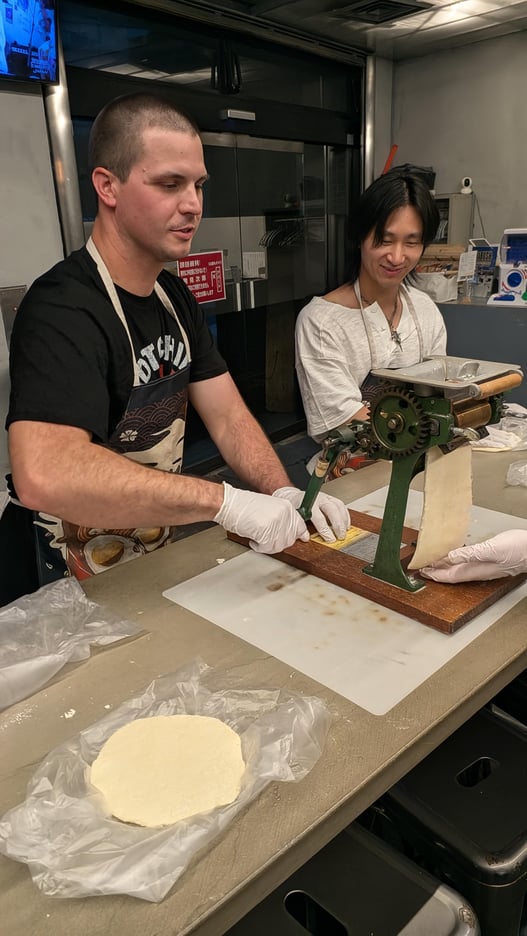 ★★★★★
Great fun! Pleasant sensei, calm vibe, and my son now cooks his own ramen!
Jade · Ireland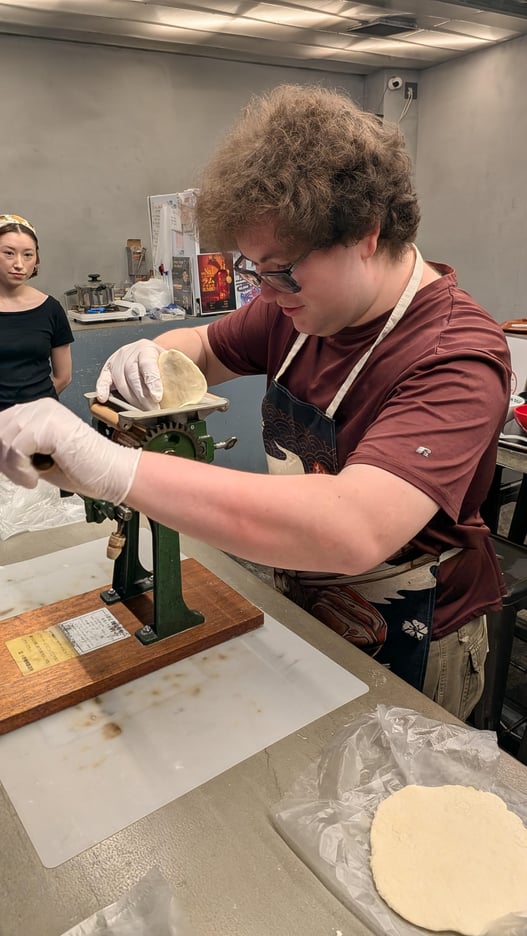 ★★★★★
Loved ramen but never knew how it was made. We cooked Tonkotsu, Shoyu, and Miso while learning their backgrounds. Clear English made it a cultural experience, a real trip highlight.
Yuji · Japan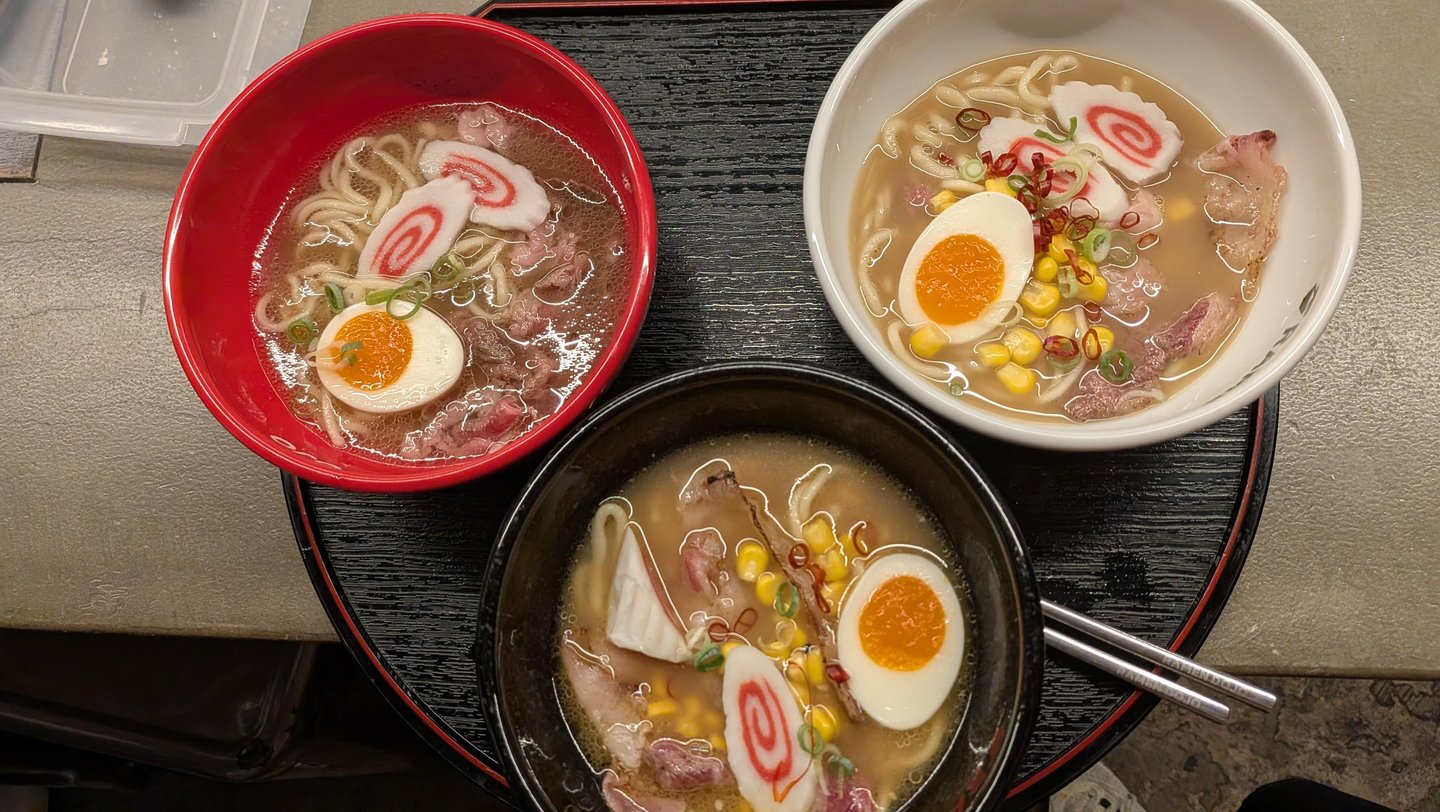 ★★★★★
My Tokyo schedule was packed, so I wanted short but memorable. This Shibuya class was convenient, and making three ramen styles in one session felt special. English explanations added meaning.
Keiichiro · Japan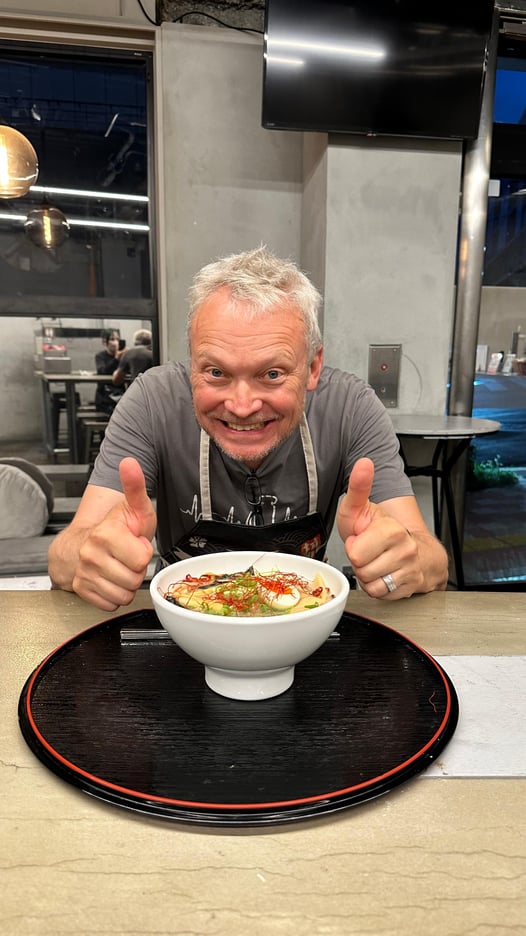 ★★★★★
I don't usually cook, so I was nervous, but the step-by-step English instruction made it easy. Making Tonkotsu, Shoyu, and Miso and tasting them side by side was a highlight!
A traveler · Japan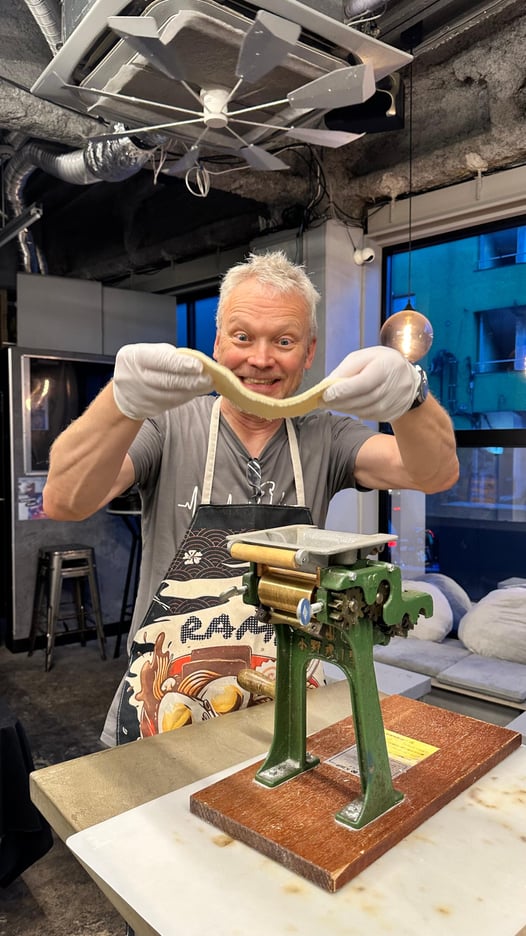 ★★★★★
Went with a friend and we had a blast. Small, friendly class; comparing three ramen flavors was so fun!
Yu · Japan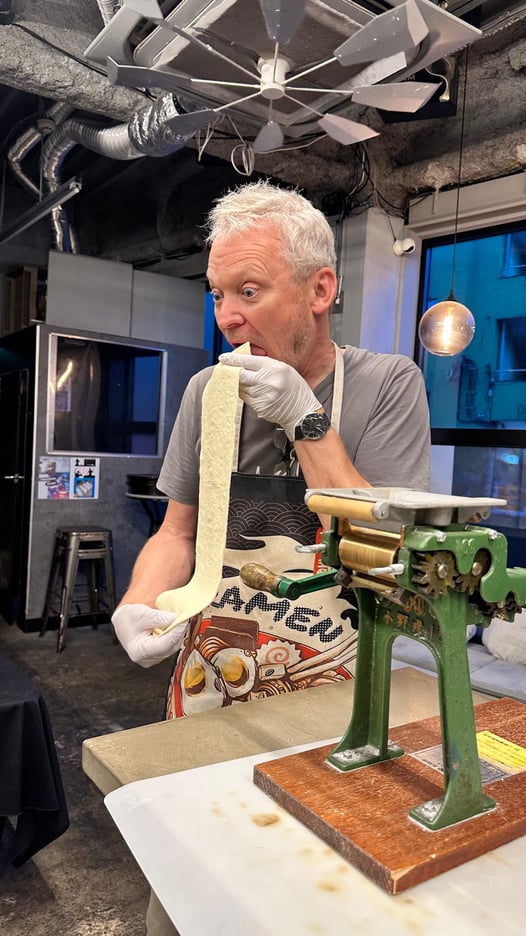 ★★★★★
Yuka was terrific, we learned ramen history, hand-made dough into noodles, cooked and ate them. Hiro helped too. We four ate our creations and shared travel stories. Fun times!
Jun · United States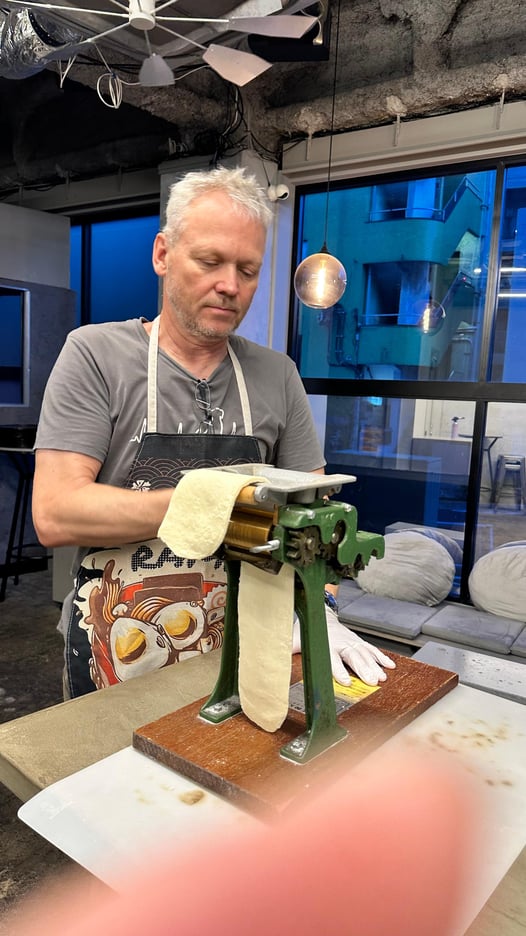 ★★★★★
Had amazing time making my own ramen, and I took the recipes home, I'll make it all the time now. The crew helped at every step. Great for food lovers!
Maxime · Canada
Why a hands-on ramen making class in Tokyo is worth doing
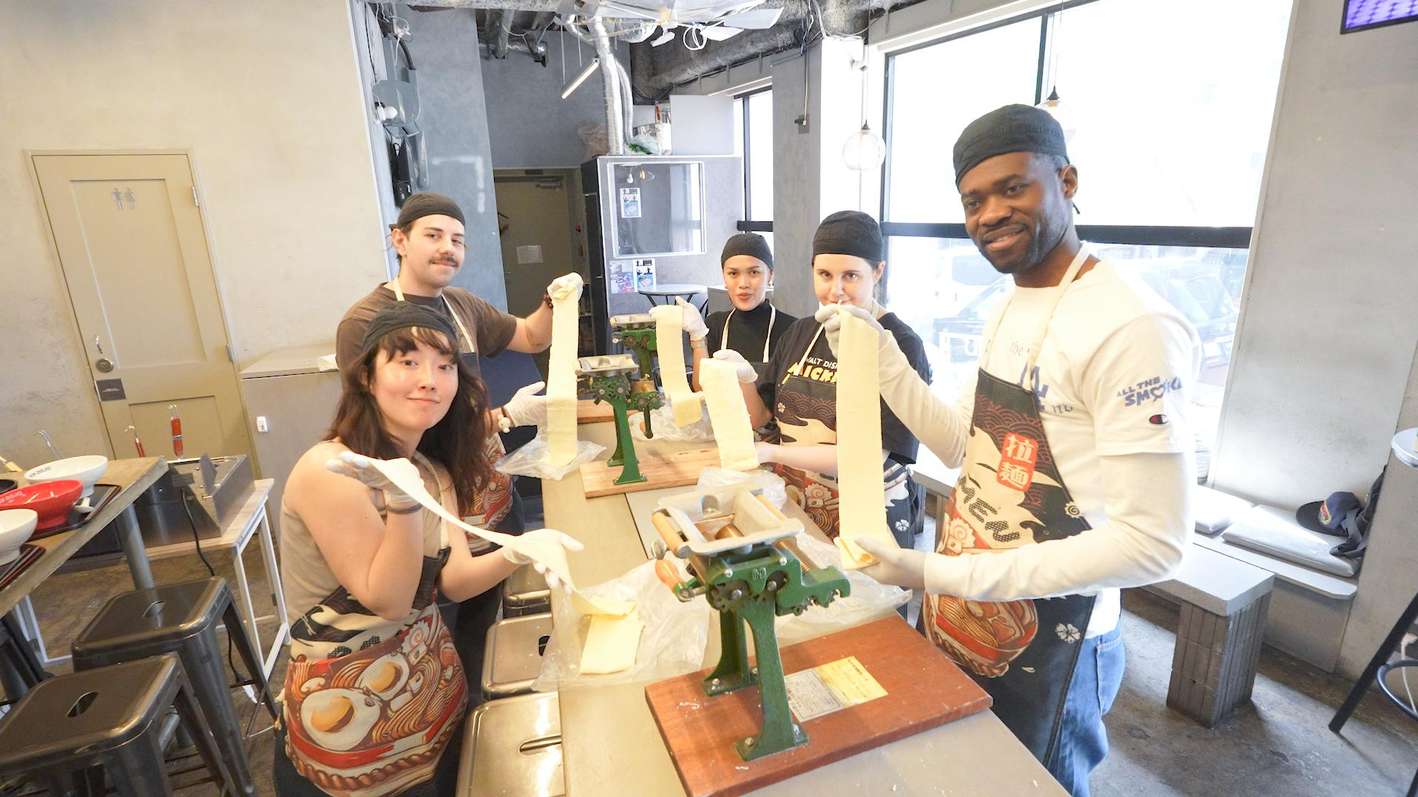
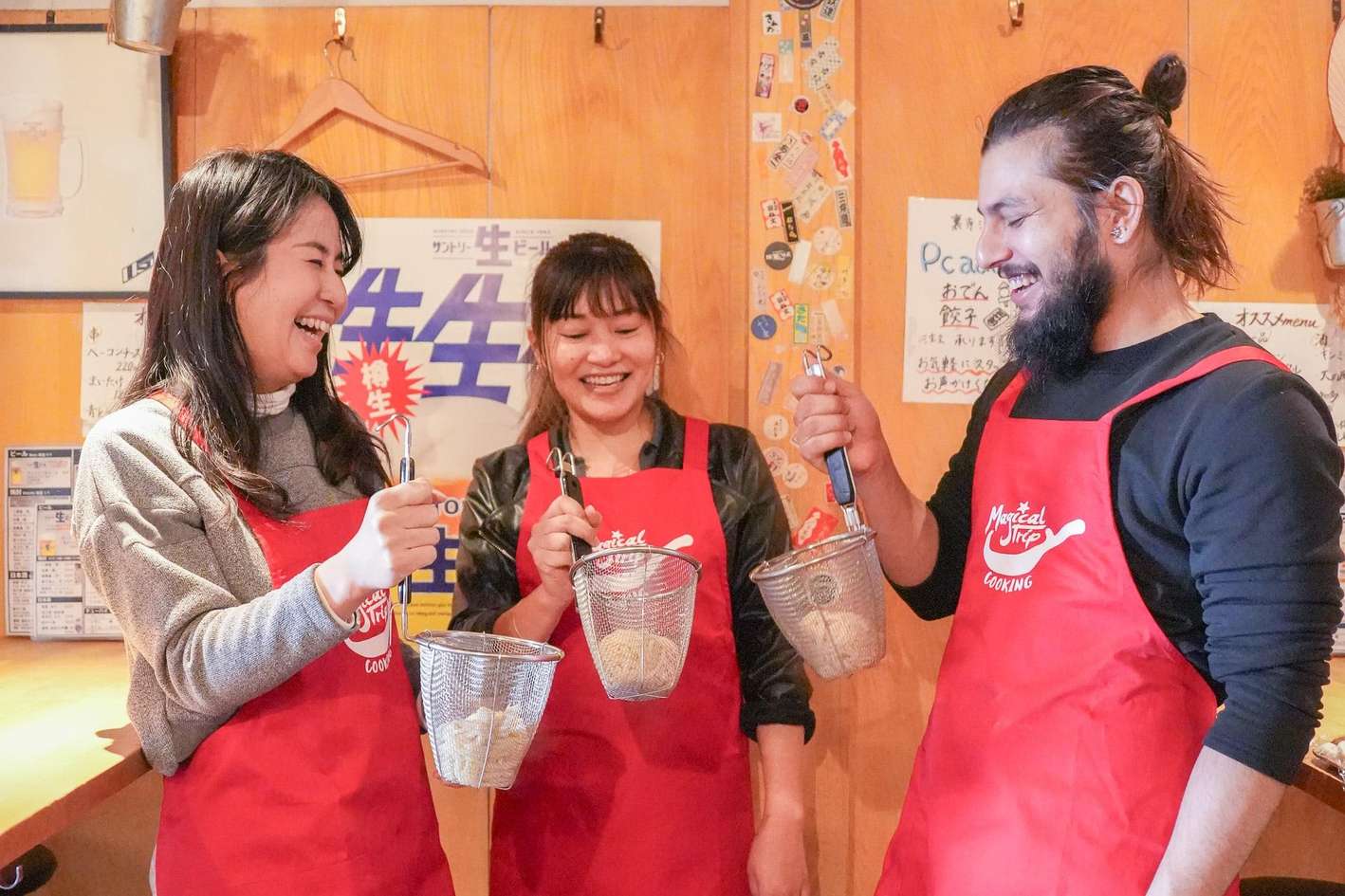
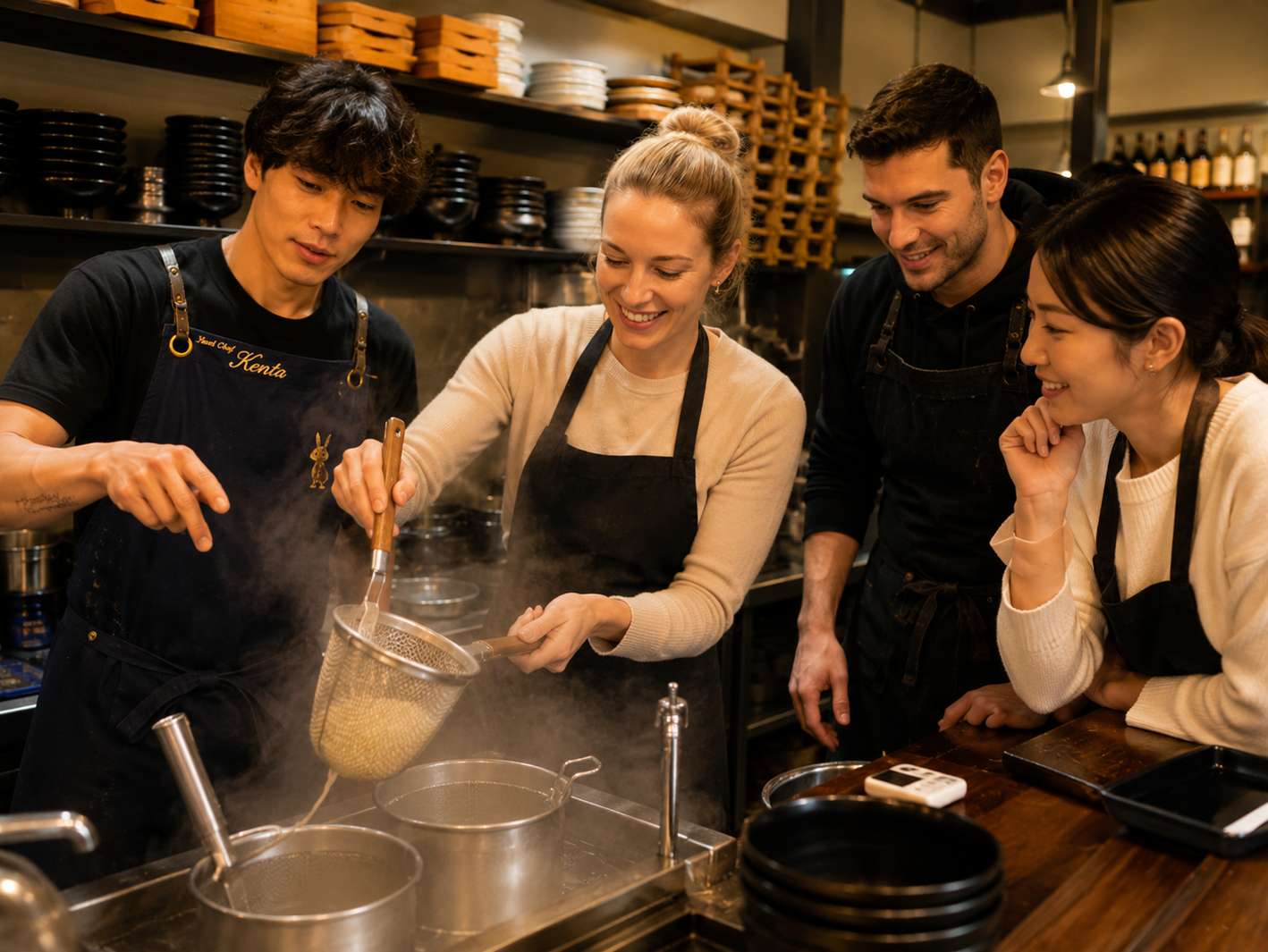
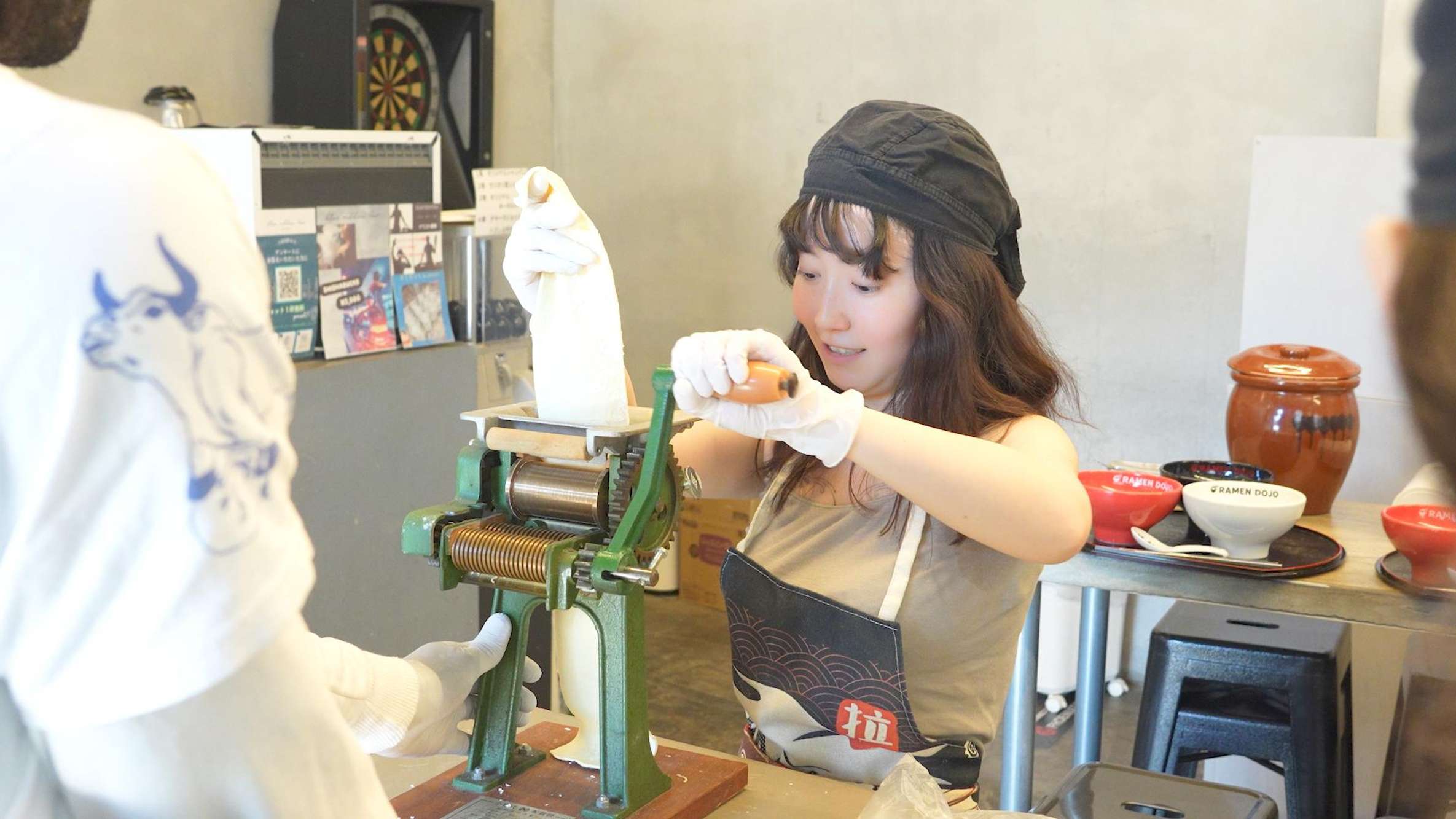
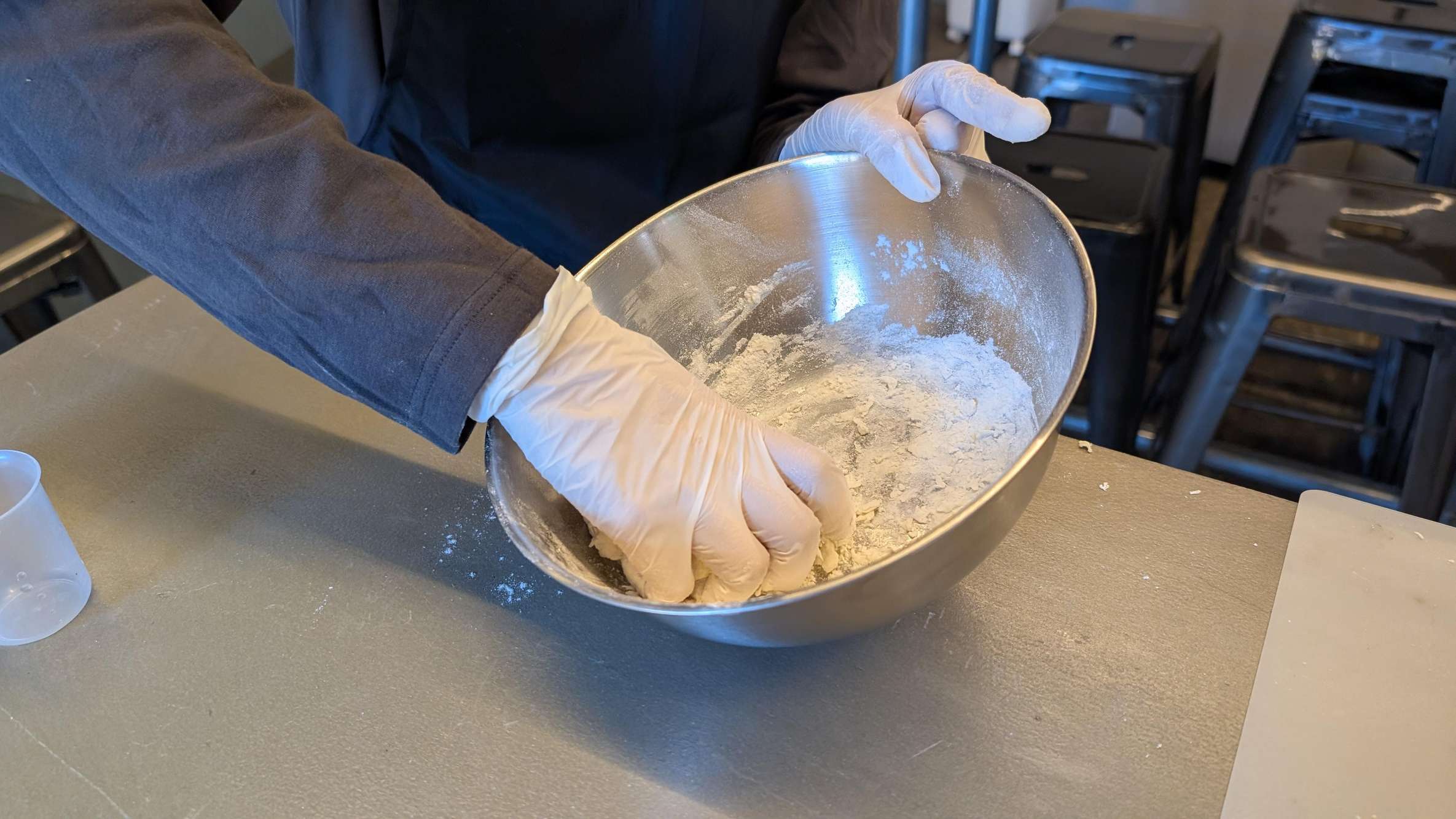
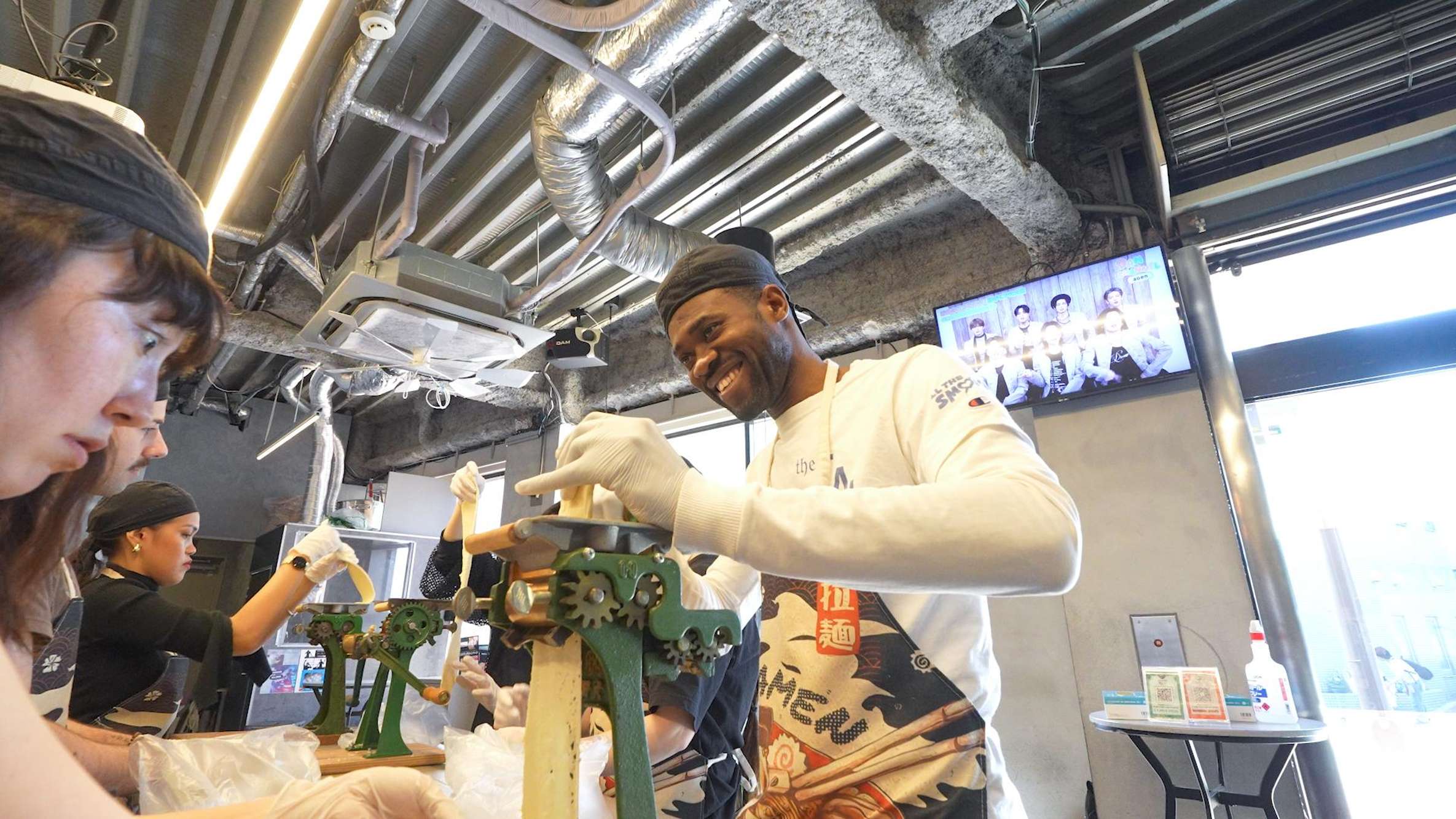
The dough comes together under your hands, goes through a professional noodle machine and comes out as springy strands you cut and cook yourself.
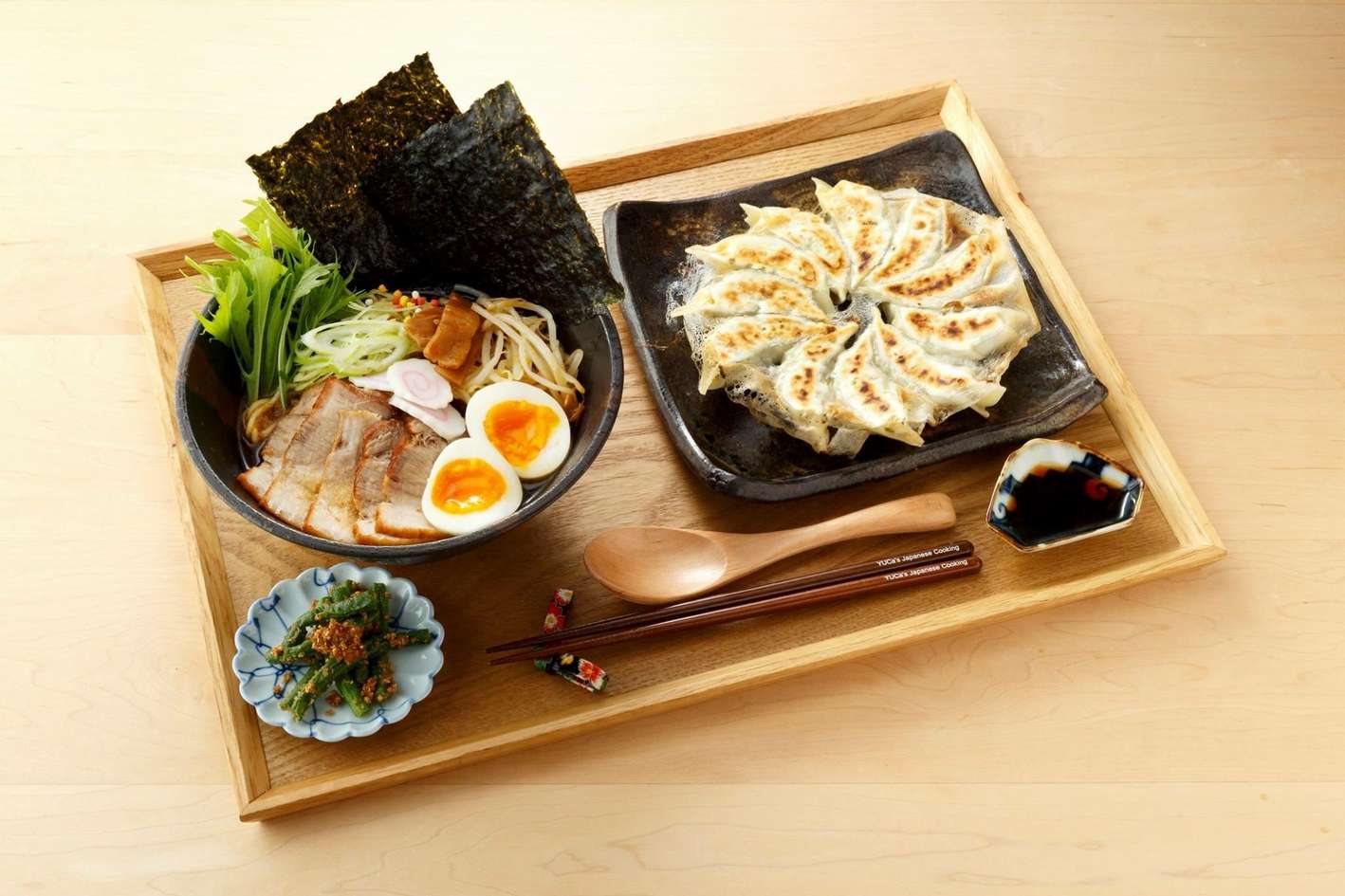
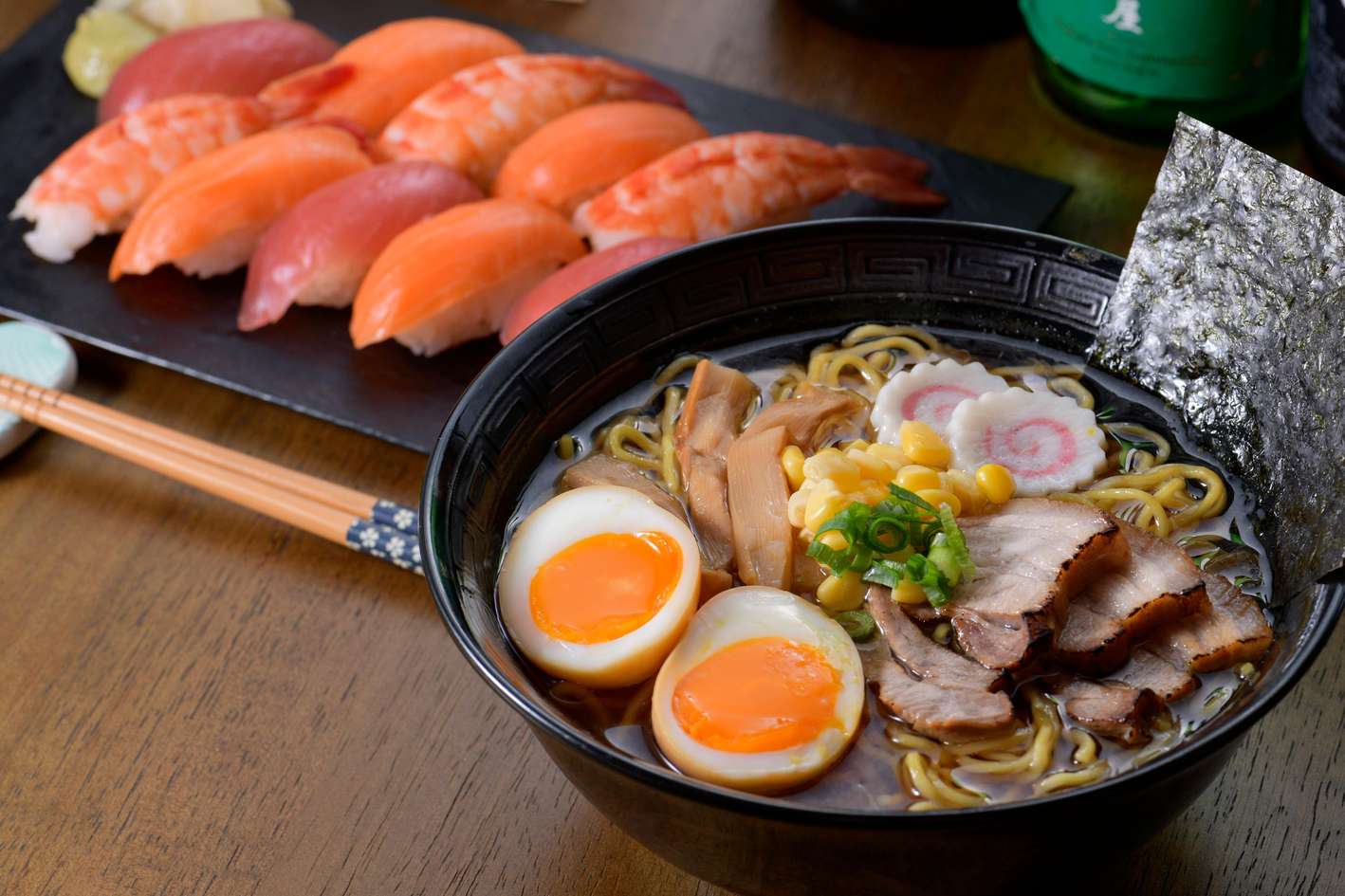
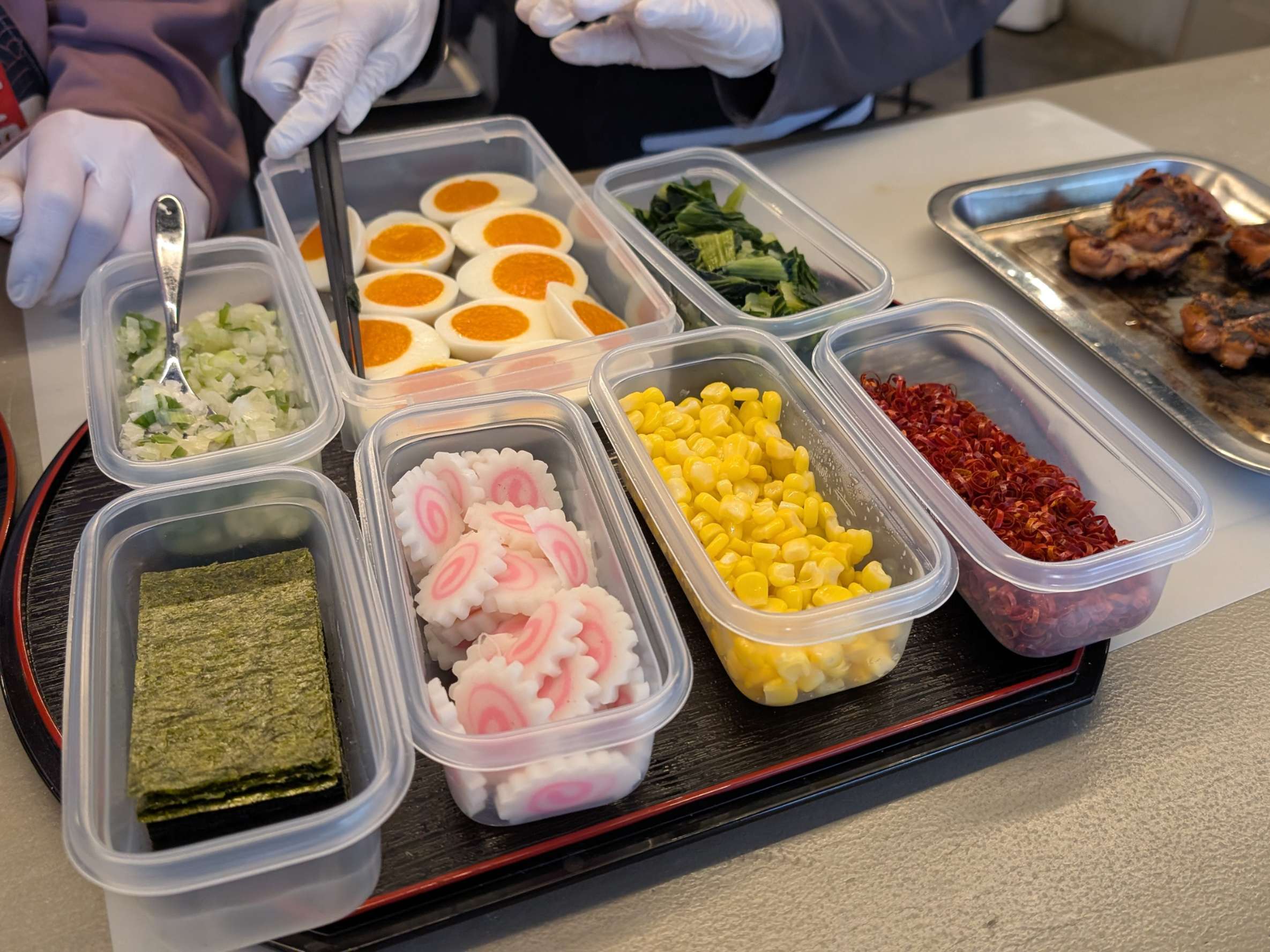
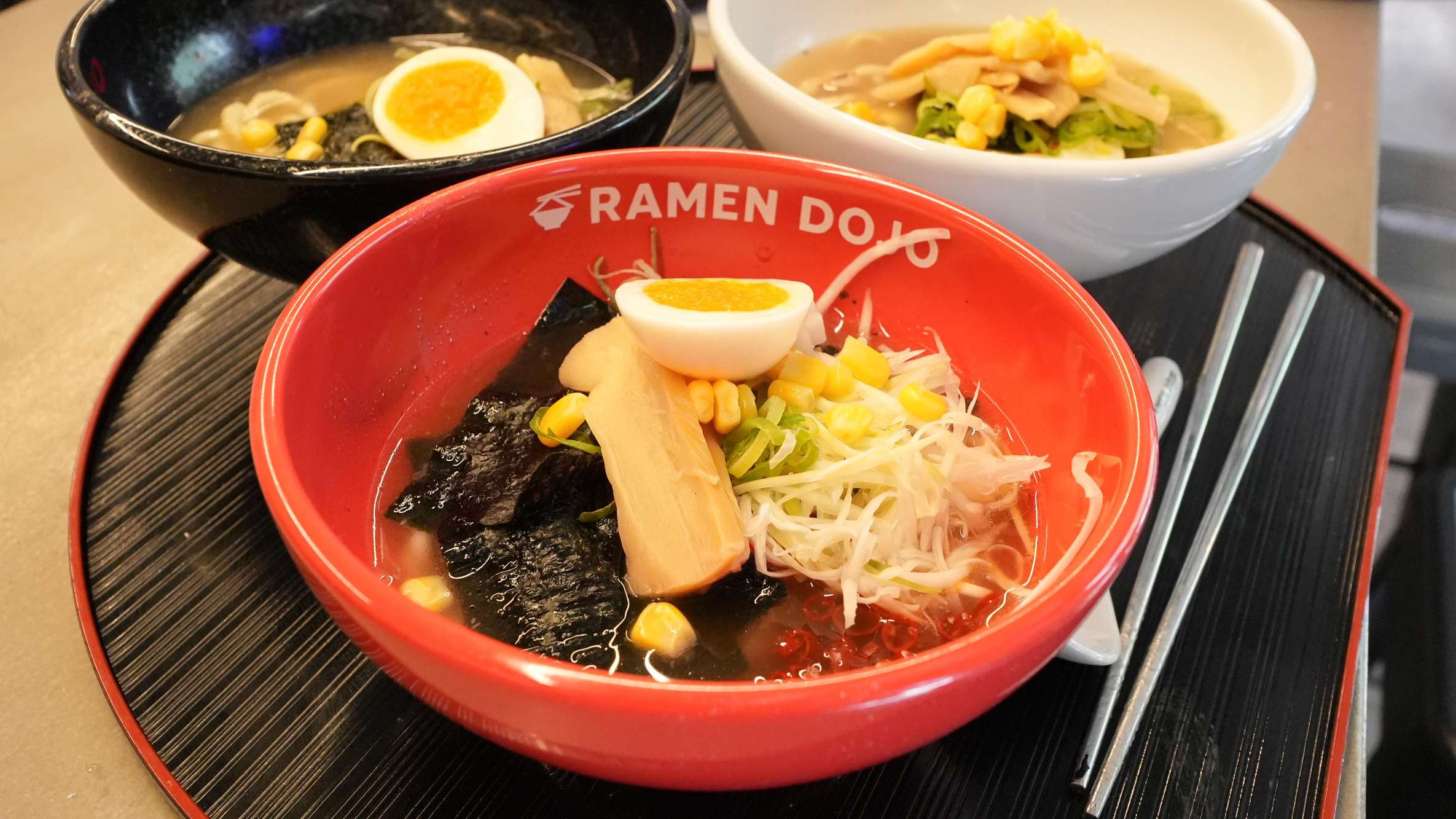
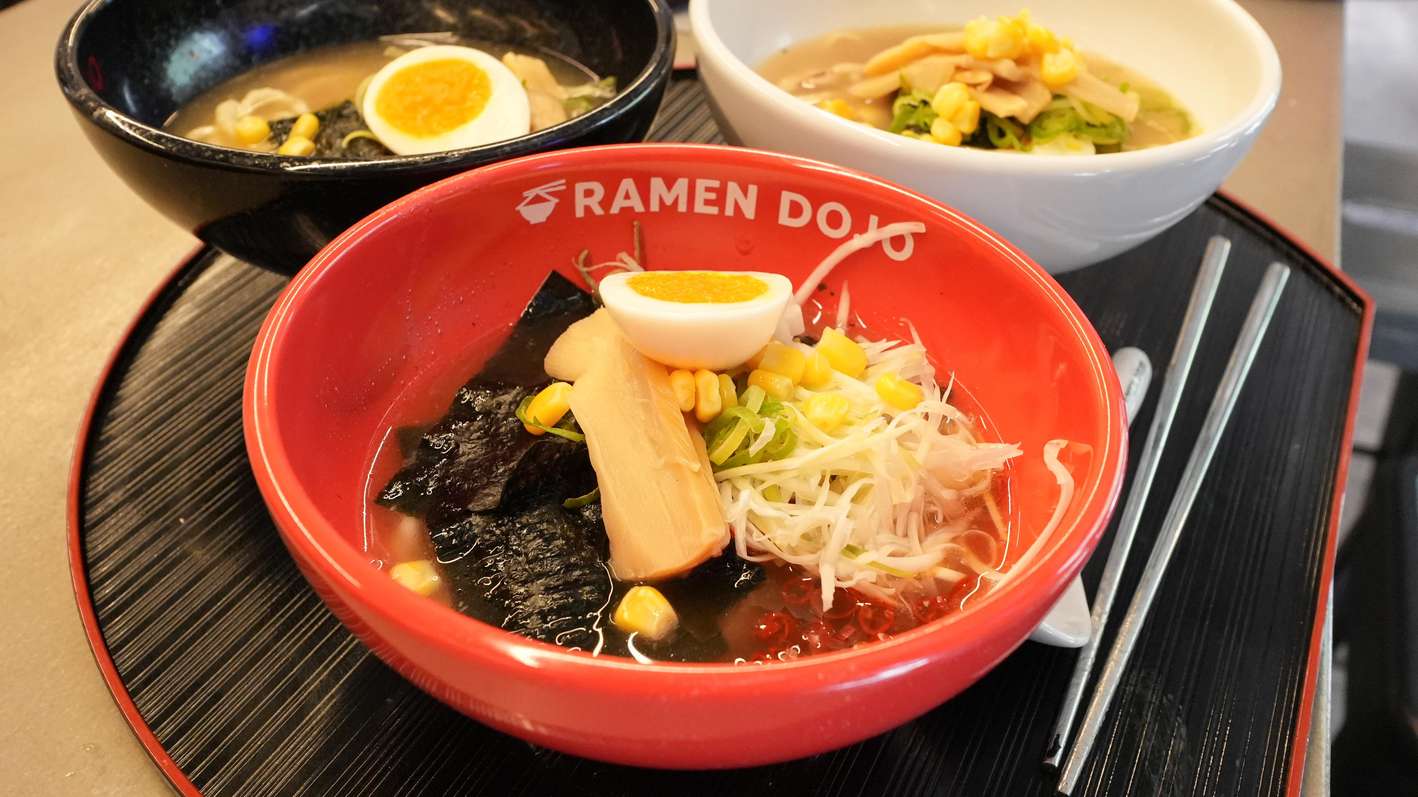
At the Shibuya studio that whole arc takes about 90 minutes, and it ends with three mini bowls on the counter: tonkotsu, shoyu and miso, each built to your own taste. Chicken chashu comes off a blowtorch, still smelling of smoke.
That is the difference between a class and a restaurant meal. You knead, roll and cut the noodles yourself, and the digital recipe that arrives after class is the part that lasts. Travelers pick sessions like this because the skill comes home with them and gets cooked again long after the trip.
You knead, roll and cut the noodles yourself, start to finish
One Tokyo studio runs a dedicated Vegan & Halal-friendly Ramen option
Noodles can hide egg and broth can hide fish, so ingredients and handling still need checking
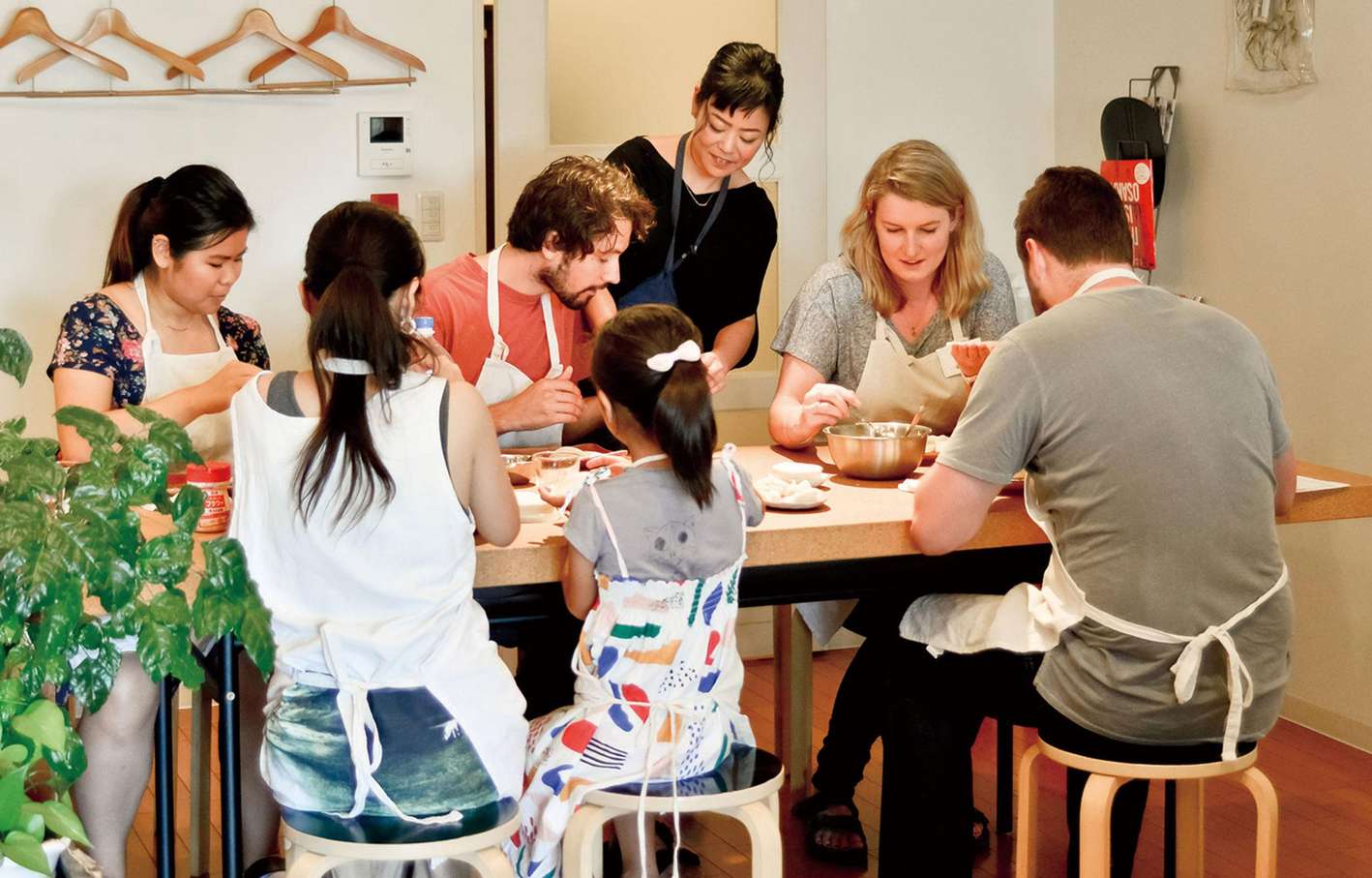
The room takes solo travelers, couples, families and groups, up to 20 guests a session, with an English-speaking instructor throughout. Come hungry: even bowls described as mini add up to a full meal once you have tasted your way through three of them.
One line of the small print matters here. The studio lists itself as unsuitable for guests requiring strict dietary compliance, which includes religious diets, and that sentence deserves a long look before you book.
What to confirm about halal ingredients and preparation before you book
The halal question never really sits with the pork. Ramen dough can contain egg even when nobody calls it an egg noodle, and broth can carry fish ingredients you will never see on the topping bar.
Seasonings on cooked vegetables and tofu need checking too. A halal-friendly label is a starting point, and these are the checks that turn it into a booking.
The Shibuya class answers several of them in advance. Its Vegan & Halal-friendly Ramen option runs as its own booking, with a recipe built apart from the standard meat broths, which beats negotiating substitutions on the day.
Treat the label as the start of a conversation with the host, because the class also states it cannot host strict religious compliance.
How to choose a halal ramen cooking class
| Check | Why it matters | Our pick |
|---|---|---|
| The recipe behind the halal-friendly option | Pork and alcohol can hide in broth and seasonings | A dedicated Vegan & Halal-friendly Ramen option runs as its own booking |
| Egg in the noodle dough | Ramen dough can contain egg without being called egg noodles | The option is built on a vegan recipe, but confirm the dough |
| The broth base | Broth can carry fish ingredients with no visible meat | Ask which broth the halal-friendly version uses |
| Cross-contact in the shared kitchen | Wheat, egg and soy pass through the room all day | The class excludes severe allergies to all three, a sign of shared equipment |
| Certification and written confirmation | A label on a booking page is not proof | Put your requirements in writing to the host after booking |
Other providers show how much this varies. A ramen workshop in Kyoto runs a halal version on request and asks guests to make contact after booking for dietary options, while one Kyoto cooking class cannot accommodate halal diets at all. Asking is never wasted.
When to go - holidays, seasons and weather in Tokyo
Tokyo's calendar fills long before the weather does. Golden Week, April 29 and May 3 to 6 in 2026, and Obon, around August 13 to 16, pack the trains with domestic travelers, and New Year in late December and early January adds several days of closed shops and offices.
Book a fixed-time class outside those weeks, or reserve well ahead.
Between the holidays, the weather decides how easy the journey is. July and August push daytime highs past 32°C with humidity to match, the rainy season soaks June to mid-July, and September stays near 29°C while rain falls on about one day in two.
Typhoons run July to October and peak in August and September, when strong wind can stop trains while tracks are checked. The class is indoors, but you still need a working train to reach it.
The easy windows are late spring and mid autumn: mild air, drier skies and no holiday crush. Whichever month you pick, an early session is the safer one, because the last session of the day has the least room for a delayed train.
How to get to the Shibuya ramen studio by train
Three direct train routes reach Shibuya Station: about 7 minutes from Shinjuku on the JR Yamanote Line, and 16 minutes from Ginza or 33 minutes from Asakusa on the Tokyo Metro Ginza Line.
The studio sits at 1F, 2-16-29 Ohashi in Meguro-ku, a 3 to 5-minute walk from Ikejiri-ohashi Station, one stop beyond the Shibuya crowds, so navigate to the studio's own address in Ohashi and save the crossing for afterwards.
Timing is the part that bites. Reach the studio 10 to 15 minutes before the start, but no earlier: doors open only 15 minutes before class. Arrive five or more minutes late and you may have to join the session in progress or be refused entry.
Check the building before you set out, too. A traveler in July 2026 had trouble finding a first-floor studio tucked inside a craft beer bar, and the address reads differently on a map than it looks on the street.
Weekday rush hours are the other thing to plan around. Add at least 30 minutes beyond your usual journey estimate in the morning rush, 7:30 to 9:30 am, or the evening one, 5:30 to 7:30 pm, and make it a full 60 with luggage or a transfer-heavy route through big stations such as Shinjuku.
What to wear and bring to the class
Kitchen work settles the wardrobe question fast. Wear casual clothes that can take flour and sauce, with sleeves rolled up and closed-toe shoes, and leave sandals and dangling jewelry at the hotel. An apron is provided, so your clothes only need to survive what the apron misses.
Tokyo's seasons pull the rest of it: breathable fabrics through the humid summer, light layers in spring and autumn, and warm outer layers you can shed once the heated kitchen does its work.
None of this is fussiness. Hot soup, hot pans and flour fill a small studio, and sandals give your feet nothing to hide behind when a bowl goes over.
The class, step by step
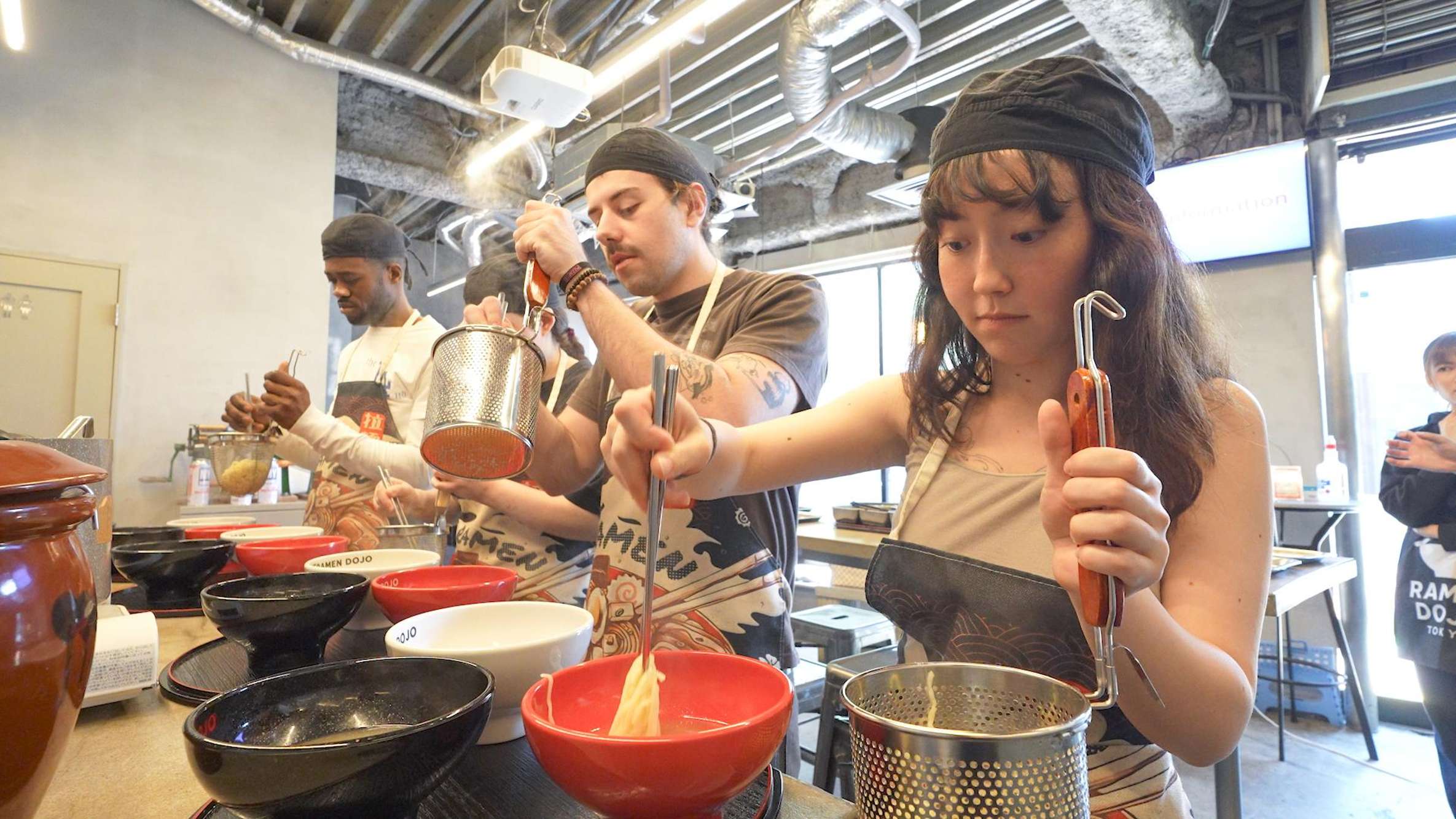
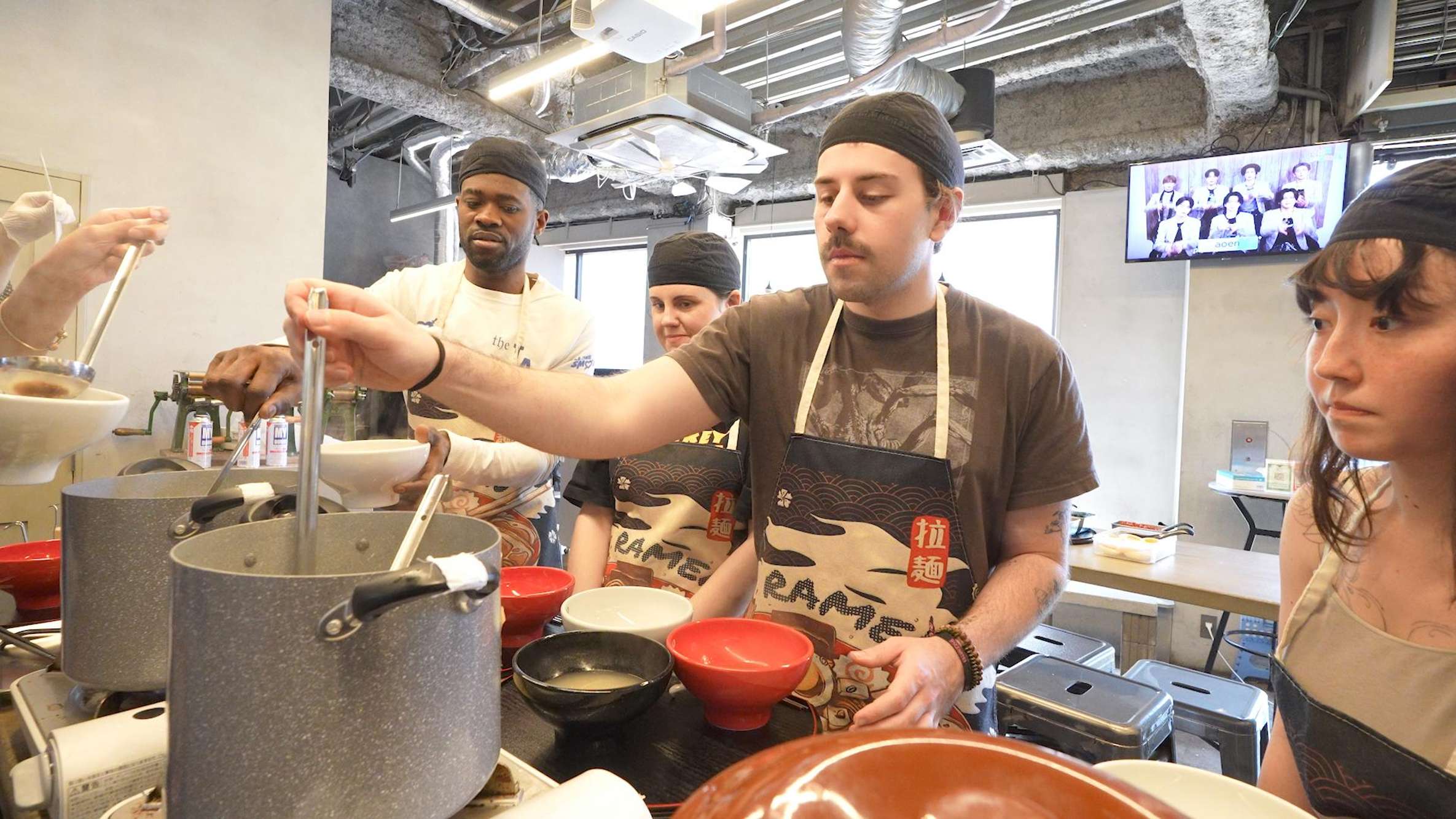
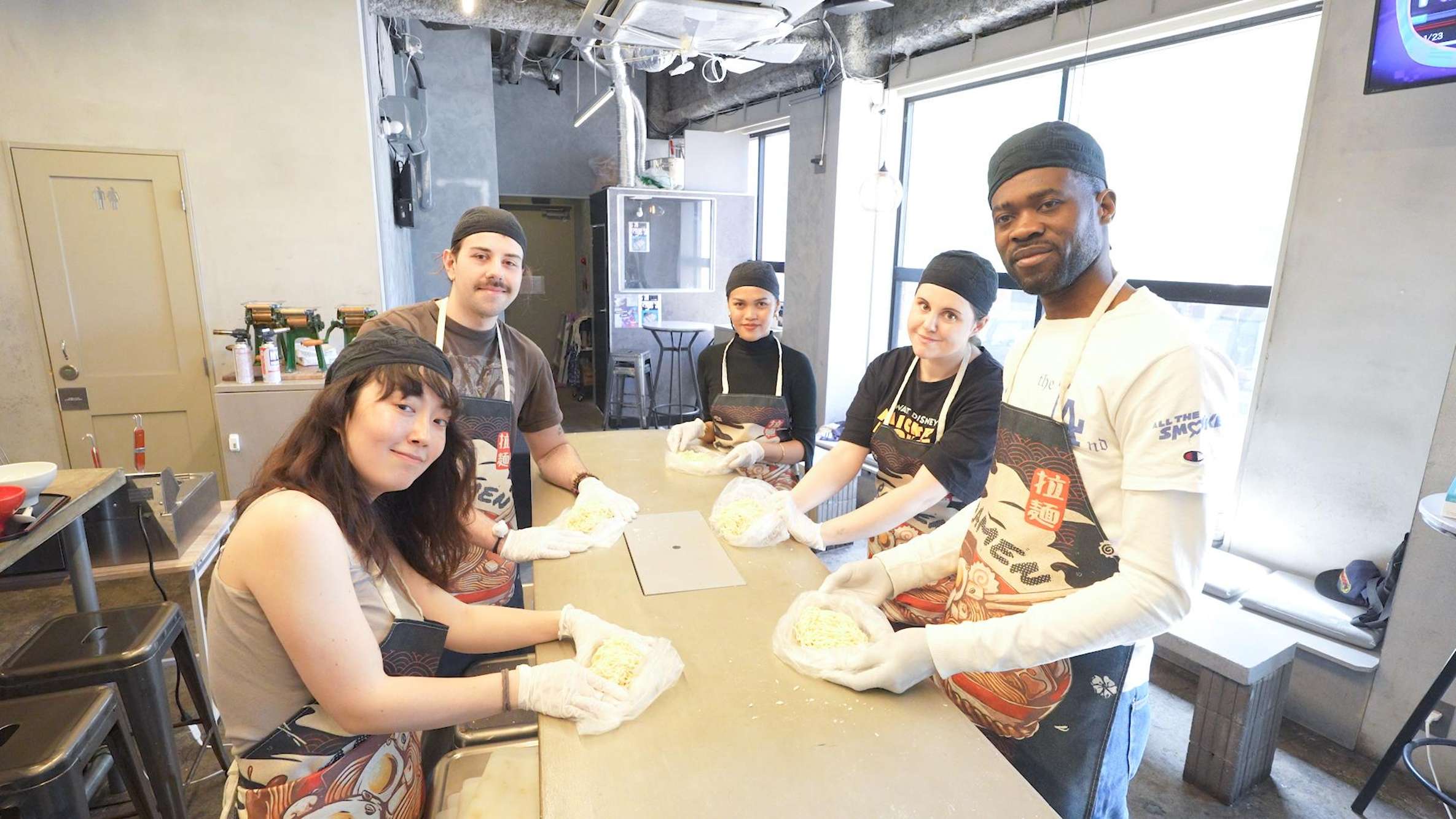
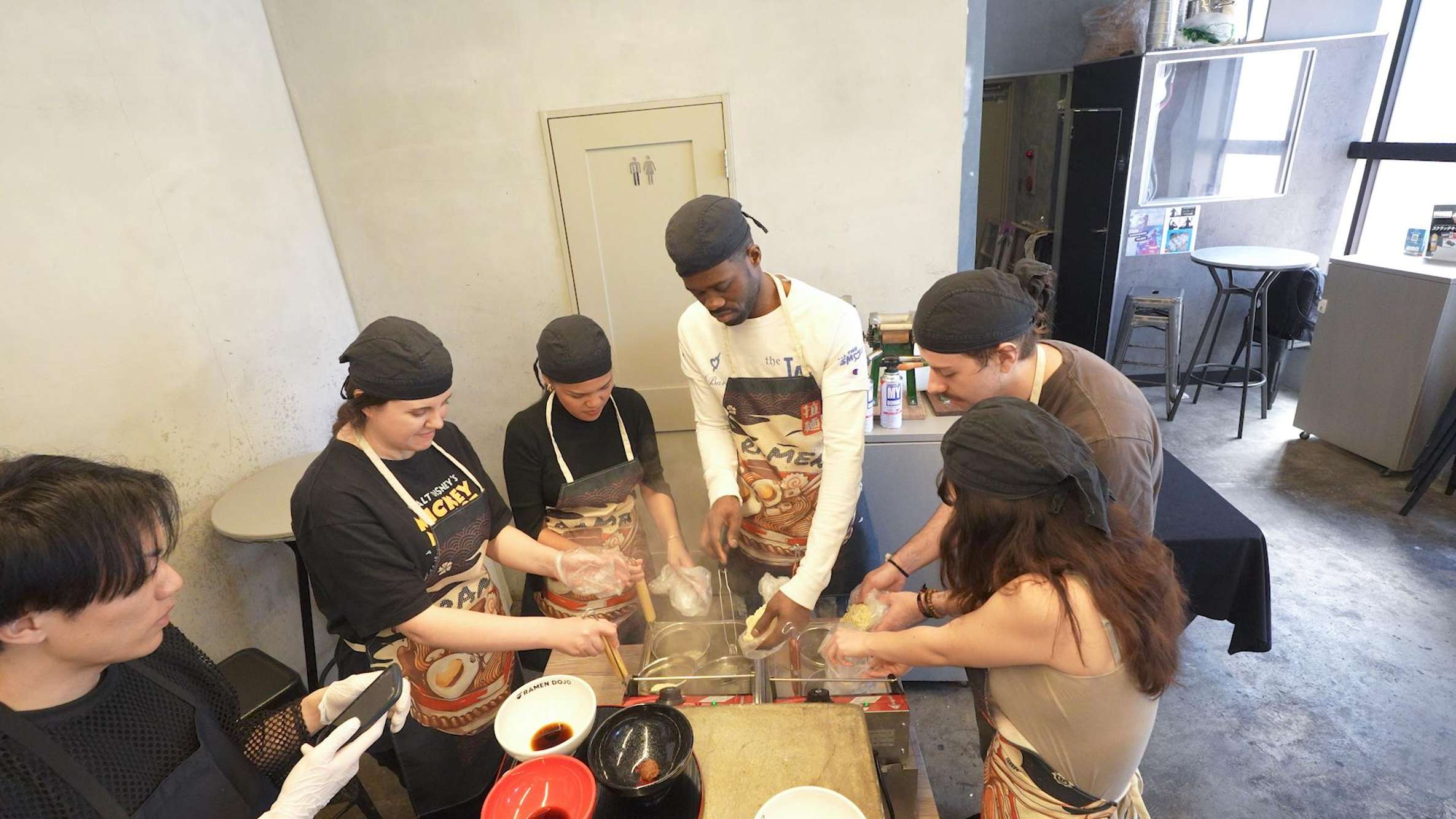
The session runs about 90 minutes and up to 20 guests, busy but personal. It opens with aprons on and a briefing from an English-speaking instructor, then the dough: kneading by hand, rolling, and cutting on the professional machine.
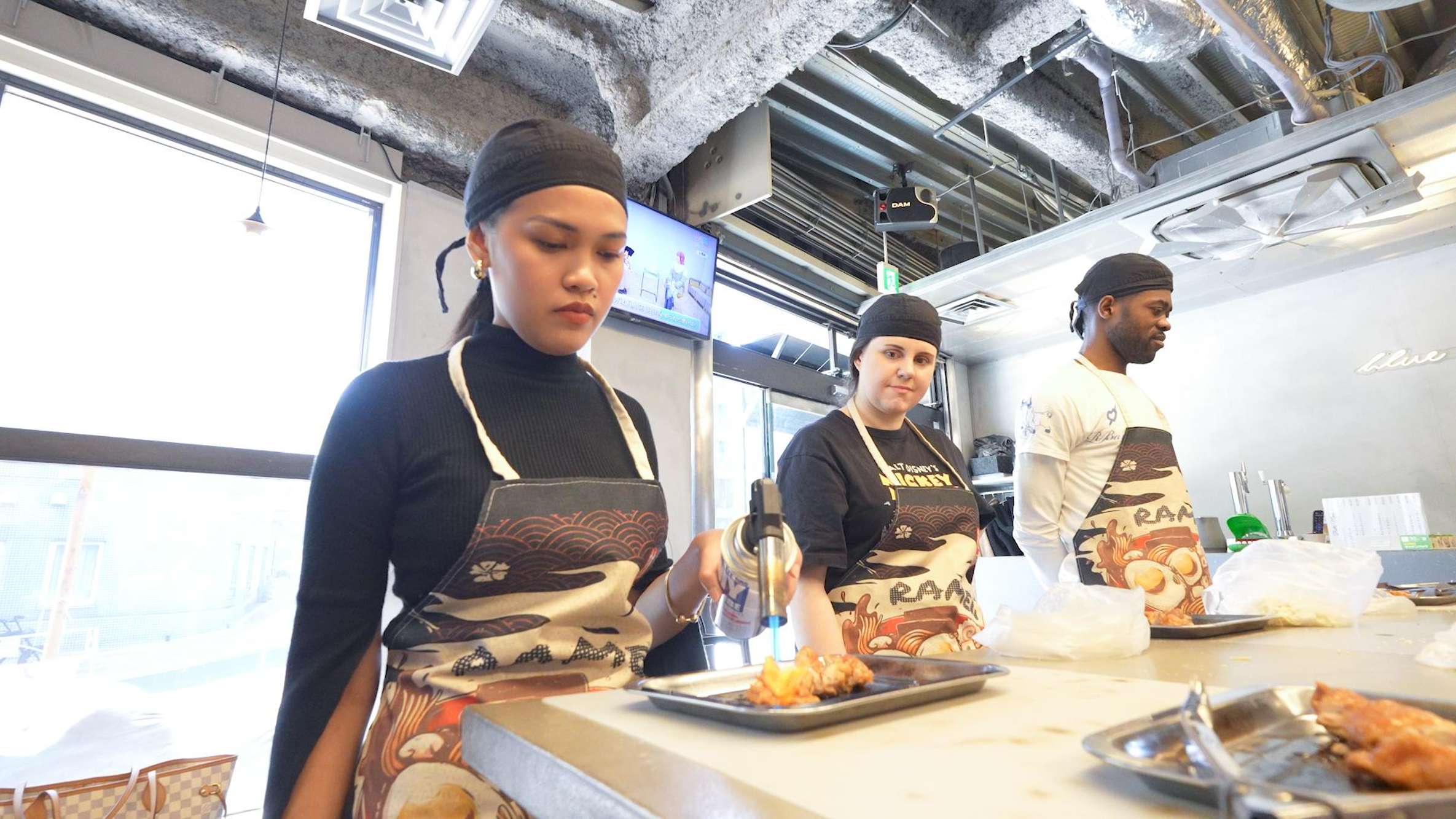
Chicken chashu comes next, seared with a blowtorch, and the last stretch is assembly, building three mini bowls across tonkotsu, shoyu and miso and customizing each one.
- 1Arrival windowDoors open 15 minutes before class
Reach the studio 10 to 15 minutes early
- 2The noodlesKnead, roll and cut fresh dough on the professional machine
Springy strands, ready to boil
- 3Chicken chashuSear it with a blowtorch
Smoke and crisped edges
- 4Three mini bowlsBuild tonkotsu, shoyu and miso and customize each
Taste them side by side
- 5End of classEverything gets eaten on site
No takeaway or leftovers, for food safety
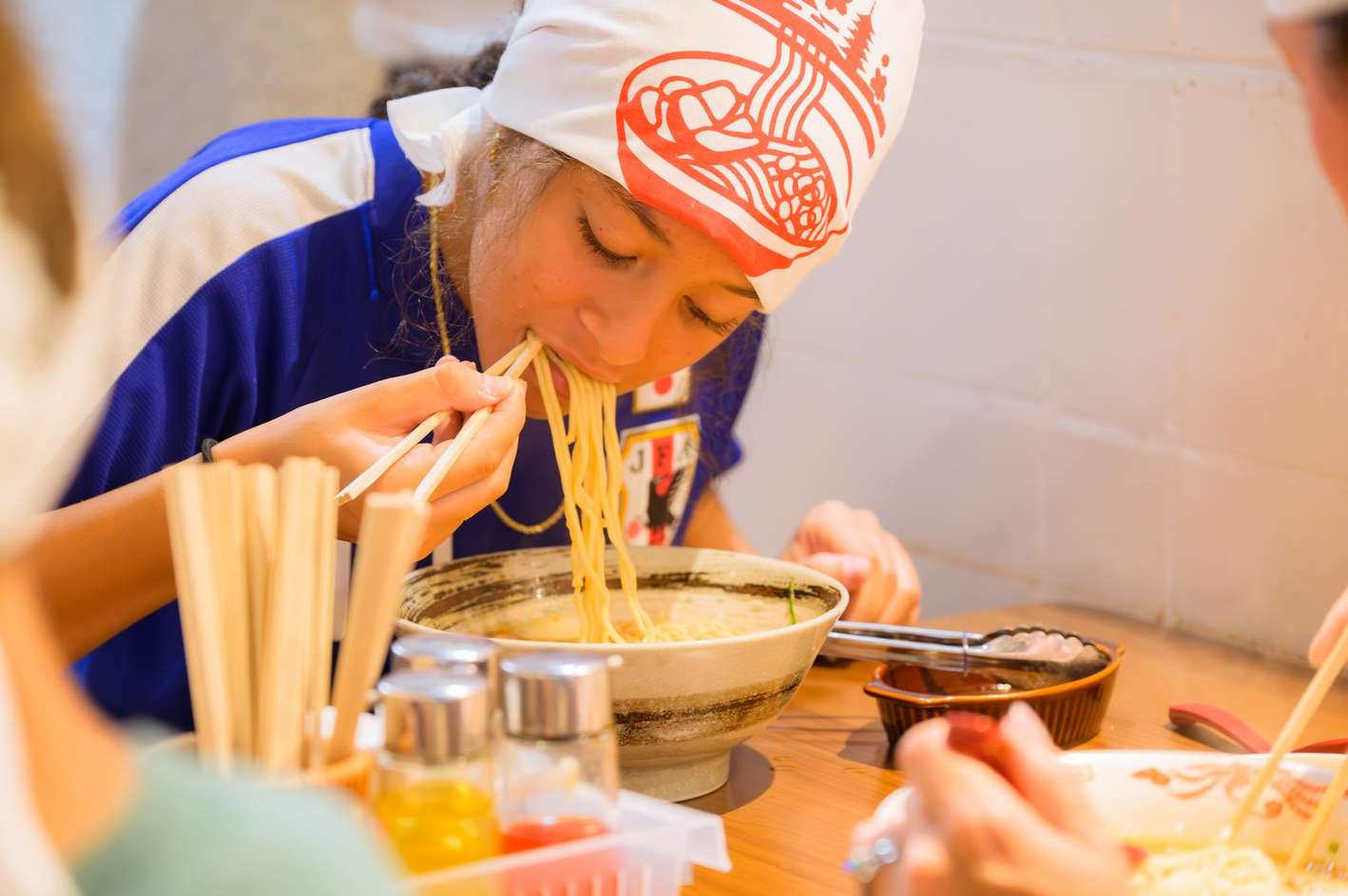
Come hungry, because the bowls you build can replace a lunch or dinner even with mini in the name, and everything gets eaten on site. The tasting is where you compare the three styles side by side and work out which one you will cook first at home.
Two questions earn their place while the machine hums. Ask the instructor which steps you can repeat with home equipment, since some machine-led courses teach methods hard to redo in a domestic kitchen, and which Japanese ingredients have substitutes you can buy where you live.
The digital recipe that follows the class is worth questioning while the person who wrote it stands next to you.
Booking the class or eating halal ramen out instead
A bowl you make yourself is a bowl whose every ingredient you chose, and that is the case for booking Tokyo: Shibuya Ramen Class: Make Tonkotsu, Shoyu & Miso over hunting for a table.
You cook, you eat, and the halal-friendly option means you are not negotiating at the counter. The ingredients and toppings are the host's to source, and your questions go to one person instead of a busy kitchen mid-service.
Eating out runs on different rules. At busy ramen shops, plan for every seated person to order something, and ask staff before a non-eating companion takes a seat in a small shop. Carry a printed Japanese-language dietary card listing exactly which ingredients you cannot eat, ready to show the staff.
A class trades some spontaneity for a fixed time and a known menu. For halal travelers, that trade usually feels easier: for an hour and a half the kitchen answers to you.
How to choose and compare Tokyo ramen cooking classes
Not every ramen workshop teaches the same thing, and the differences show up when you try to cook the dish at home. The classes that pay off at home teach ingredients, recipes and techniques, and they tell you which components you make from scratch.
One two-hour Tokyo class builds bowls on soup the host prepared beforehand, a short session in the Kappabashi area gets you noodle making from flour in about 50 minutes, and the Exclusive Tokyo Ramen Kitchen Experience is a behind-the-counter shift in a working shop.
The nearest alternative for readers who want a working kitchen is Become a Ramen Chef for a Day: Tokyo Restaurant Experience, a two to three-and-a-half-hour session in a real Minami Aoyama restaurant: bones broken for broth, noodles and gyoza from scratch, toppings, and a professional recipe e-book to take home.
Its hosts cater to pork-free and other dietary requirements with advance notice, but pork-free accommodation alone does not establish halal preparation, so the same confirmation questions apply there.
The Shibuya class measures up well as teaching: real noodle making, a recipe to take home and tasting across three styles in 90 minutes. What it cannot promise is certified strict-compliance handling, so readers whose booking depends on that need written answers from the host before they pay.
What else to do near the Shibuya studio
The studio's address in Ohashi, Meguro puts a quieter Tokyo around the class than the crossing's postcard version. Bunkamura and the Japanese Folk Crafts Museum both sit about 1.2 km away, each an easy 15-minute walk, and the folk crafts museum pairs well with a morning class.
Shibuya Station itself is still worth the detour. The Hachikō Statue and the Scramble Crossing are a three-minute walk from the station gates, and Miyashita Park is about as close.
For an art stop, the Ōta Memorial Museum of Art is a 19-minute walk each way, so allow time for the visit as well as the walk.
Build the day around the studio's own neighborhood rather than the station's. The sights near Ikejiri-ohashi fit naturally into the walk to class, and Shibuya's big names slot in before or after, once you are moving again with a full stomach.
What to know before you book a halal ramen cooking class in Tokyo
The Shibuya class runs two versions, and only the one listed as Vegan & Halal-friendly Ramen is meant for your diet. The standard class states it cannot host guests who need strict religious dietary compliance, so pick the halal-friendly option when you book.
Message the host before you pay and say exactly what halal means for you, from the broth and seasonings to how the food is handled. A pork-free promise alone does not settle it. The answer tells you whether the class meets your standard.
The studio sits at 1F, 2-16-29 Ohashi in Meguro, a 3 to 5 minute walk from Ikejiri-ohashi Station, not beside Shibuya Station itself. Look up the exact address before you set out so the last minutes stay calm.
Doors open 15 minutes before class, so aim to arrive 10 to 15 minutes early and not sooner. Guests who turn up 5 or more minutes late may have to join the class in progress or be refused entry, and refunds may not apply in those cases.
Cancel up to 24 hours ahead for a *full refund*. That gives you room to move the class around a busy Tokyo itinerary if your plans shift.
Everything you need to cook is included: the ingredients, a wide set of toppings, the equipment and an apron, with an English-speaking instructor guiding you and a digital recipe to take home afterwards. Getting to the studio is on you.
Sessions run an hour and a half, easy to fit around sightseeing. Come hungry: the bowl you cook can stand in for lunch or dinner even in a short session, and *you eat what you make*.
The studio is not suitable for guests who cannot use stairs. The kitchen is also a flour-heavy space, so the class rules out severe wheat, egg or soy allergies, coeliac disease and airborne flour sensitivity.
One Tokyo restaurant experience in Minami Aoyama, a ramen chef for a day, can cater to pork-free and other diets with advance notice. Pork-free is not the same as halal though, so ask about broth, seasonings and preparation before you commit. It runs 2 to 3.5 hours.
Allow at least 30 extra minutes on Tokyo trains to reach a fixed start time during weekday rush hours, roughly 7:30 to 9:30 am and 5:30 to 7:30 pm. With a transfer-heavy route or luggage, make it 60.
Book the halal-friendly option, confirm first
The Shibuya class suits travelers who want to cook and eat, and its halal-friendly option is the clearest starting point Tokyo's classes give you. Readers needing certified strict-compliance handling should get written answers from the host before paying, and readers who want a full restaurant kitchen will be happier with the Minami Aoyama experience instead.
Halal ramen cooking in Tokyo - your questions answered
Is there a halal-friendly ramen cooking class in Tokyo?+
Yes. A Shibuya ramen class runs a dedicated Vegan & Halal-friendly Ramen option alongside its standard session. You book that option instead of the usual three-broth tasting, and the class lasts 90 minutes in a studio in Ohashi, Meguro. It is the clearest starting point in Tokyo for cooking ramen around a halal diet.
What do I make in the Shibuya class?+
You knead the dough by hand, roll it, and cut fresh noodles on a professional noodle machine, then prepare chicken chashu and sear it with a blowtorch. The standard option builds three mini bowls in tonkotsu, shoyu and miso style. Ask which soup base and toppings the halal-friendly option uses when you book.
Does the halal-friendly option come with certification?+
The operator's own notes call the option halal-friendly, not certified, and state that the class cannot meet strict religious dietary compliance. That makes it a good fit if halal-friendly cooking is what you are after.
If your observance is strict, send your exact requirements to the instructor before booking and let the reply guide your decision.
Which ingredients should I confirm before booking?+
Broths and noodles are the usual questions. Ramen noodles can contain egg even when they are not labelled egg noodles, and broth can contain fish ingredients. Ask which soup base, seasonings and toppings the halal-friendly option uses, and how the kitchen handles them. These are questions the instructor can answer directly before you pay.
What if I have allergies as well as halal requirements?+
The same studio notes rule out guests with severe wheat, egg or soy allergies, coeliac disease and severe airborne flour sensitivity, because the kitchen handles wheat flour and shared equipment. If one of those applies to you, that is a rule that decides the booking, so match the class to your allergies before you pay.
Is there an alternative in a real restaurant kitchen?+
The nearest alternative is the Tokyo Restaurant Experience, a ramen chef for a day in a working kitchen in Minami Aoyama. You break bones for broth, make noodles and gyoza from scratch and assemble your bowl, in two to three and a half hours.
It caters to pork-free and other diets with advance notice, though pork-free alone does not establish halal preparation, so state your needs up front.
Do I eat what I make, and is it enough for a meal?+
Tasting your bowl is part of the session, and travelers say the mini bowls add up: come hungry, because what you cook can replace lunch or dinner. You also receive a digital recipe afterwards, so the techniques you practiced follow you home to your own kitchen.
How do I get to the studio, and when should I arrive?+
The studio sits on the ground floor at 1F, 2-16-29 Ohashi in Meguro-ku, a three to five minute walk from Ikejiri-ohashi Station, and it is not right beside Shibuya Station despite the class name.
Doors open 15 minutes before the start. Plan to arrive 10 to 15 minutes early, because guests who arrive late may have to join the class in progress.
Do I need Japanese for the class?+
No. An English-speaking instructor guides the whole session, and staff also speak Japanese if you want to practice a few questions in the local language. The class suits solo travelers, couples, families and groups, with up to 20 guests per session.