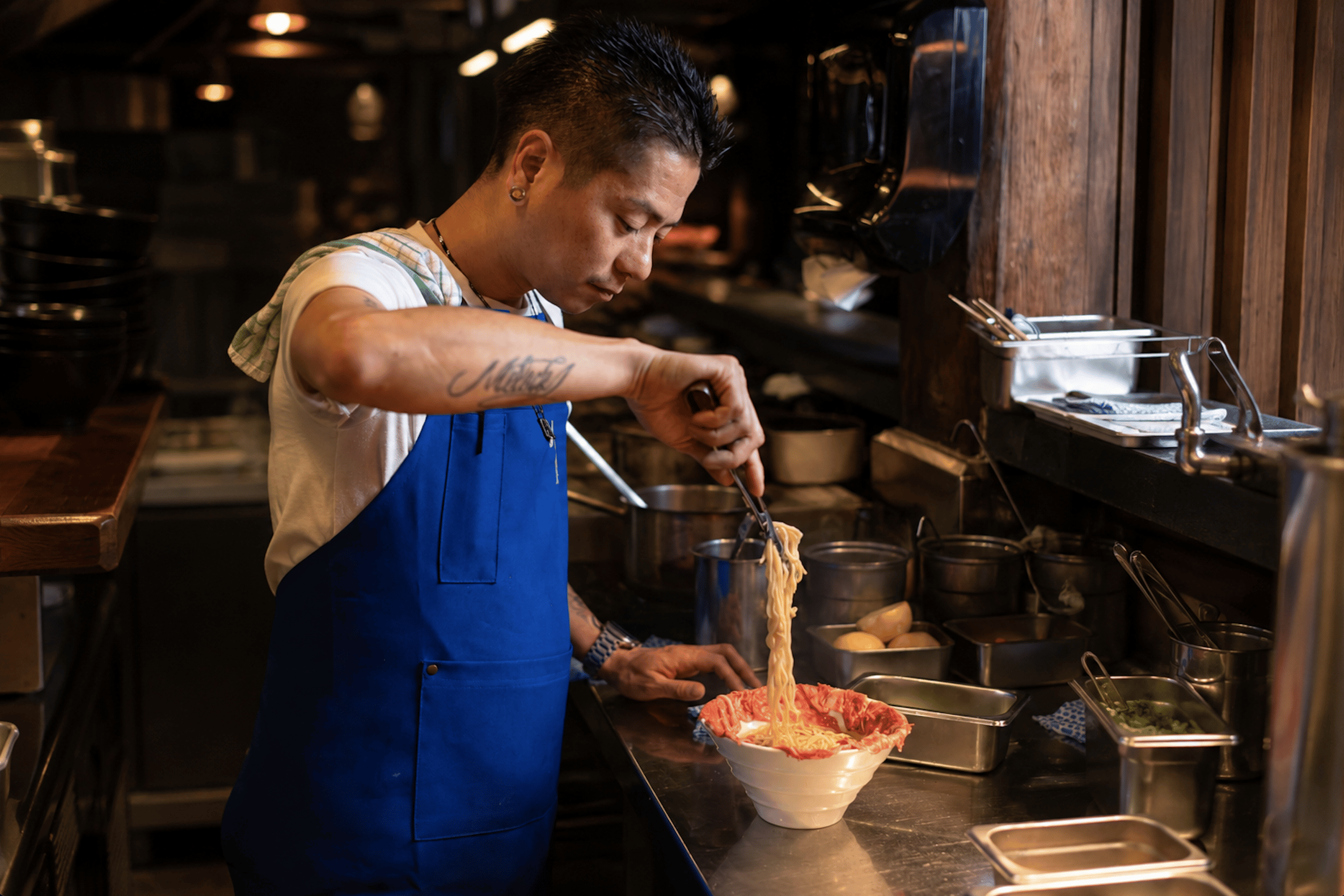
Vegan Ramen Cooking Class in Kyoto Plant-Based Workshop Options
Book a Kyoto class where you can eat the bowl you make. Three workshops swap in plant-based ingredients for you - a hands-on ramen-and-gyoza class taught by a professional chef, a from-scratch noodle session, and a broth lesson from a Michelin Guide shop, each in English and each ready for your vegan version when you ask at booking.
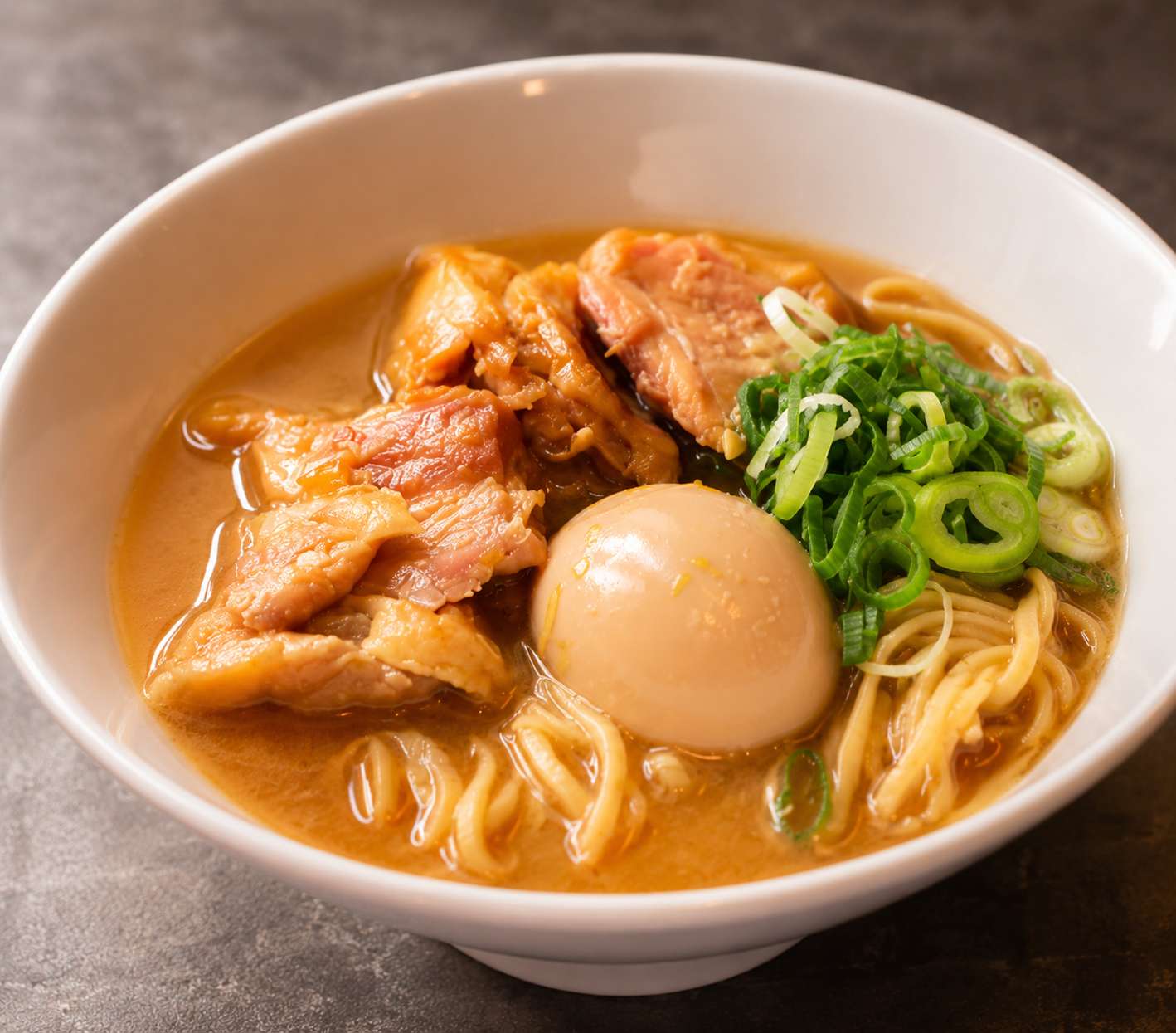
"Great activity. Detailed instruction for authentic ramen: prepped raw meat and sauce, made dough and cut noodles, then broth from soy sauce, miso and more. Finished with delicious chicken ramen. Educational and fun."
5.0★average rating682traveler reviews100%free cancellation22countries travelers came from
Vegan cooking in Kyoto - choosing a ramen class
Three Kyoto workshops welcome plant-based guests, and the difference comes down to how much you make yourself. One class takes you from dough to finished bowl, one runs through broth and gyoza in a working restaurant kitchen, and one focuses on the soup with a craft souvenir. All three suit beginners.
LabelsThe word vegan on its own does not settle the question; name the ingredients you exclude, and check the broth, because fish stock can hide in a bowl with no visible meat.
NoodlesEgg can sit in the dough even when the package never mentions it, so flag that with the kitchen if it matters to you.
BookingTell the class you want a vegan version when you book; the from-scratch class asks dietary guests to contact the local supplier after booking.
AgesThe broth and chopsticks class cannot take children under 10.
SeasonKyoto cooking classes fill fastest in April and May and again in November, so book those months early.
Getting thereThe Ramen Factory venue sits a five-minute walk from Demachiyanagi Station, down stairs to a basement.
ClothingWear closed-toe shoes and casual clothes that can take a splash of flour or soup.
WeatherA Kyoto class may be canceled in unsafe weather, so keep a spare morning in your plan.
importantIn Kyoto kitchens a vegan version only exists if you arrange it when booking, and a vegan label alone does not tell the class which ingredients you avoid.
When you book, name your actual ingredient exclusions in writing, things like fish stock, egg in the noodles, honey or certain seasonings, so the kitchen can prepare a version you can genuinely eat.
Which vegan ramen cooking class in Kyoto suits you
Broth class
1.5 hours·English, Japanese
5.0(31)
Ramen Broth Class by Michelin Guide Shop & Custom Chopsticks
The broth-focused choice, run by a ramen shop featured in the Michelin Guide five years running, and you leave with chopsticks engraved with your name.
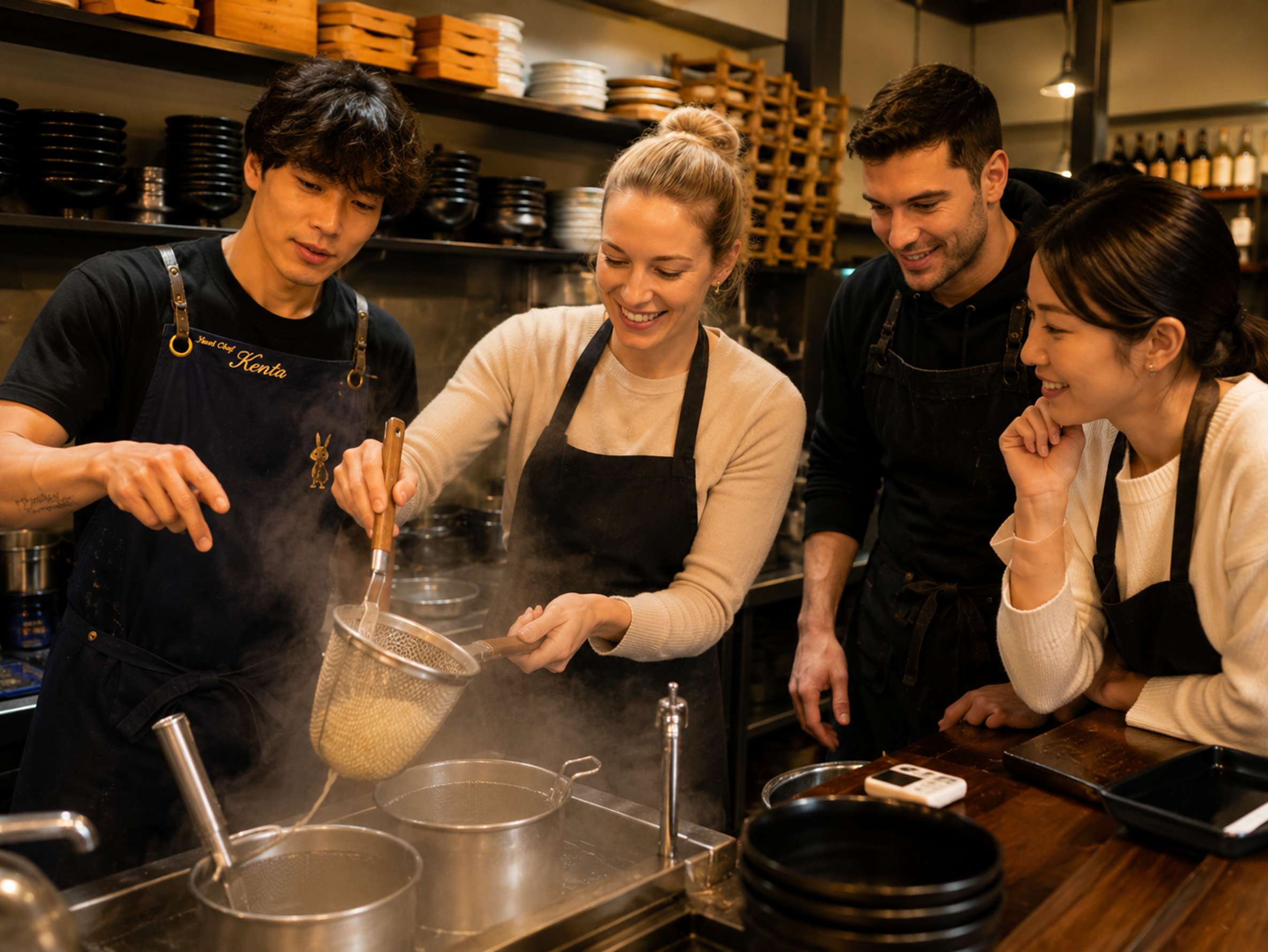
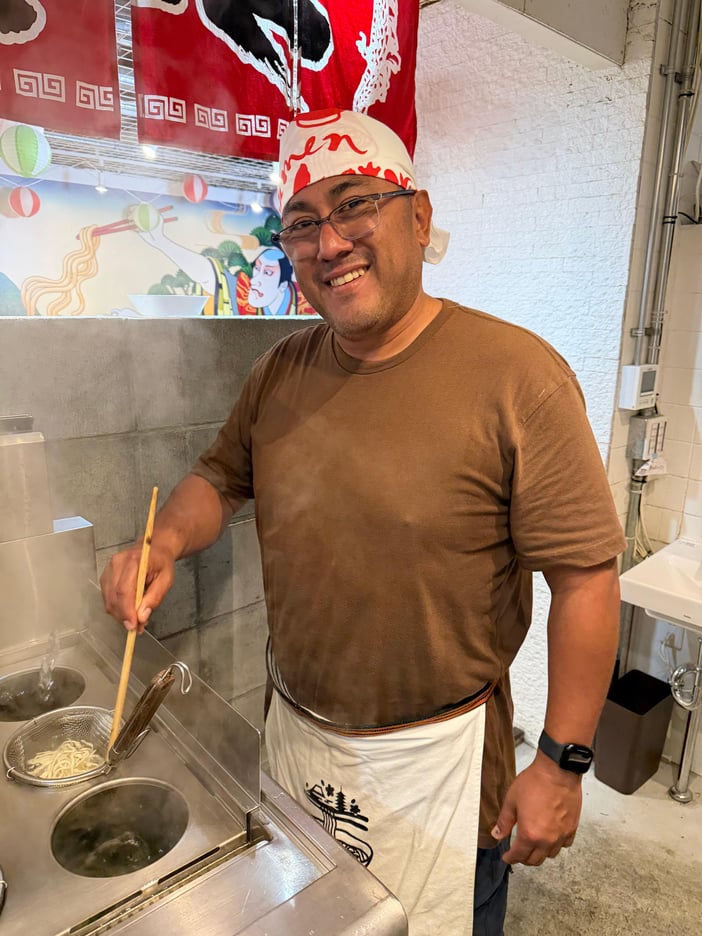
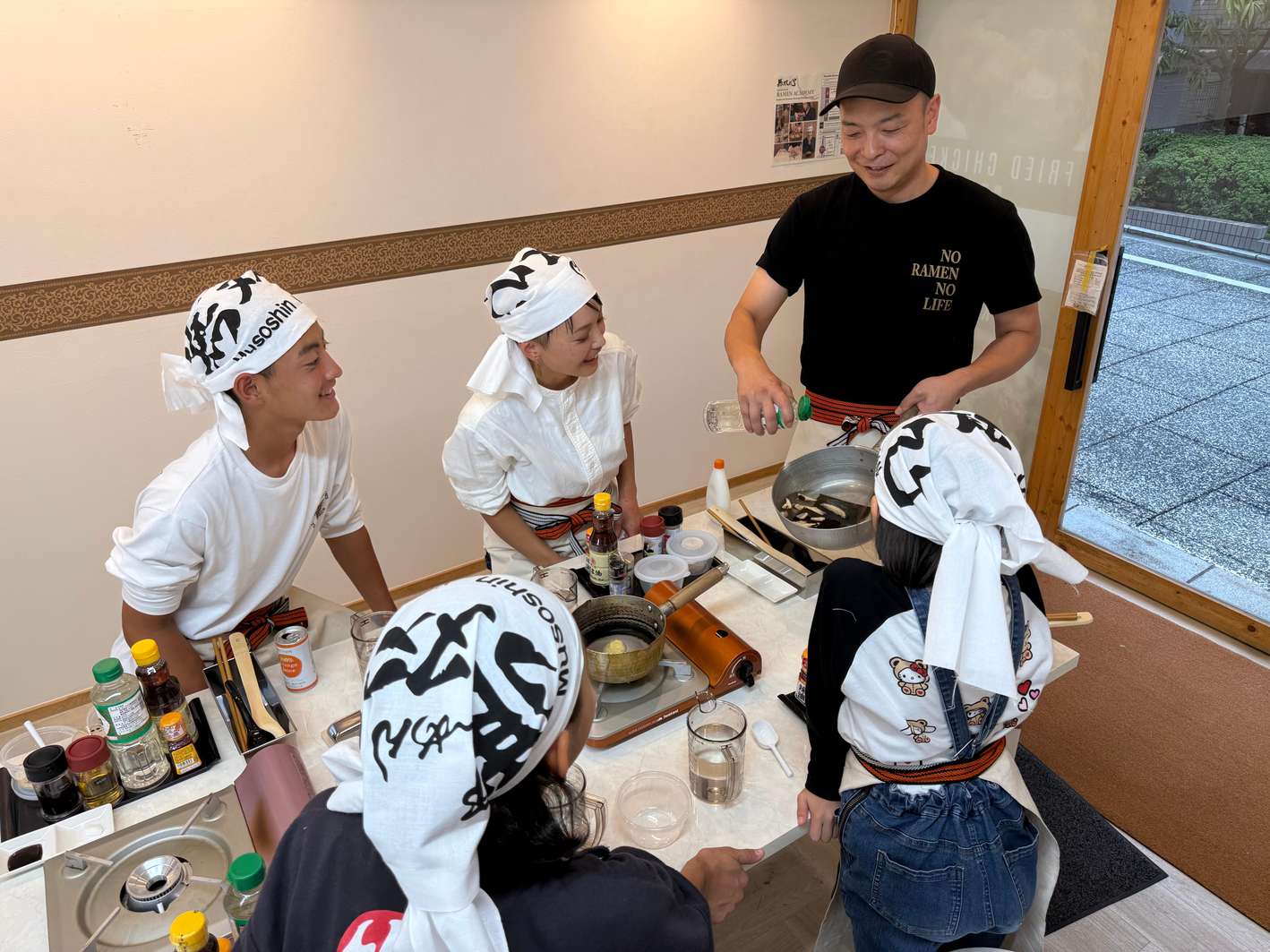
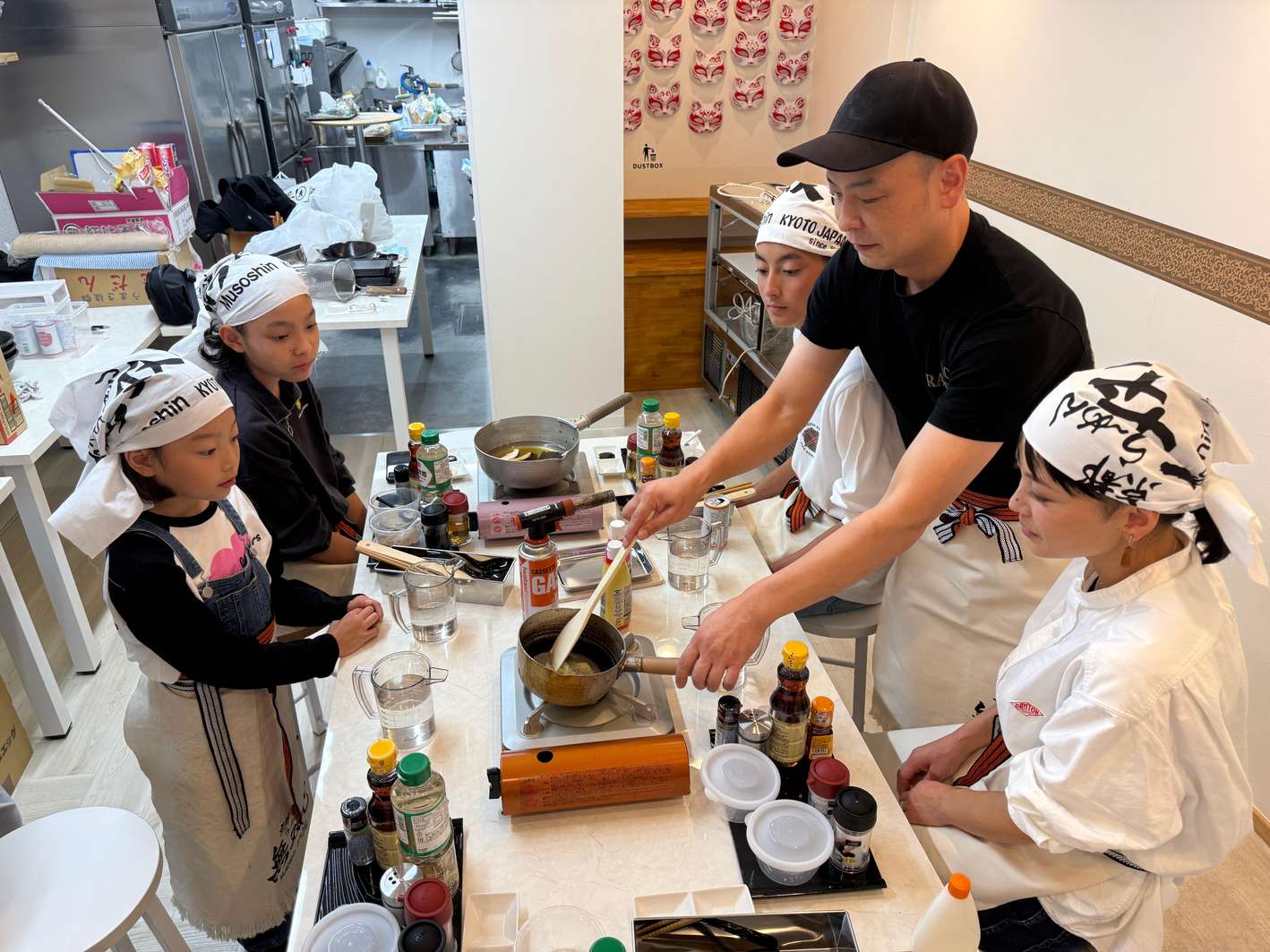
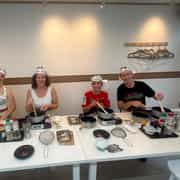
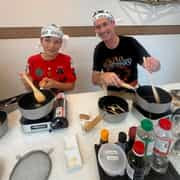
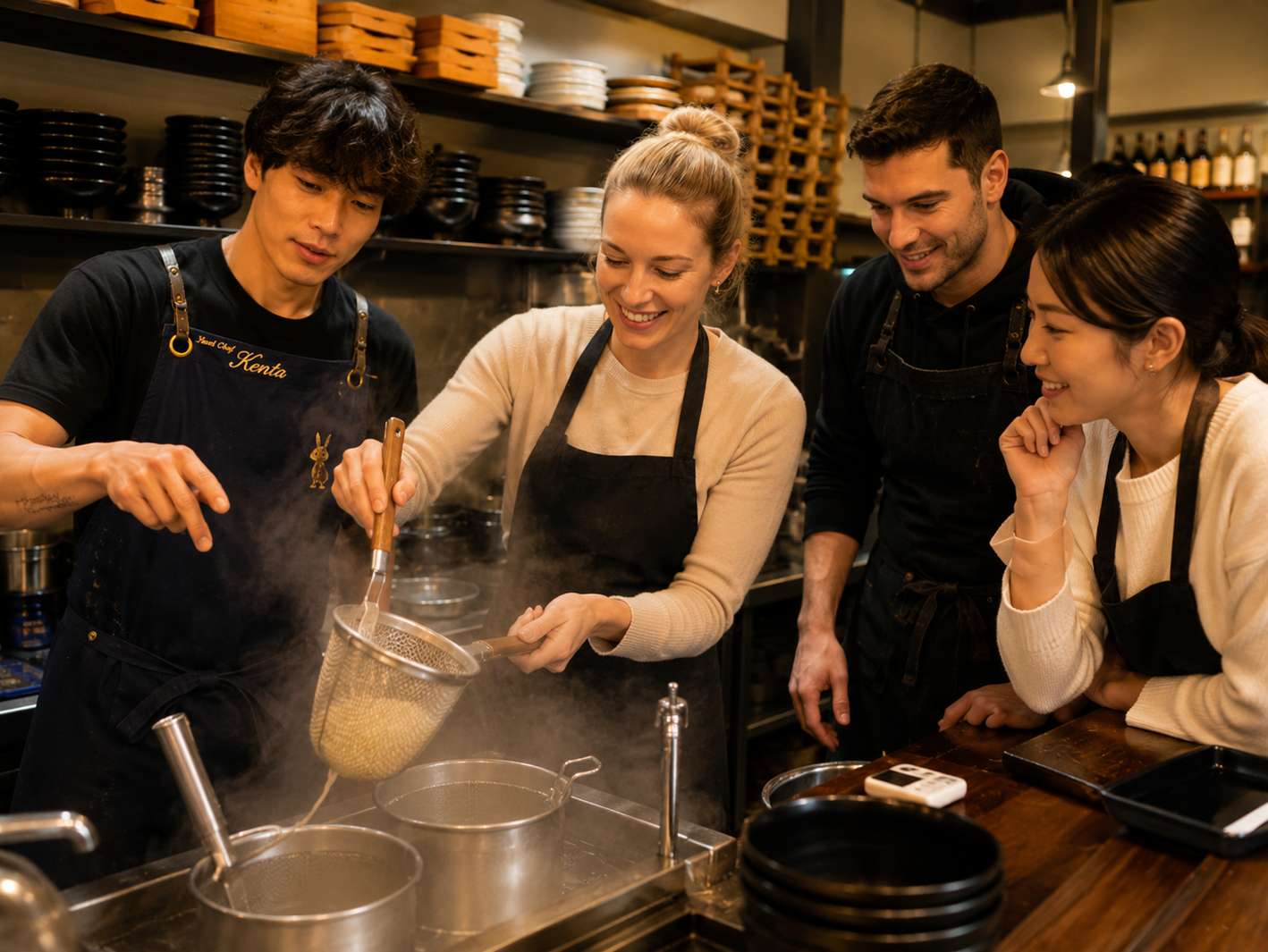
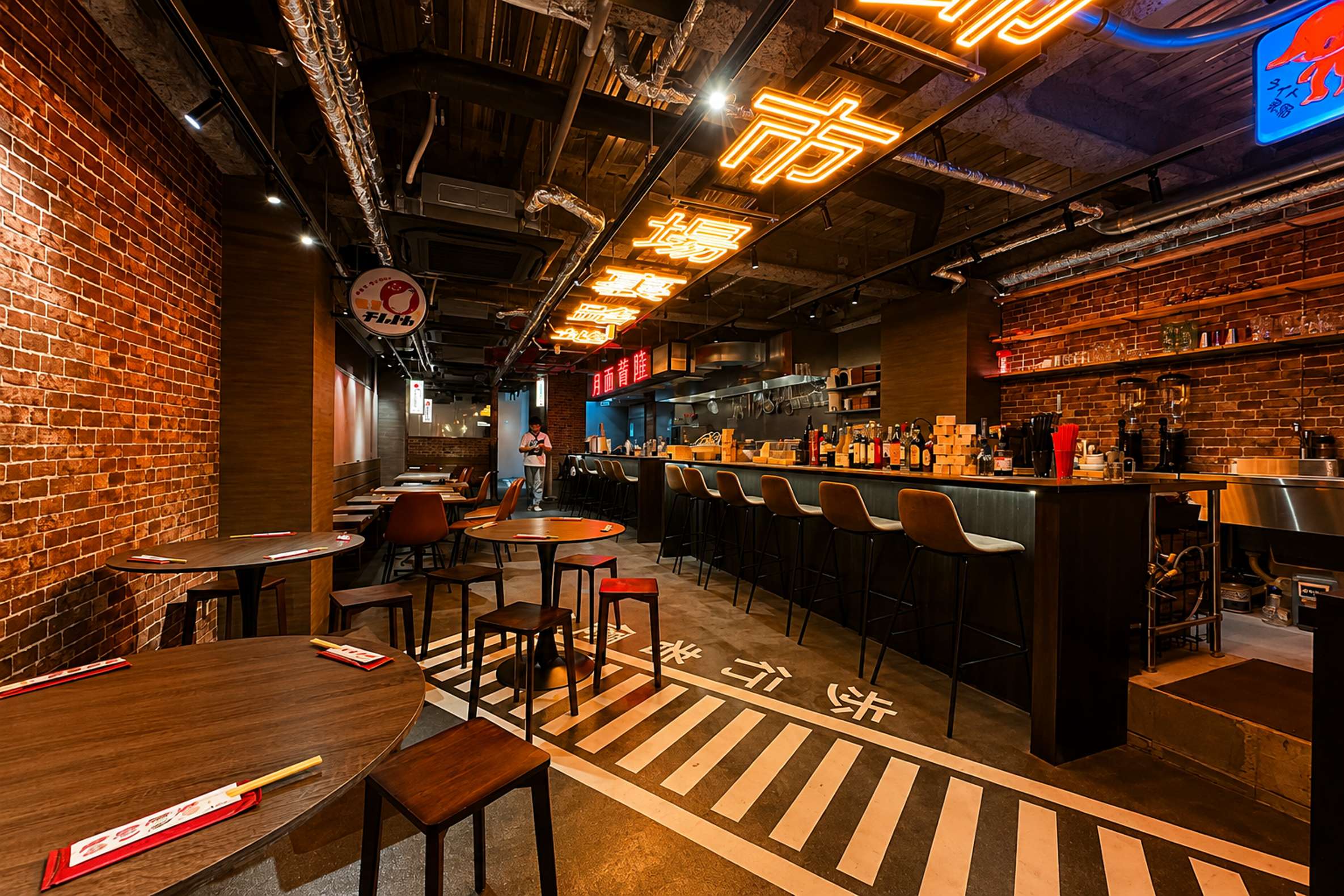
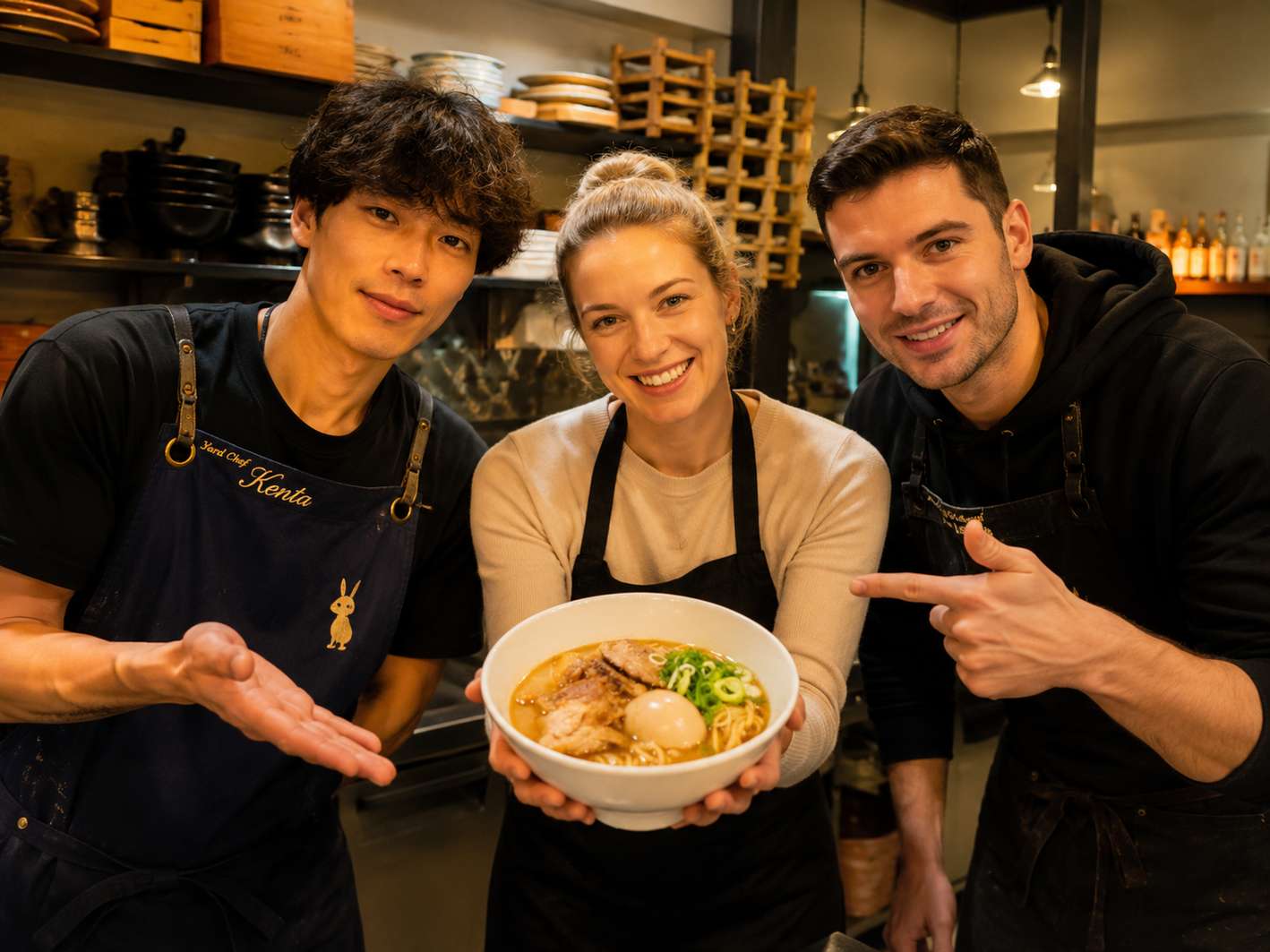
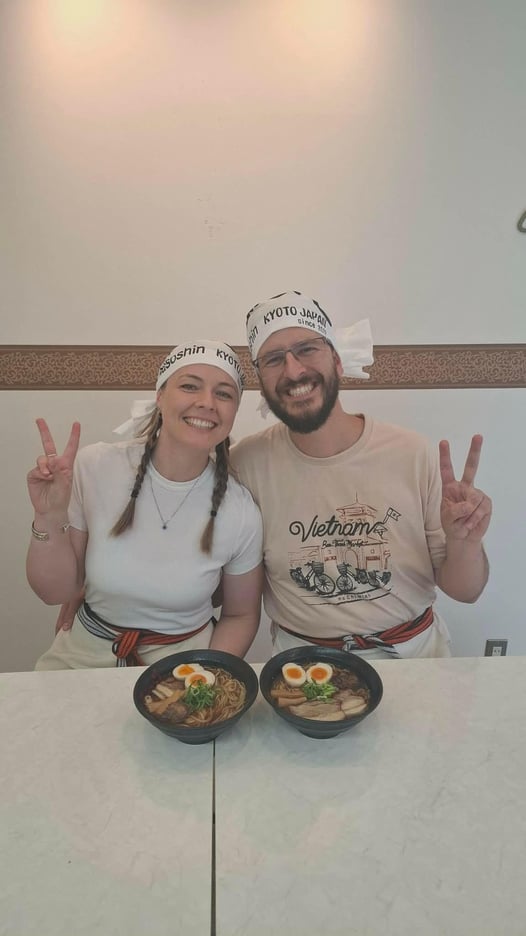
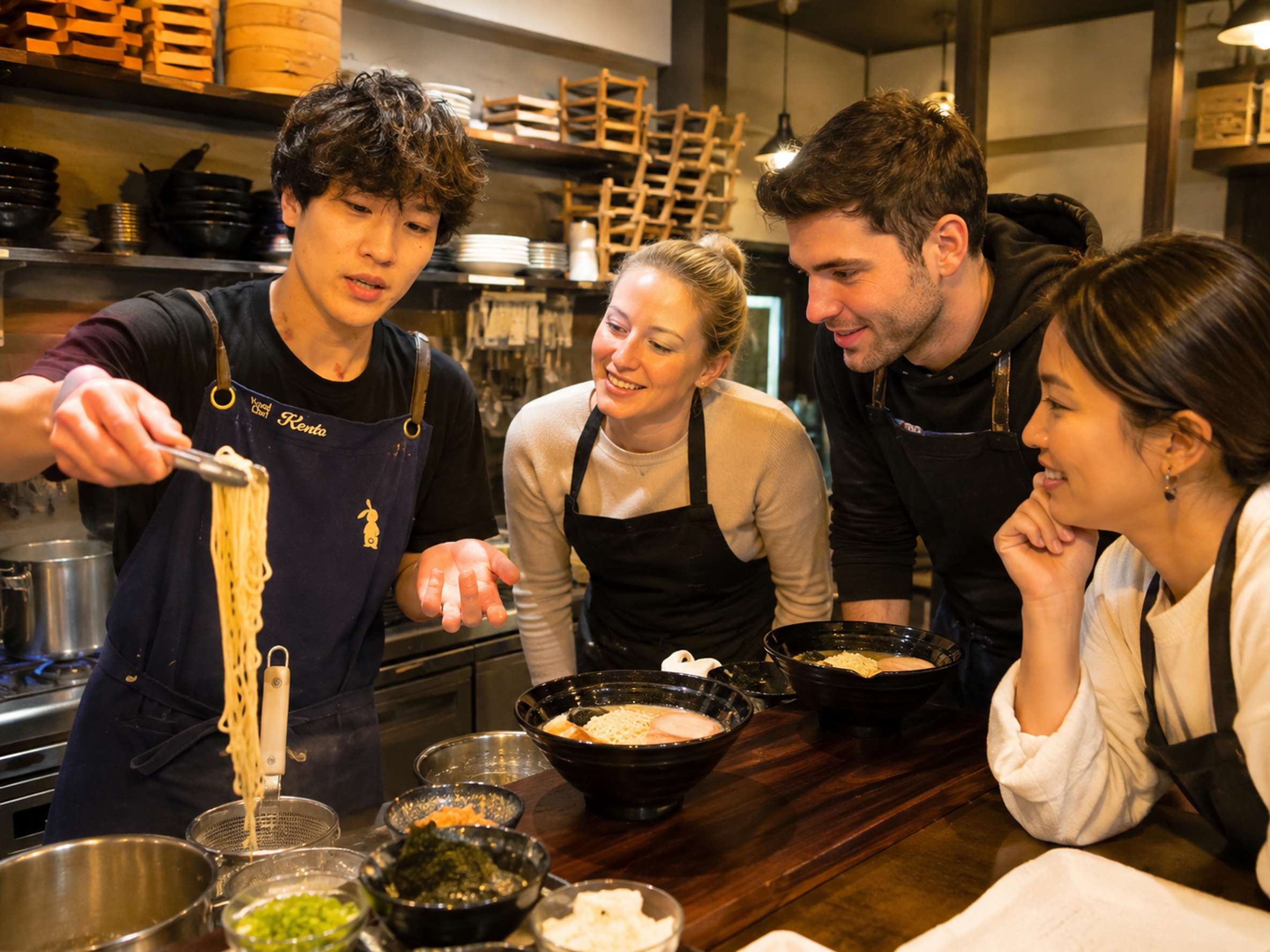
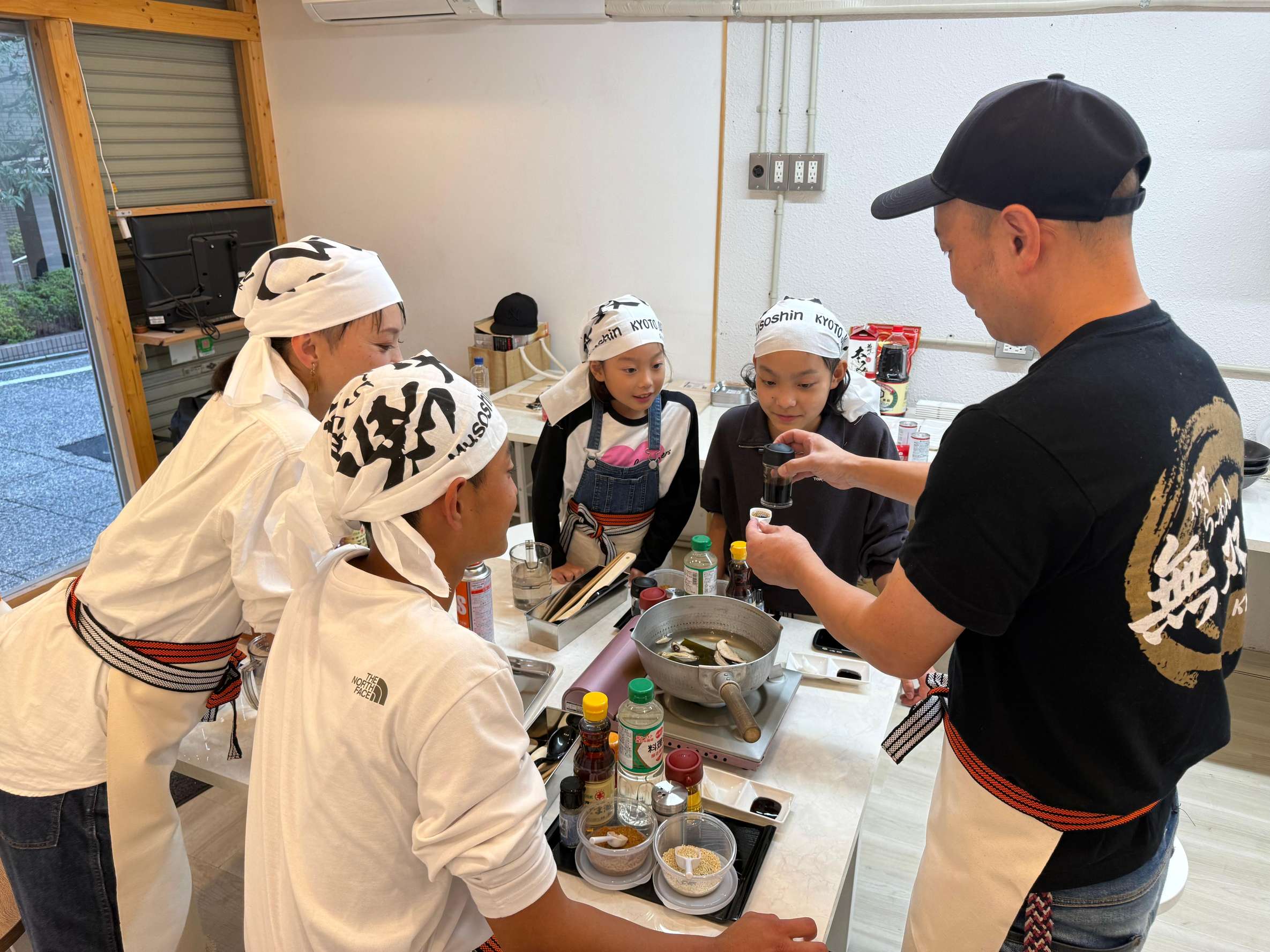
The first thing worth seeing happens before the class starts: you step into a real ramen restaurant near Nishiki Market before it opens, and for the next stretch the whole kitchen is yours. No waiting customers, just the counter, the burners and a chef who ran high-end kitchens overseas before coming back to Kyoto.
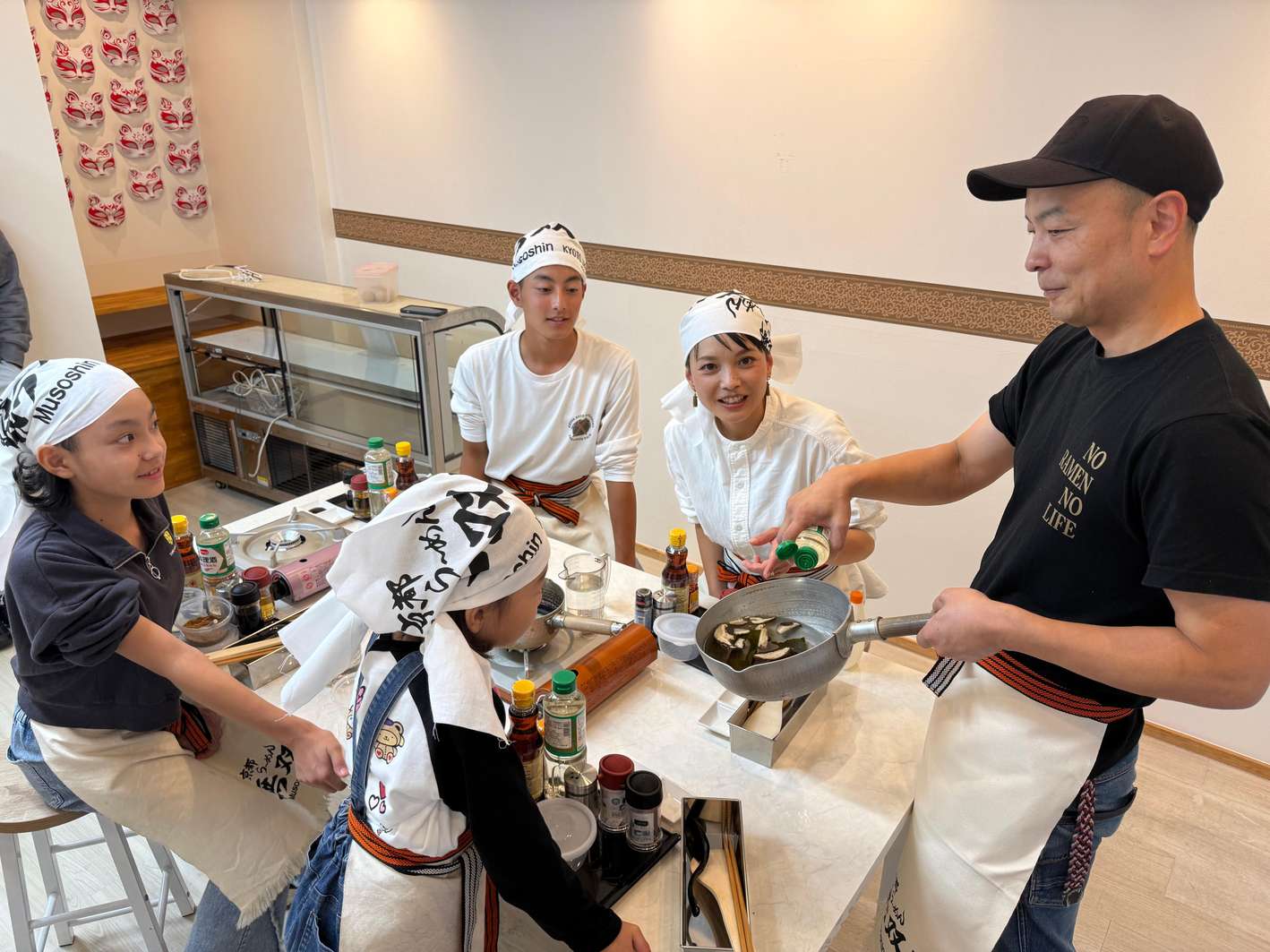
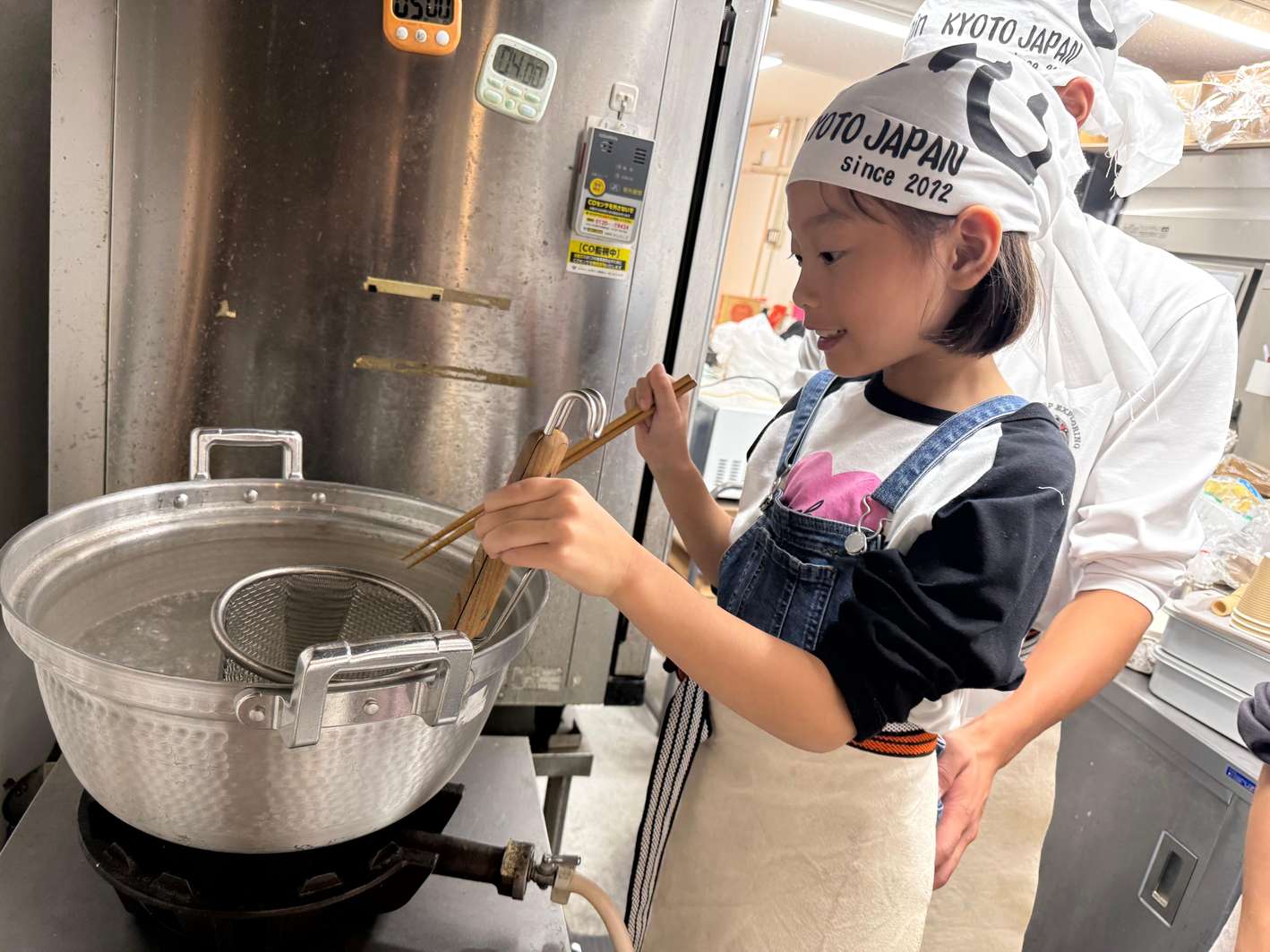
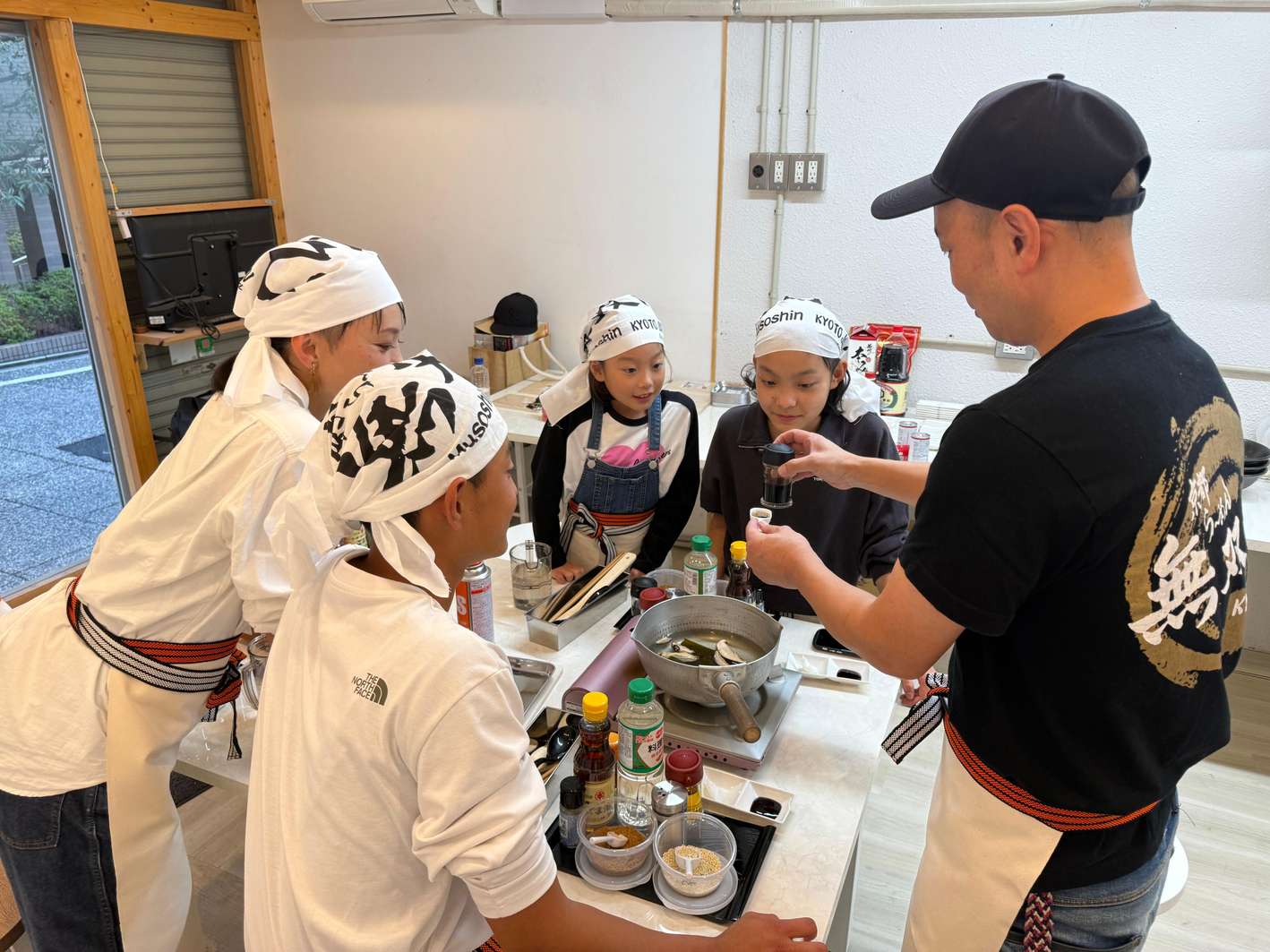
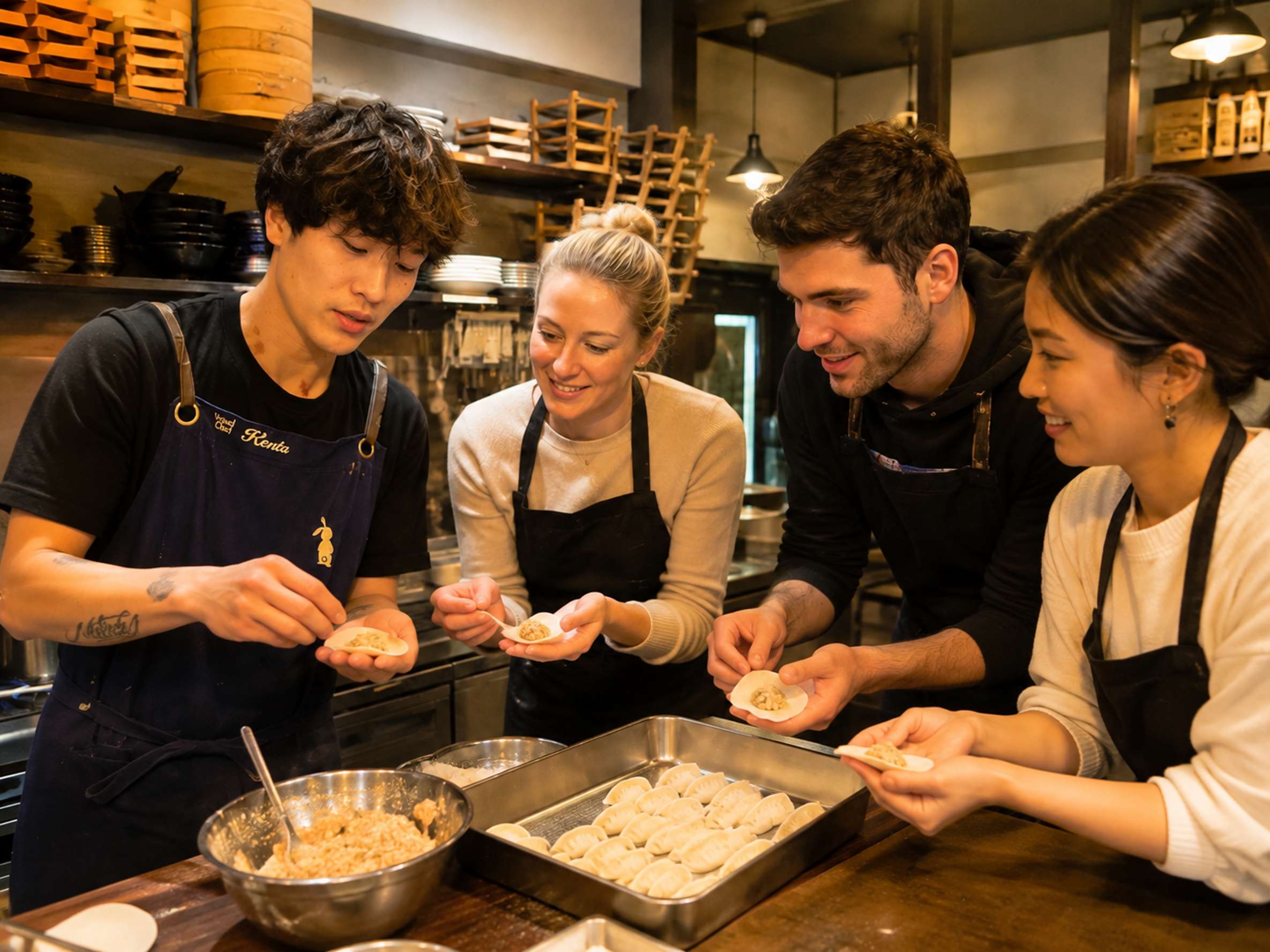
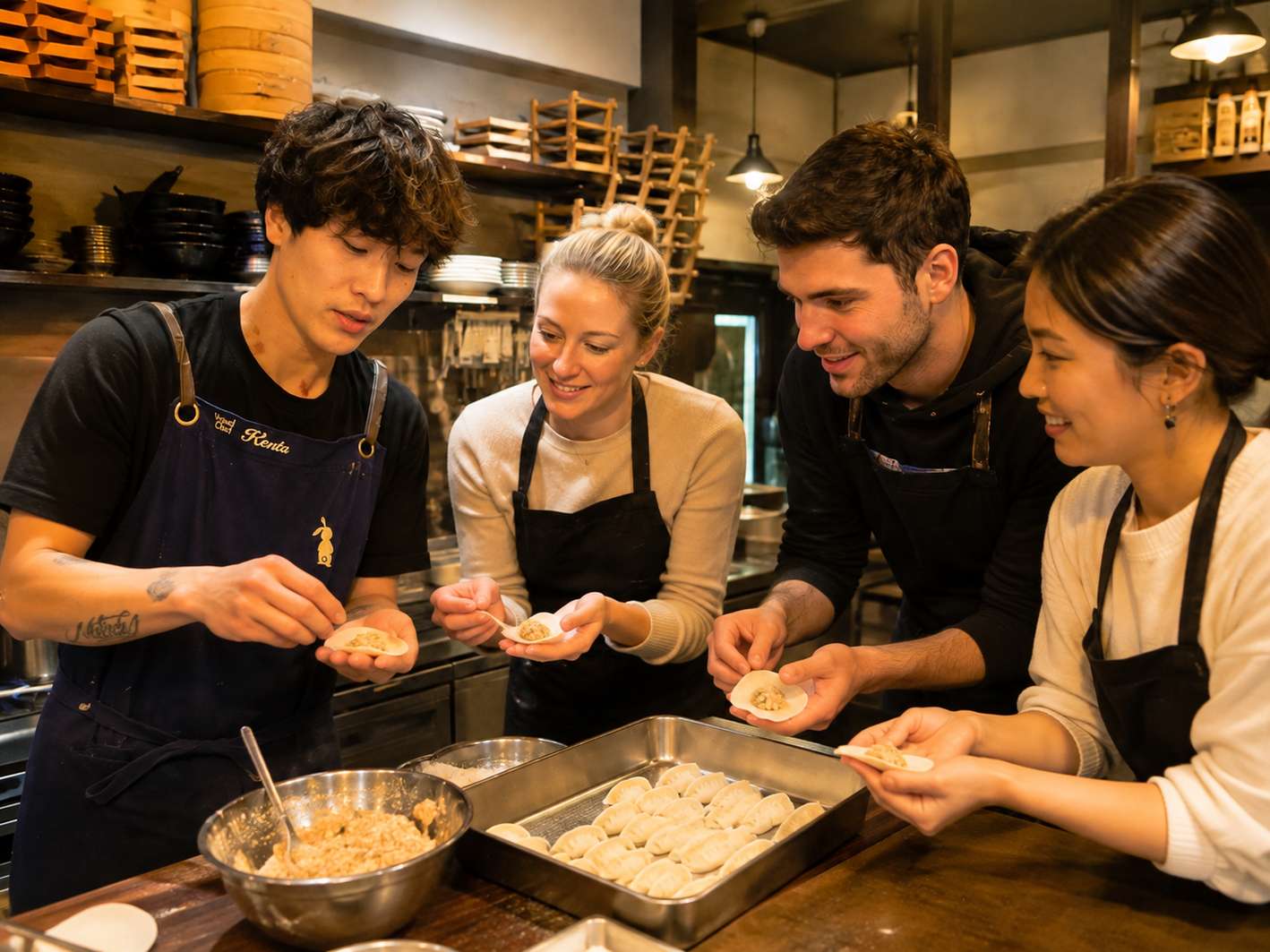
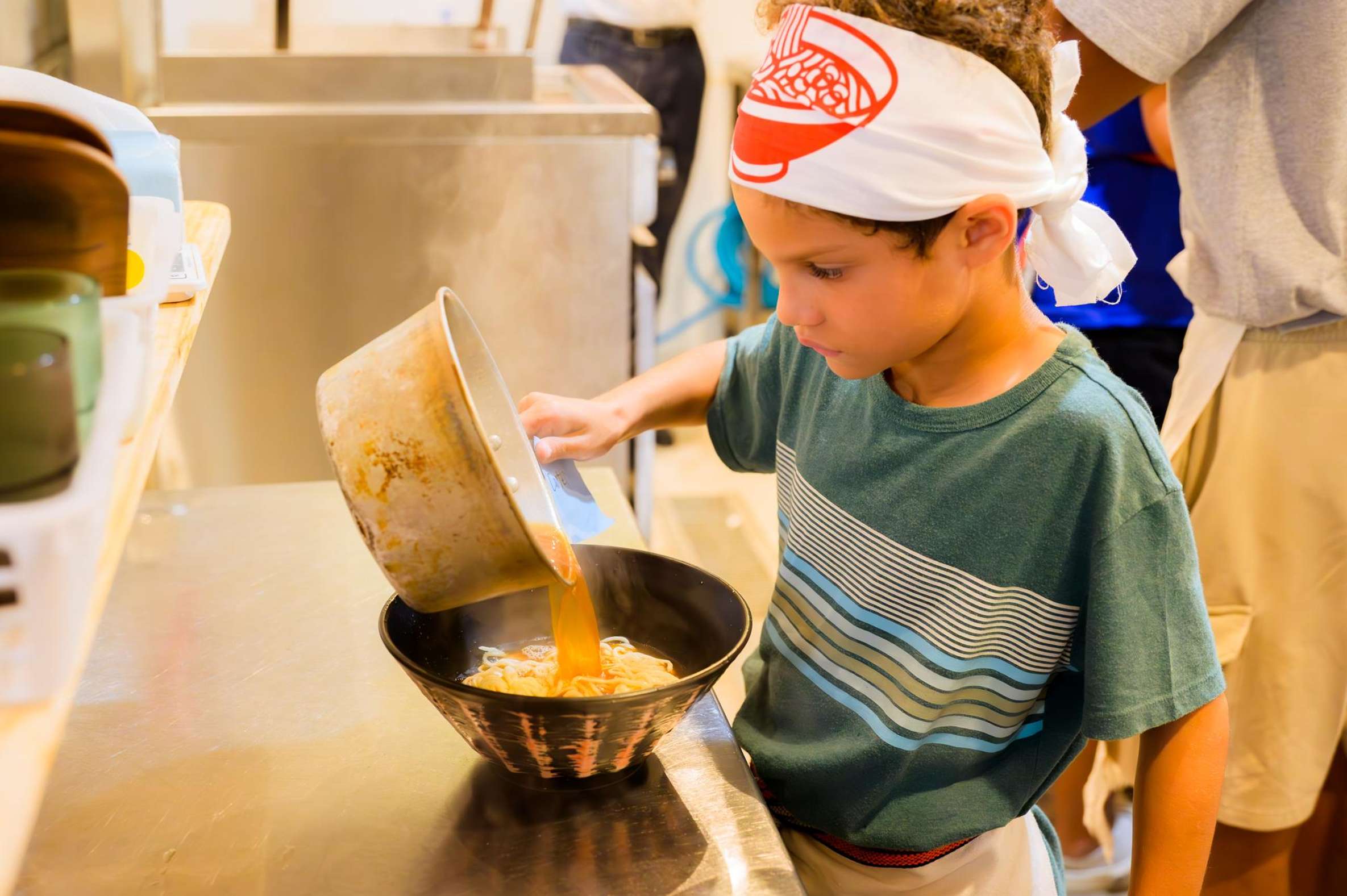
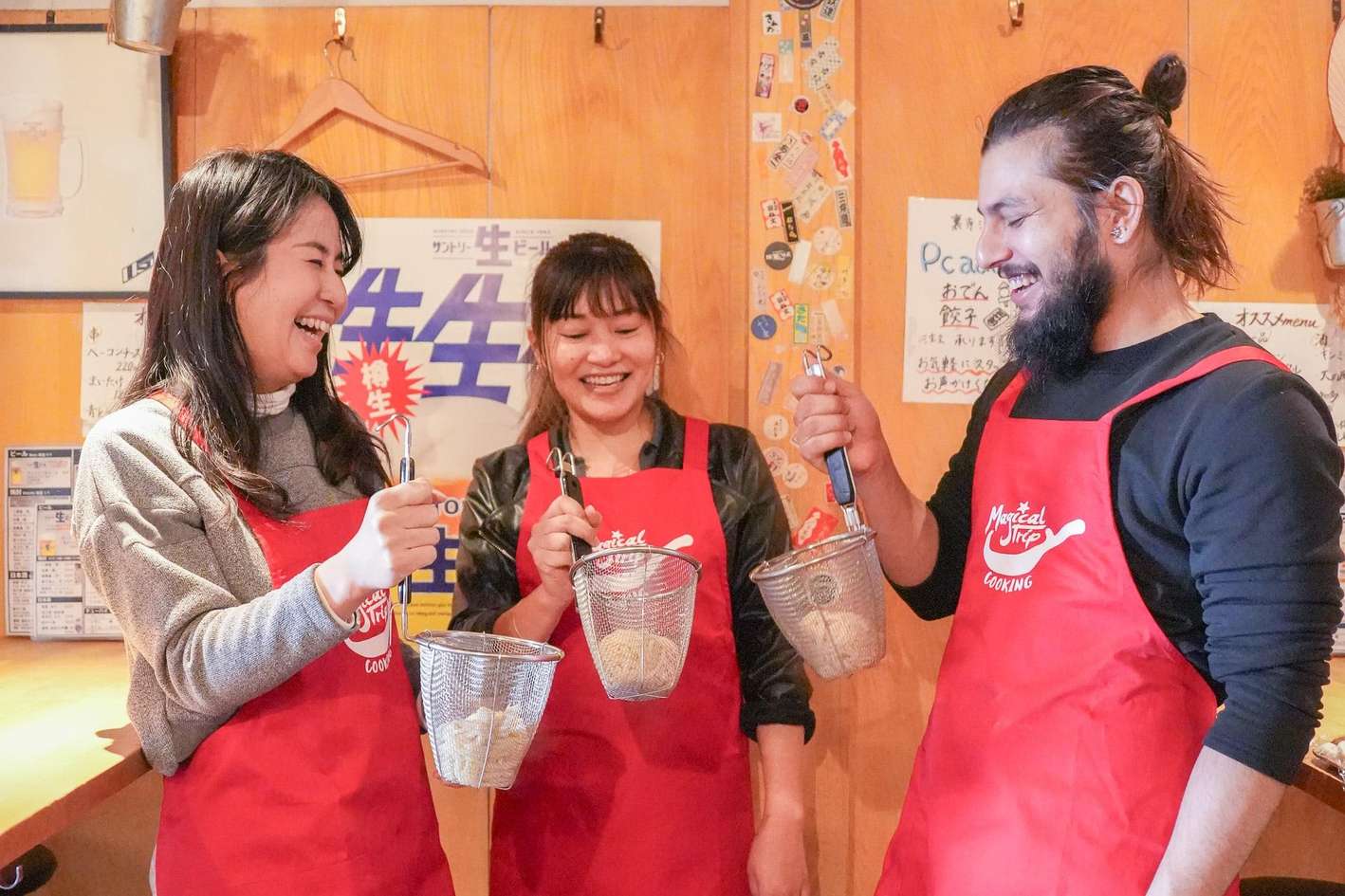
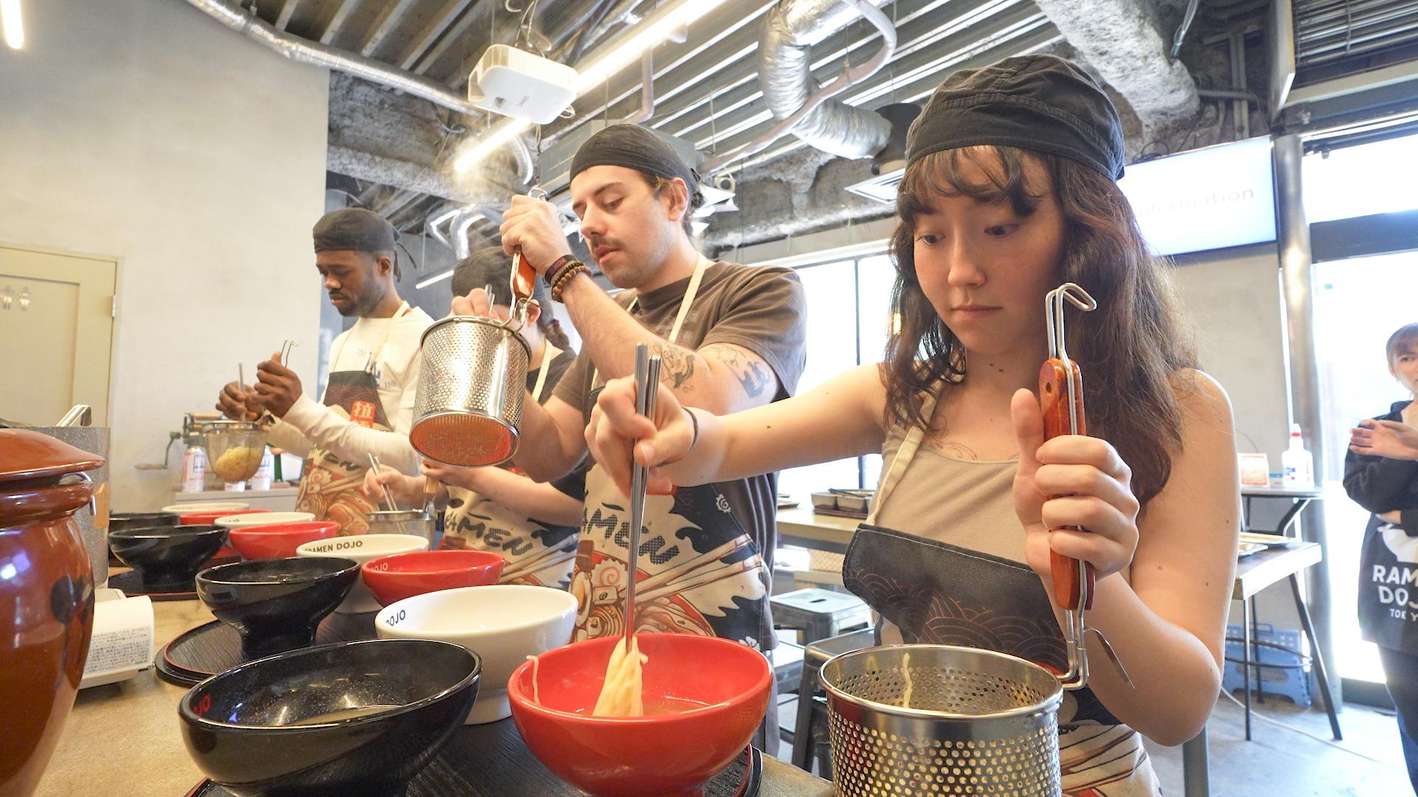
A short lecture on how ramen reached Japan sets up the cooking, then you season and finish the broth, fold six gyoza by hand and try yugiri, the sharp noodle-draining technique the pros use. A vegan version is available, but only if you say so when booking, so make that part of the reservation.
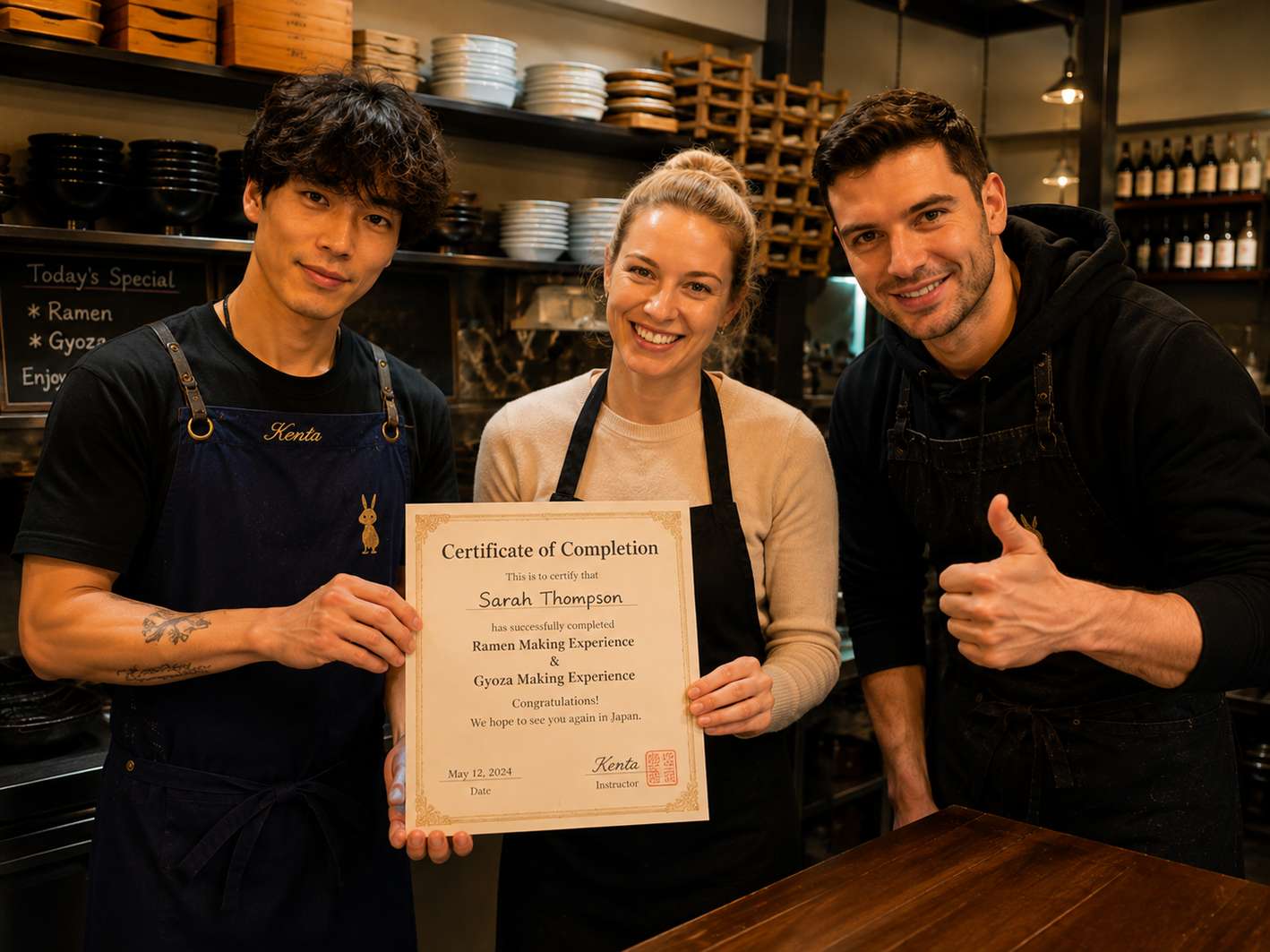
1An empty restaurant kitchen· about 10 minArrive before the Nishiki Market alley restaurant opens and get the counter and burners to yourself, with an apron ready.2How ramen came to Japan· about 15 minA short lecture traces how ramen arrived from China and split into the regional styles you see today, so you know the bowl before building it.3Seasoning the broth· about 30 minSeason and finish a rich paitan-style broth yourself; request the vegan version when booking and the ingredients are swapped accordingly.4Folding six gyoza· about 25 minFold six gyoza by hand and learn the pleating that keeps the filling sealed while the bottoms crisp.5Yugiri, the drain· about 10 minTake the strainer yourself and try yugiri, the professional noodle-draining move, before your bowl is assembled.6Eating what you made· about 30 minSit down to your own bowl of ramen and six gyoza, with soft drinks on free refill, and leave with a completion certificate.
Included
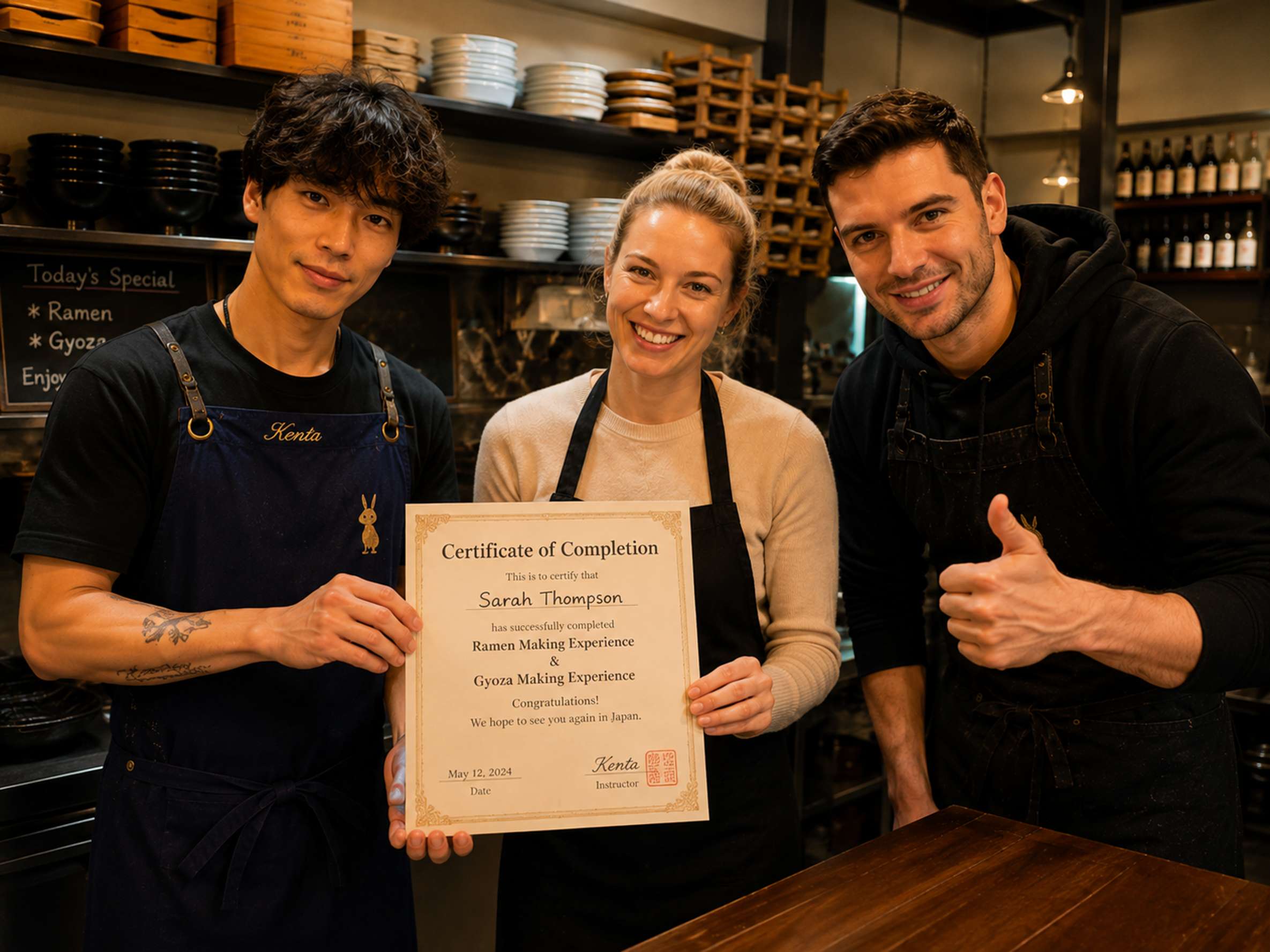
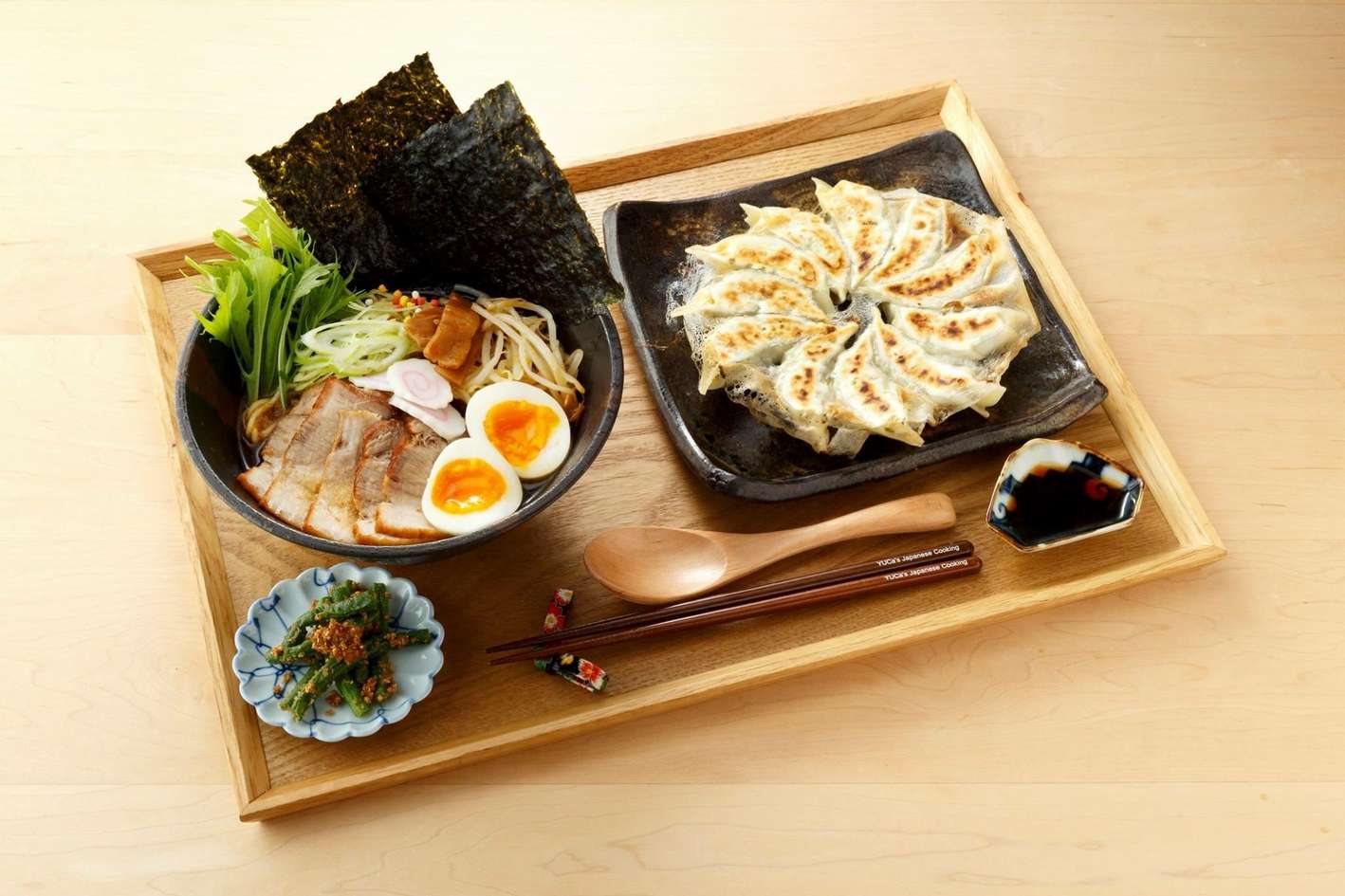
1 bowl of chicken paitan ramen (made by you)6 handmade gyozaSoft drinks with free refills during the meal1 bottle of mineral waterApron to use during the classCertificate of completion
Not included
Hotel pickup and drop-offGratuitiesAlcoholic drinksAdditional food and drinks
Vegan cooking in Kyoto - what travelers said about the ramen classes
Most reviewers name their instructor, praising teachers like Hero, Shin and Sakura for being patient, funny and clear.
Best surprise
Many travelers did not expect to leave with engraved chopsticks and a tenugui, and they loved those souvenirs.
Most common wish
A few reviewers wished drinks came with the meal, saying they would happily pay a little more up front.
How to book a vegan cooking class in Kyoto
01
Pick your class and date
Choose between the 90-minute from-scratch class, the 1.5-hour broth class in Gion and the ramen-and-gyoza workshop at a working restaurant, then pick a date. April and May fill first, then November.
RecommendedBook a few weeks ahead for spring or autumn; April draws nearly twice the usual participants
02
Choose the right option
The Gion broth class has two versions: broth with personalized chopsticks, or the same class plus painting a ramen plate that is fired overnight and ready the next day.
Common mistakeBooking the plate-painting version on your last morning in Kyoto, before you can pick the plate up
ImportantThe Gion broth class admits no children under 10
03
State your ingredients
After booking, message the operator with exactly which ingredients you exclude rather than only the word vegan, because seasonings and noodles can hide animal products. Do this the same day you book.
Pro tipThe from-scratch class swaps chicken for deep-fried tofu at no extra charge, so the vegan version is worth asking for outright
04
Check your confirmation
Free cancellation up to 24 hours ahead lets you hold a slot while plans settle. Save the operator's messages with the meeting details; the from-scratch venue is a short walk from Demachiyanagi Station, down stairs to the basement.
Common mistakeBooking and assuming the operator knows you eat plant-based, because the swap needs a message after booking
05
Turn up ready to cook
Arrive a little early with room to eat, since every class ends with the bowl you made. Wear sleeves you can roll and shoes that can take a flour spill, and leave the sandals at the hotel.
RecommendedCheck the forecast, because some Kyoto classes are canceled in unsafe weather
What to know before you book a vegan cooking class in Kyoto
Can stop the dayGood to knowGood news
01
ChoosingWhat it is, who it suits, when to go
4
Ingredients
Say what you actually leave out when you arrange the meal, and use the word vegan as well, since labels alone can mislead in Japan. Ramen broth can carry fish, noodles can contain egg even when the topping is gone, and tofu seasonings need checking too.
The meal
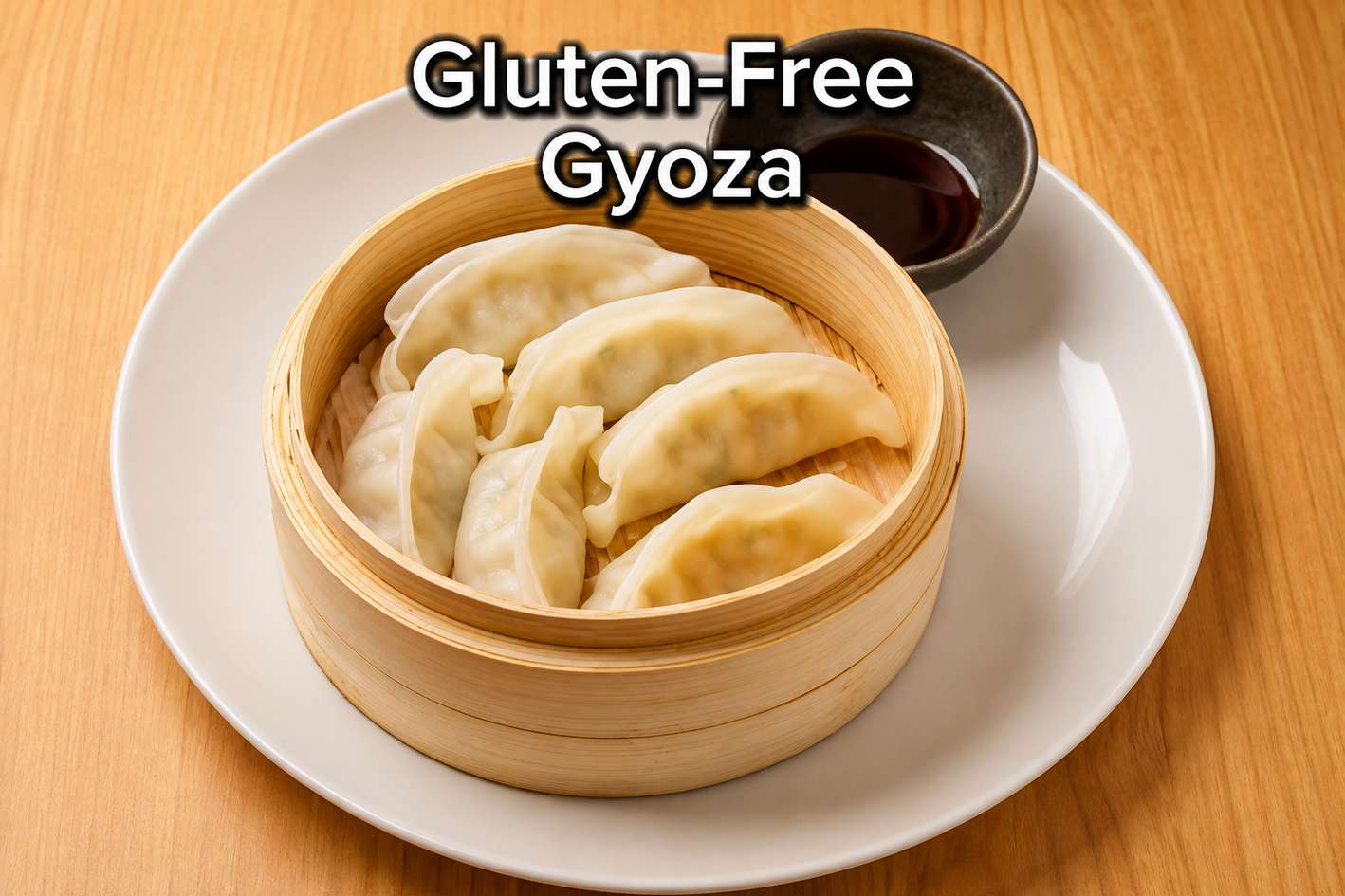
You sit down and eat what you made. The vegan versions include your own full bowl of ramen, and the vegan-and-gluten-free workshop adds six gyoza you folded yourself, with soft drinks on free refill during the meal. Come hungry; this is lunch or dinner.
Broth prep
In a 90-minute or two-hour lesson, some parts of a vegan broth arrive prepared ahead. Kombu and dried shiitake are often steeped the night before; in class you learn how layering kombu, shiitake, miso and aromatics builds depth without a long stock simmer.
Busy seasons
Kyoto's cooking classes fill earliest in April and May and again in November, when cherry blossoms or foliage swell the city. April draws nearly twice the usual participants, and March runs about a third busier too. Book your vegan version weeks ahead in those months.
02
BookingHow far ahead, and what happens if plans change
2
Booking veganCan stop the day
Every plant-based bowl on this page has to be arranged in advance. The from-scratch class and the vegan-and-gluten-free workshop both swap ingredients only for guests who request the version at booking, so message the host as soon as you reserve.
Cancellation
All three Kyoto workshops let you cancel up to 24 hours ahead for a full refund. That makes it easy to hold a place while you settle the rest of your Kyoto days, and to move the class if your plans shift.
03
Before you goPapers, health, what to bring
2
What to wear
Wear closed-toe shoes; sandals are not welcome near boiling water and hot pans. Roll your sleeves up, tie back long hair, and choose clothes that survive a splash of broth. Aprons are provided, so you can leave your best jacket at the hotel.
AllergiesCan stop the day
These kitchens handle wheat, egg and soy side by side with your bowl. The vegan-and-gluten-free class can adapt for gluten, but a shared Kyoto kitchen cannot guarantee an allergy-free meal, so if your allergy is severe, confirm it with the host before you book.
04
On the dayWhere to be, when, and how you get there
1
Getting there
For the from-scratch class near Demachiyanagi, take the Keihan line from Gion-Shijo, or JR to Tofukuji and change, then walk three to five minutes. Trains beat Kyoto buses at rush hour, and one host starts on time and turns away late arrivals.
Vegan ramen cooking class in Kyoto - A Guide for plant-based travelers
Three Kyoto workshops take vegan guests, swap the ingredients and let you eat the bowl you made. What is left is choosing between them, and asking for the vegan version at the right moment.
Kyoto
If you only remember three things
1
Ask for the vegan version when you book, and name the ingredients you avoid.
2
Book early for April, when Kyoto cooking-class demand nearly doubles.
3
Reach the Demachiyanagi class by train; the class starts on time.
Is a vegan cooking class in Kyoto a real ramen experience?
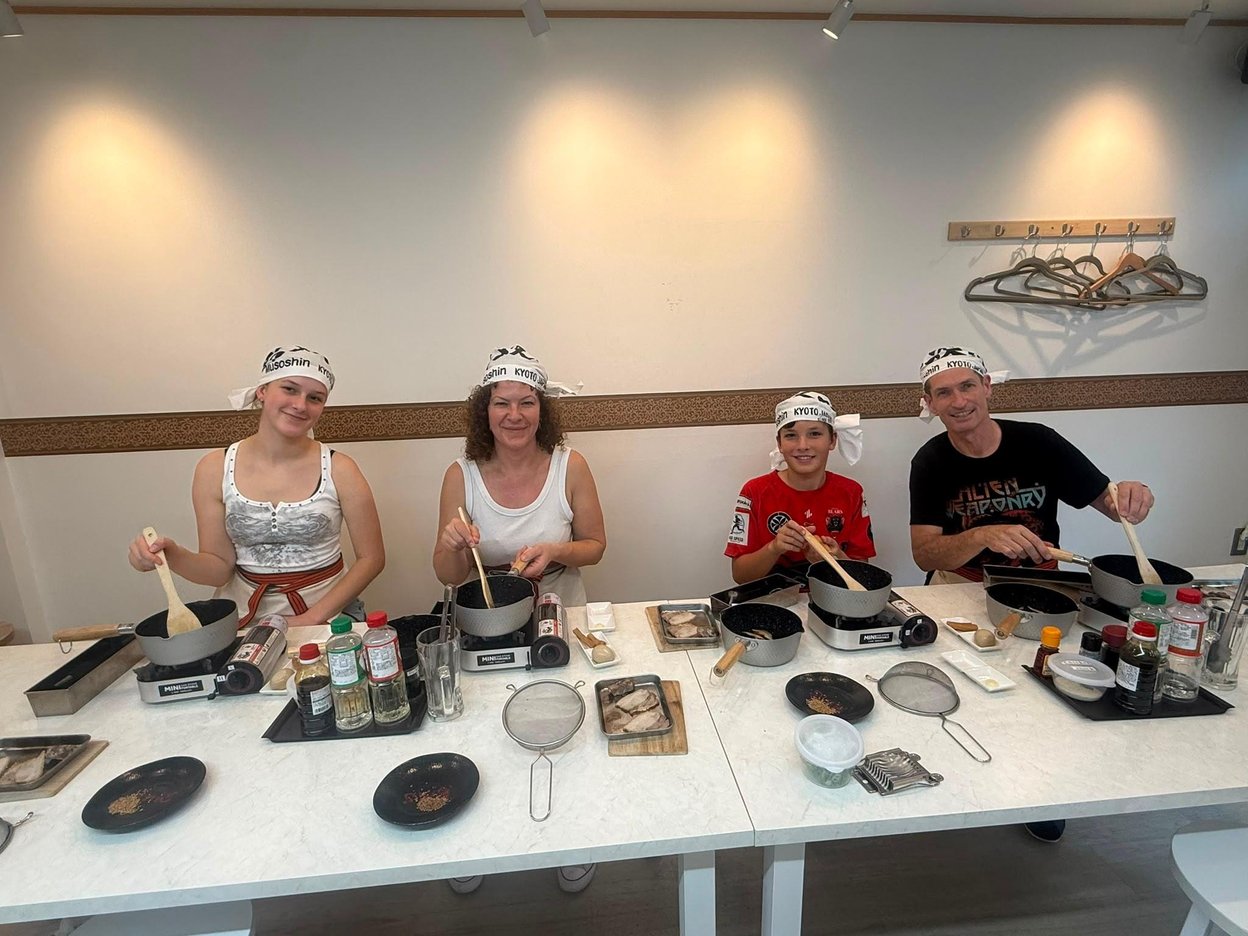
A short alley off Nishiki Market, a ramen restaurant still closed to customers, and the burners already lit for the morning class: this is where one Kyoto session begins, and nobody is turned away from the meal.
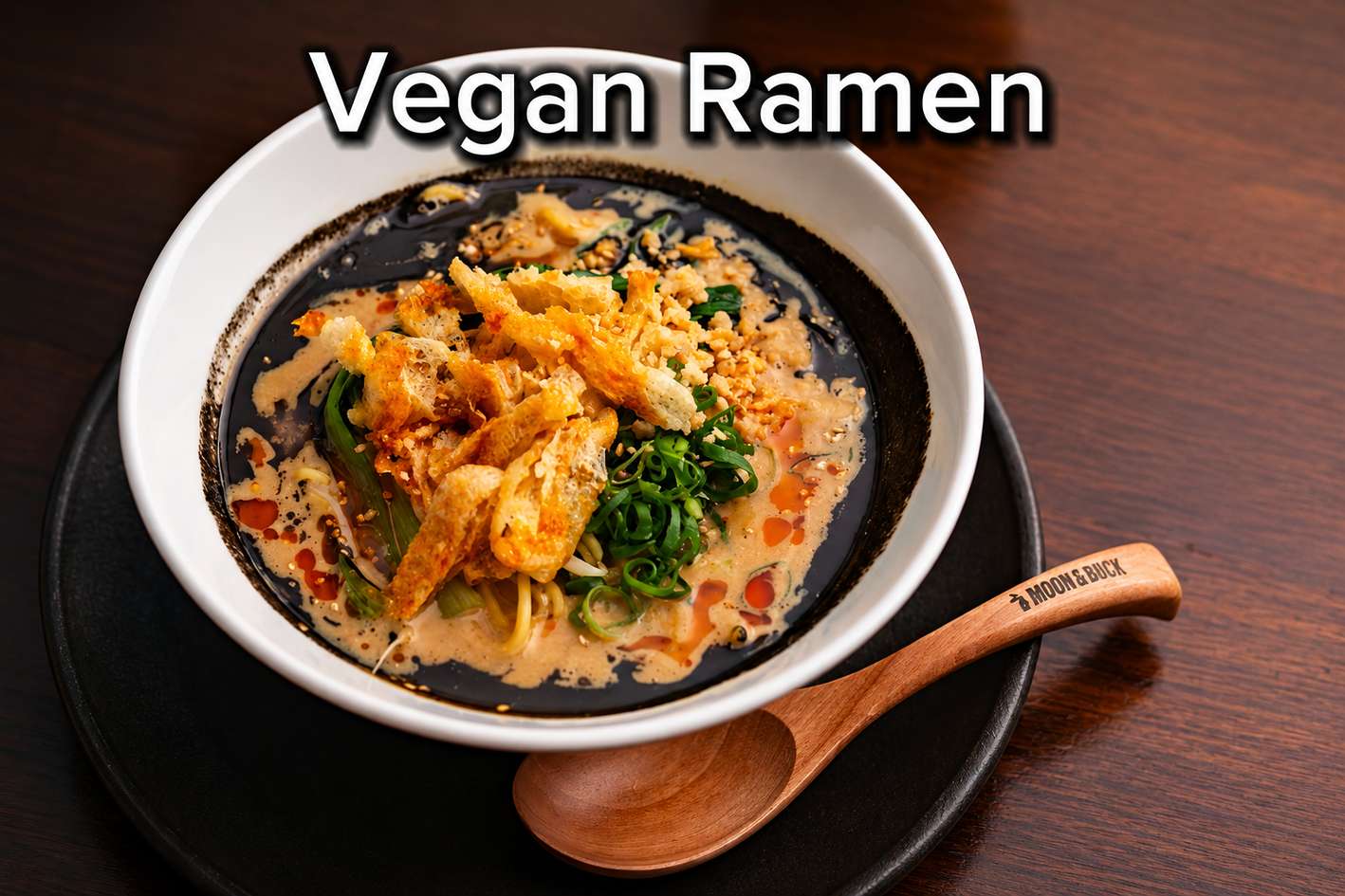
The first worry for a plant-based traveler is that the class hands them side dishes while everyone else eats ramen. It does not. Three Kyoto workshops swap the ingredients so you can stay: you cook your own bowl and you sit down and eat it.
That matters more than it sounds. Eating at a vegan ramen restaurant is a fine evening out. Cooking the bowl yourself, with a chef explaining how the broth is built, is the part that follows you home.
Travelers who do these classes come away with recipes they actually use after the trip, which no restaurant meal gives you.
The beliefs that stop people booking, though, are mostly wrong.
What vegan travelers believe about Kyoto classes
MythBeing vegan means watching others cook
Reality
The vegan version is a full bowl you make and eat yourself
MythYou have to leave the class hungry
Reality
The ramen counts as lunch or dinner, and gyoza come with it
MythA hands-on class is off the menu on a plant-based diet
Reality
Three Kyoto workshops arrange vegan versions, each on request
So the question is never whether a vegan class exists in Kyoto. It is which of the three fits your day, and what each one asks you to arrange in advance.
Tour for this
Kyoto Ramen & Gyoza Class with Vegan and Gluten-Free Options5.0★ (6) · Free cancellation
Three kitchens in Kyoto will cook a vegan ramen with you, and they are not interchangeable.
One class runs inside a working restaurant near Nishiki Market before the doors open: you season a rich broth, fold six gyoza by hand and try the professional noodle-draining technique, and the vegan version is arranged when you tell the operator at booking.
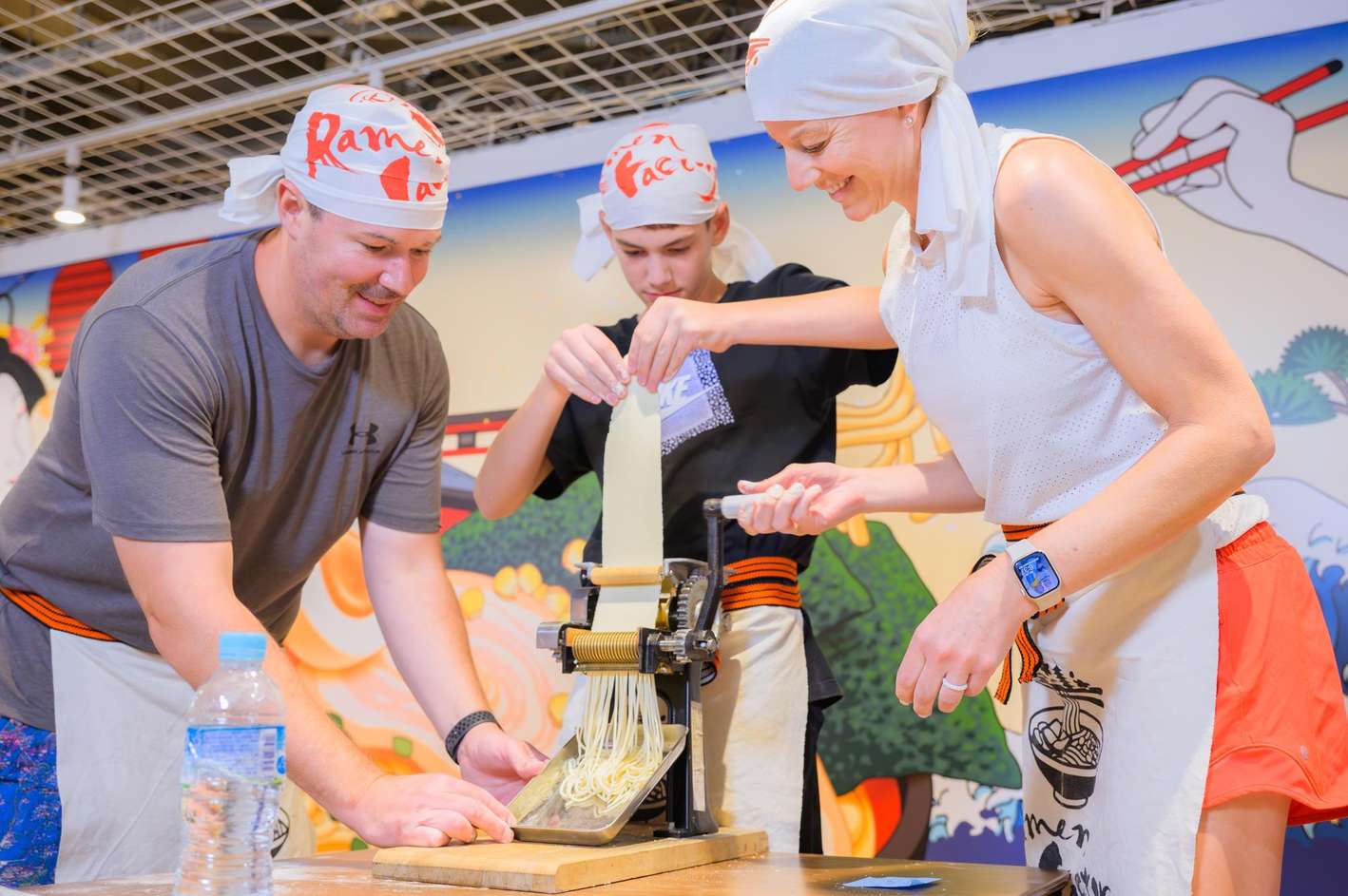
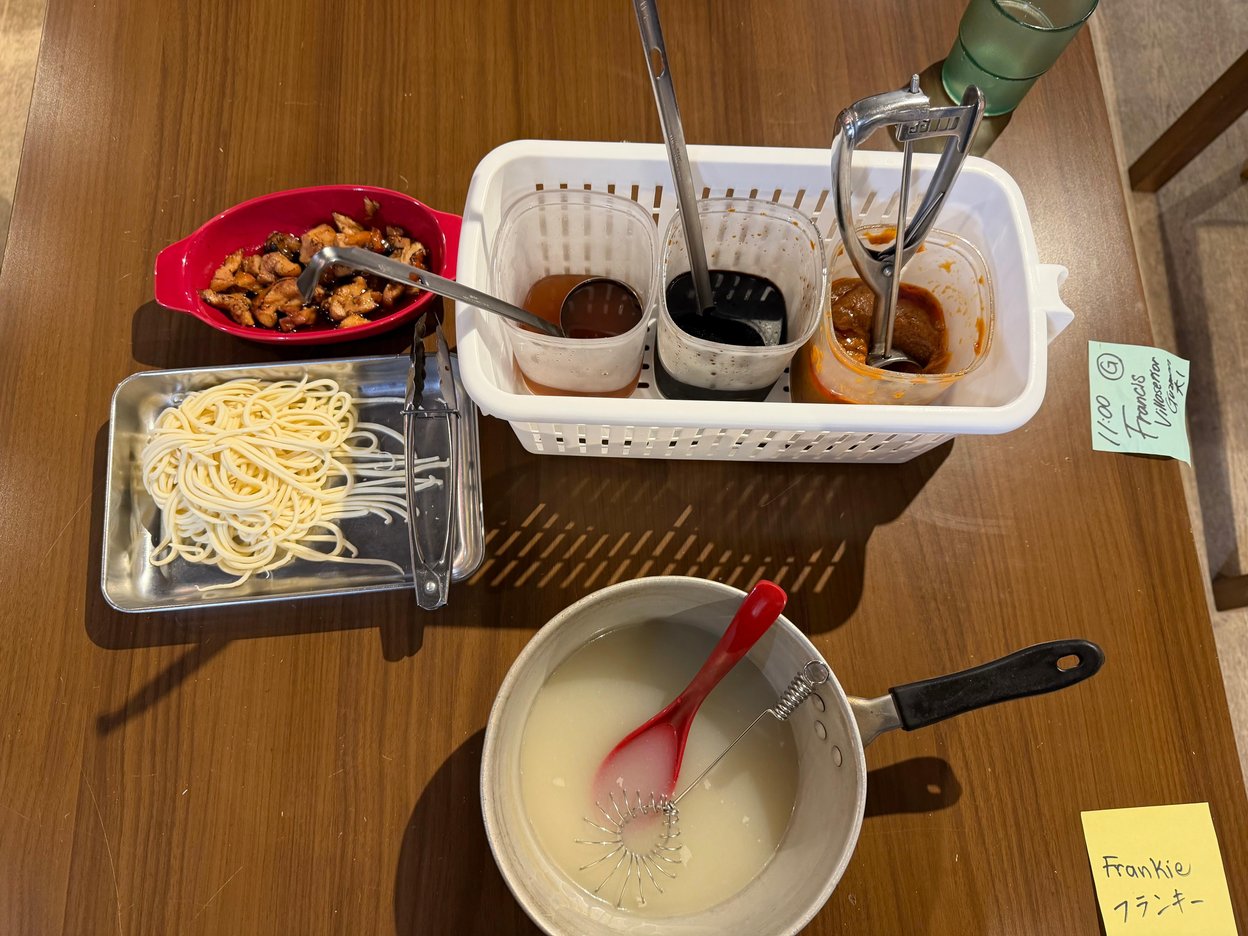
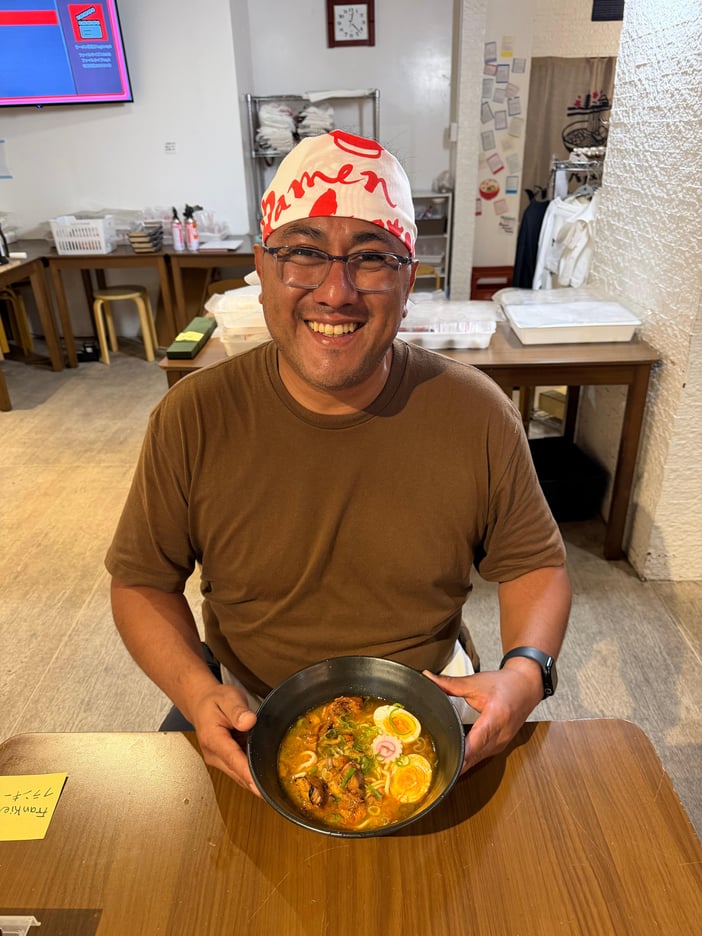
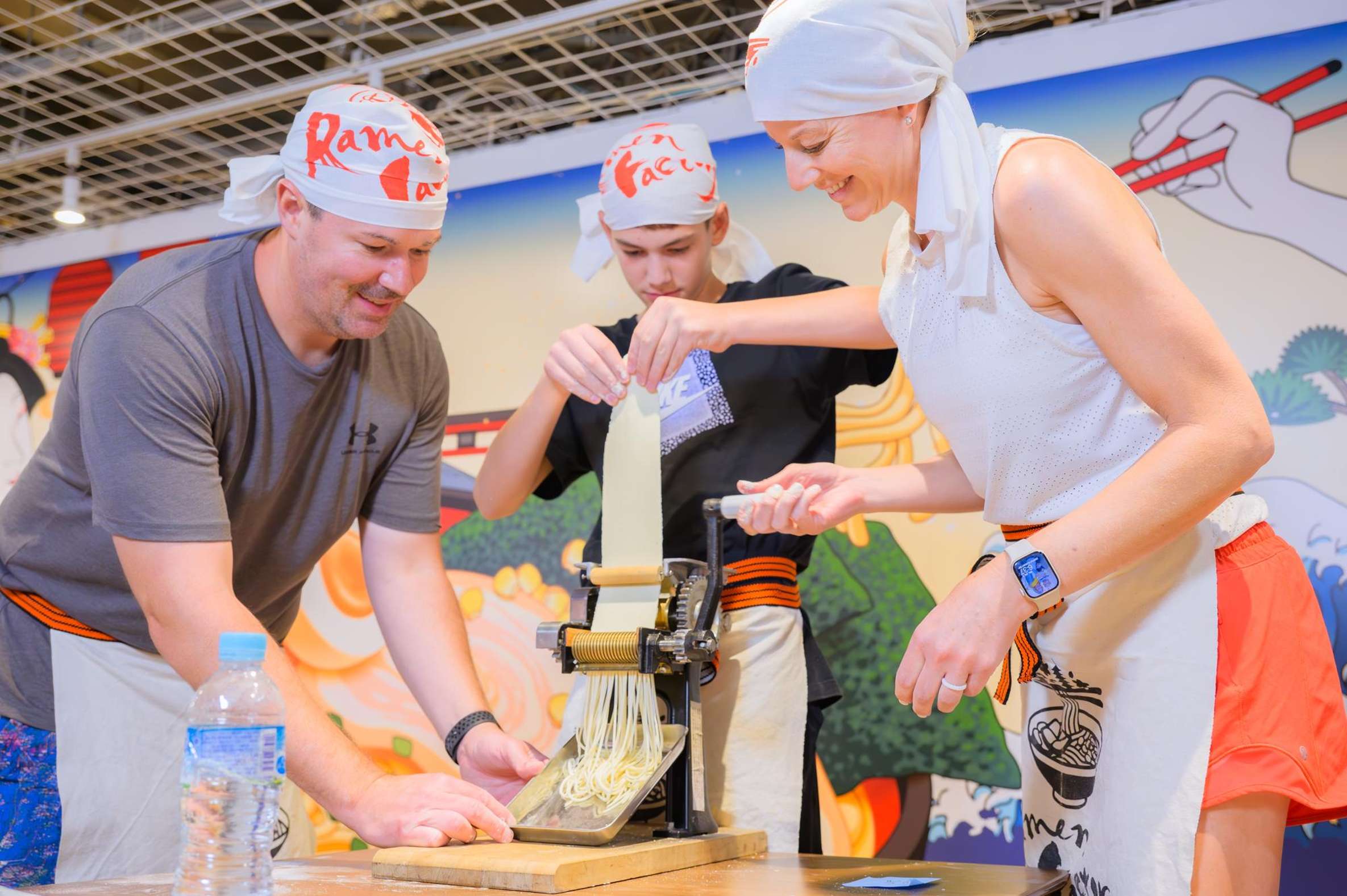
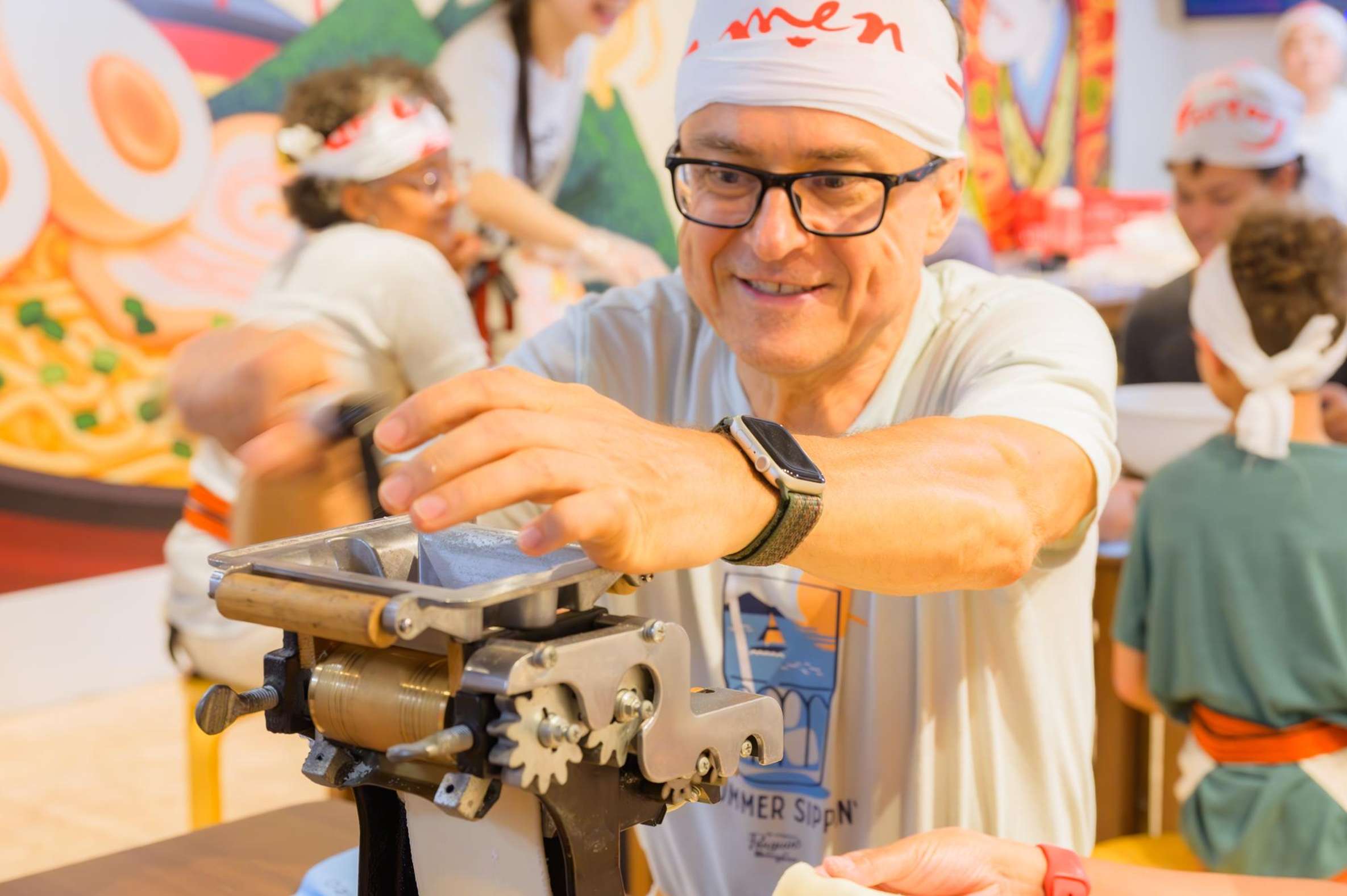
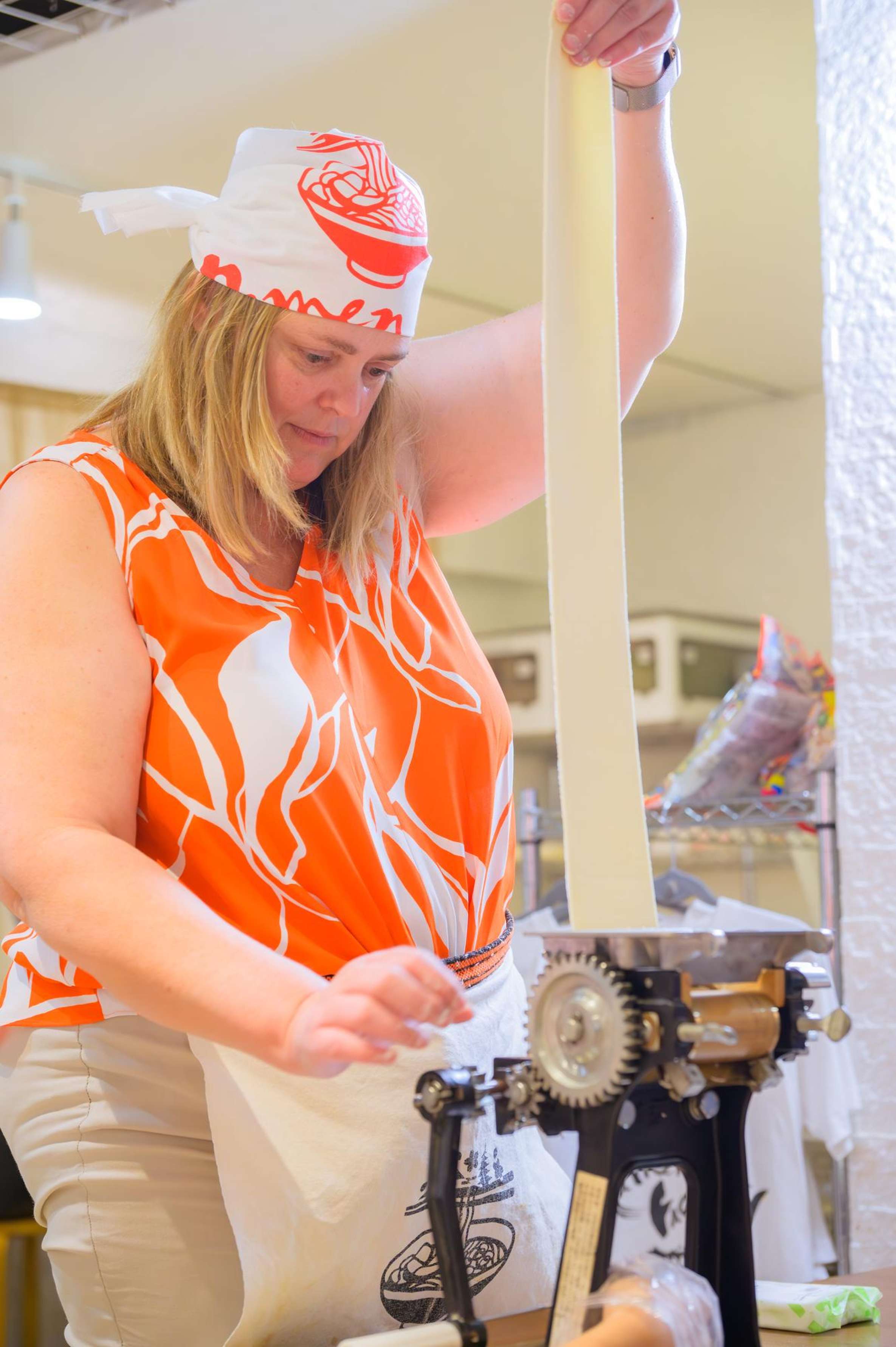
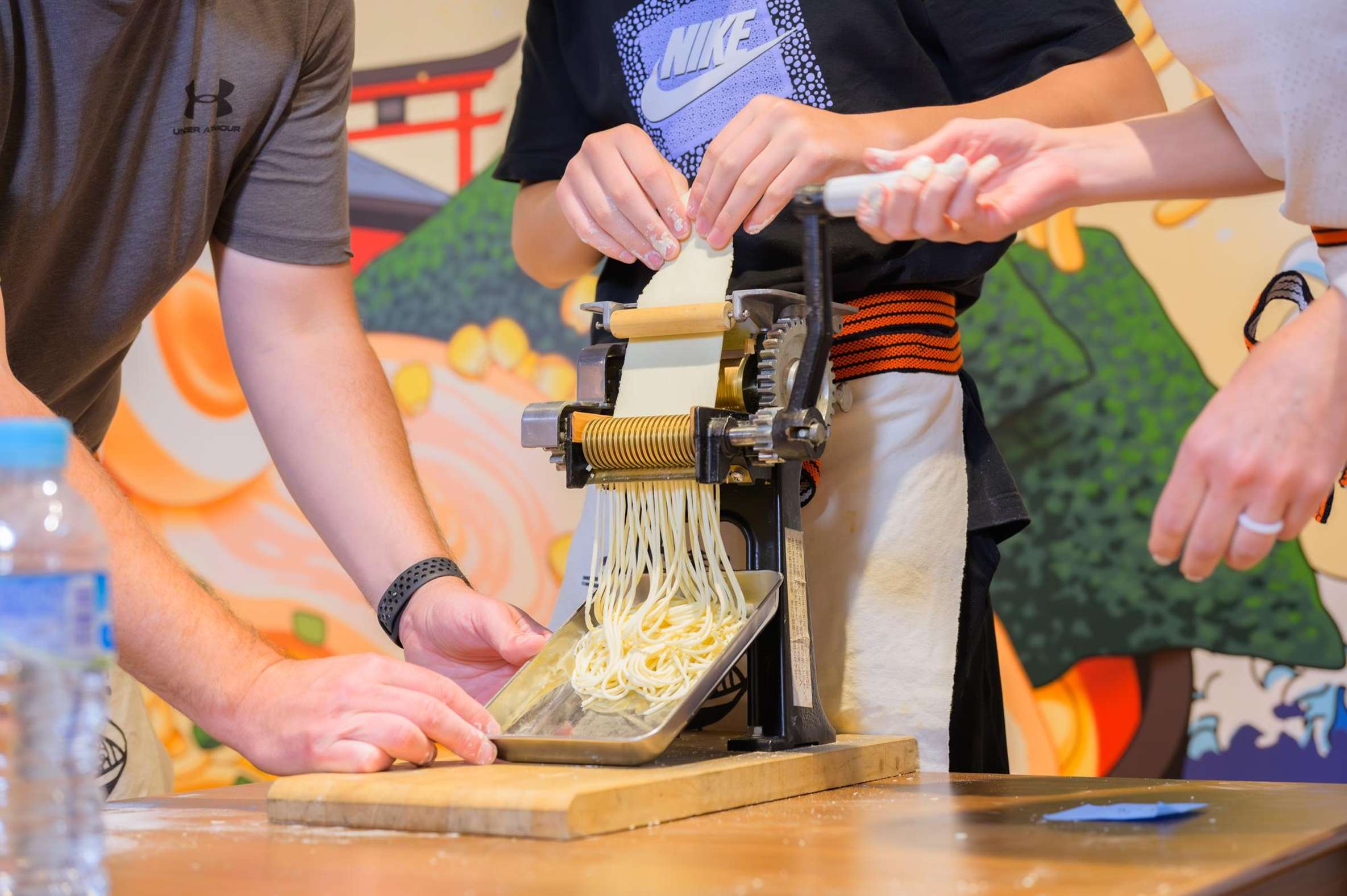
A second, the Make Ramen from Scratch class, kneads dough through a noodle machine and builds a full bowl from soup base to toppings, with a vegan version at no extra charge once you message the supplier after booking.
The third is a broth class in Gion, where the lesson is a recipe you can repeat at home and the souvenir is chopsticks with your name on them.
Whichever you pick, the rule is the same: state the vegan version when you book, in plain words about ingredients.
How to choose a vegan ramen cooking class in Kyoto
Check
Why it matters
Our pick
Ramen & Gyoza Class with Vegan Options
Make Ramen from Scratch & Eat Your Own Bowl
Ramen Broth Class with Custom Chopsticks
Setting
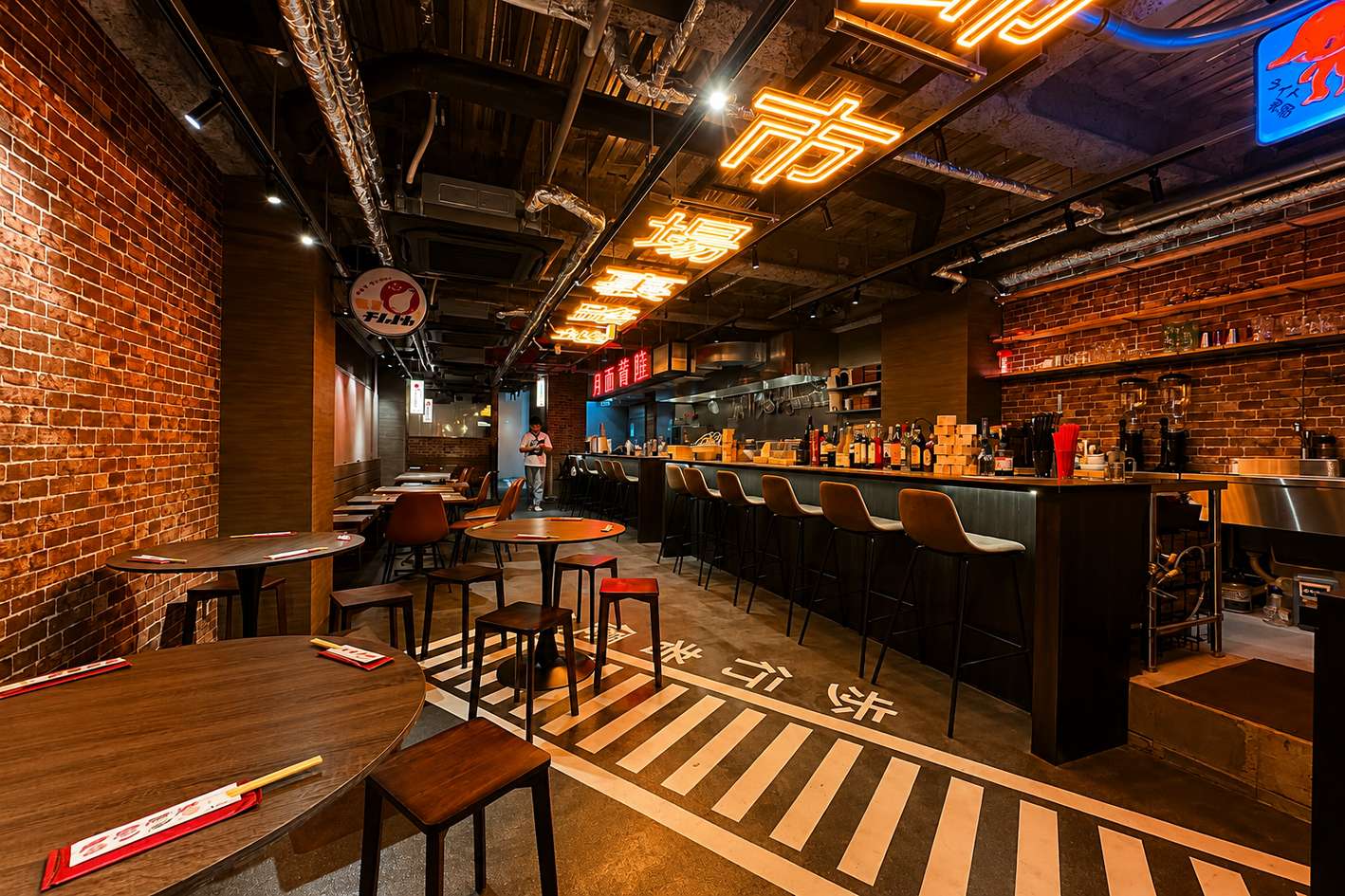
A working restaurant kitchen before opening
A classroom with a noodle machine
What you make
Broth and 6 gyoza folded by hand
Noodles, soup base, toppings, a full bowl
How long
Morning, before the restaurant opens
1.5 hours
Souvenir
Certificate of completion
Bandana to keep, recipe photo
Vegan arrangement
Requested when booking
Requested after booking, no extra charge
The comparison comes down to what you want from the bowl. If eating your own cooking is the point, the first two cover it. If the recipe matters most, the Gion class is built for that.
Tour for this
Kyoto: Make Ramen from Scratch & Eat Your Own Bowl4.9★ (645) · 1.5 hours · Free cancellation
Vegan cooking in Kyoto - what hides in broth and noodles
Ramen in Japan plays a quiet game with plant-based eaters. The noodles can contain egg even when nothing on the menu calls them egg noodles. The broth can carry fish ingredients that never show at the surface.
Tofu and cooked vegetables can be seasoned with something animal, and the word vegan on a description guarantees none of it away. In a Kyoto kitchen, no visible meat or fish settles nothing.
Every Kyoto class on this page therefore asks for something better than the label. Tell them your actual ingredient exclusions, in a plain list: egg, fish stock, dashi, honey, whatever applies. A kitchen can only swap what it knows about.
The same habit protects the rest of your Kyoto days. For meals around your class, plan with HappyCow, and give fully vegan restaurants priority over mixed menus, which rarely strip out every animal ingredient.
What nobody tells you
Broth hides fish ingredients beneath the surface
Ask about the stock before anything else
Noodles can contain egg without being called egg noodles
Ask whether the dough itself contains egg
Seasonings on tofu and vegetables need checking
A seemingly vegetable dish is not automatically plant-based
Mixed menus rarely remove every animal ingredient
Fully vegan restaurants are the safe choice around your class
Reading the table once changes how you order in Japan for the rest of the trip, well beyond your class.
Tour for this
Ramen Broth Class by Michelin Guide Shop & Custom Chopsticks5.0★ (31) · 1.5 hours · Free cancellation
What you make and eat in a vegan ramen cooking class in Kyoto
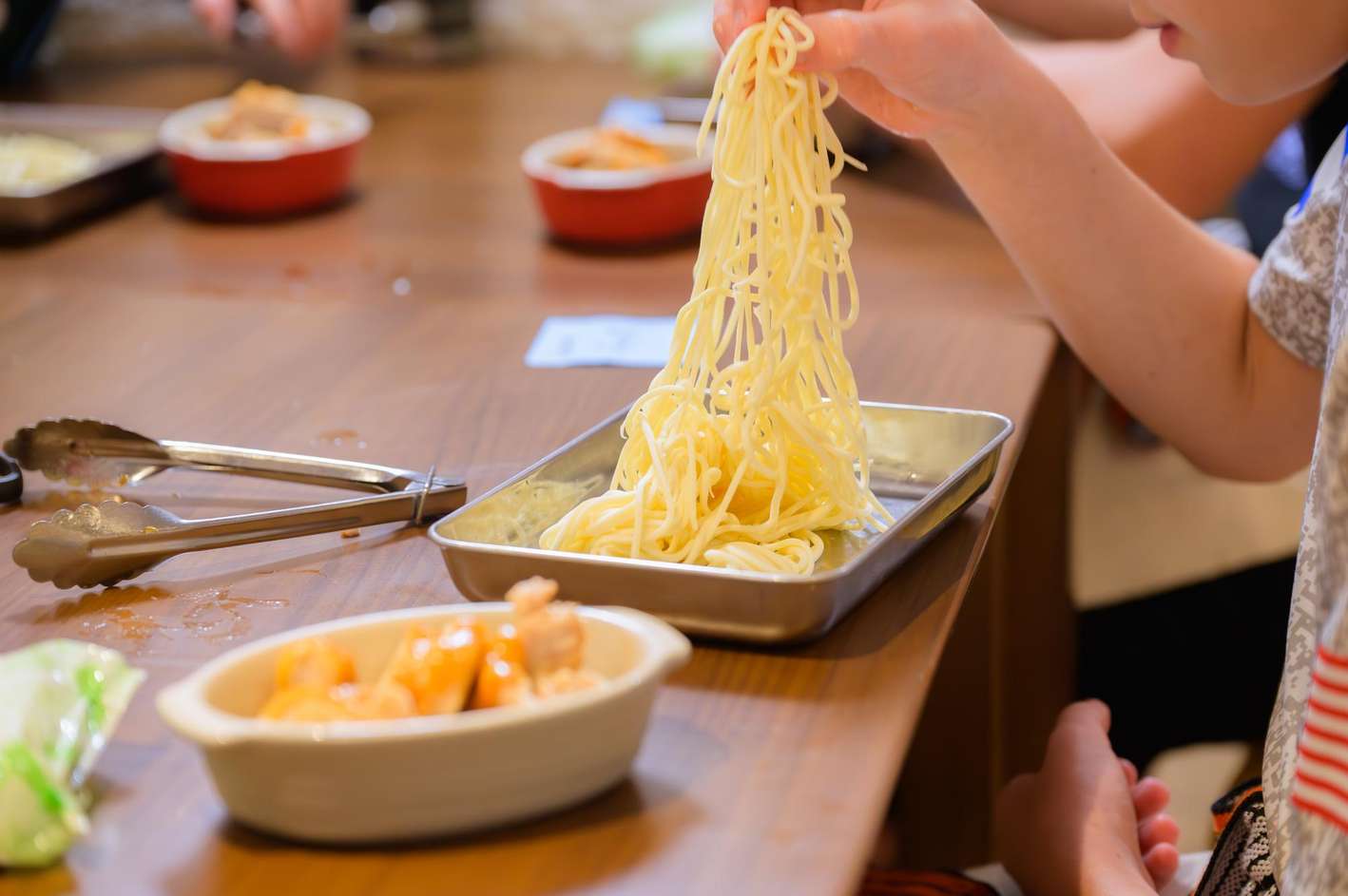
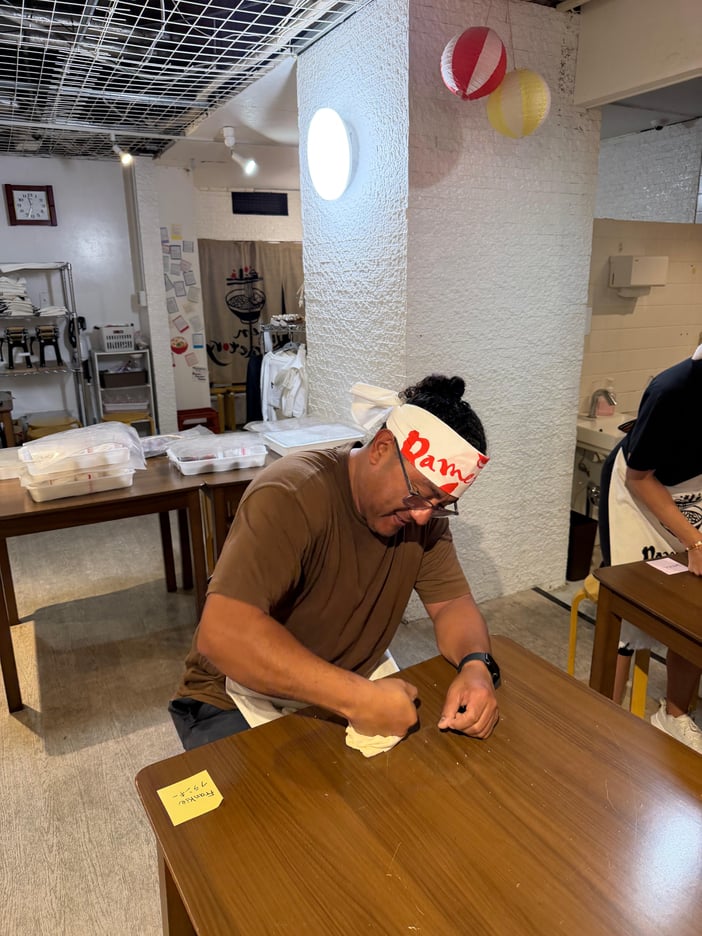
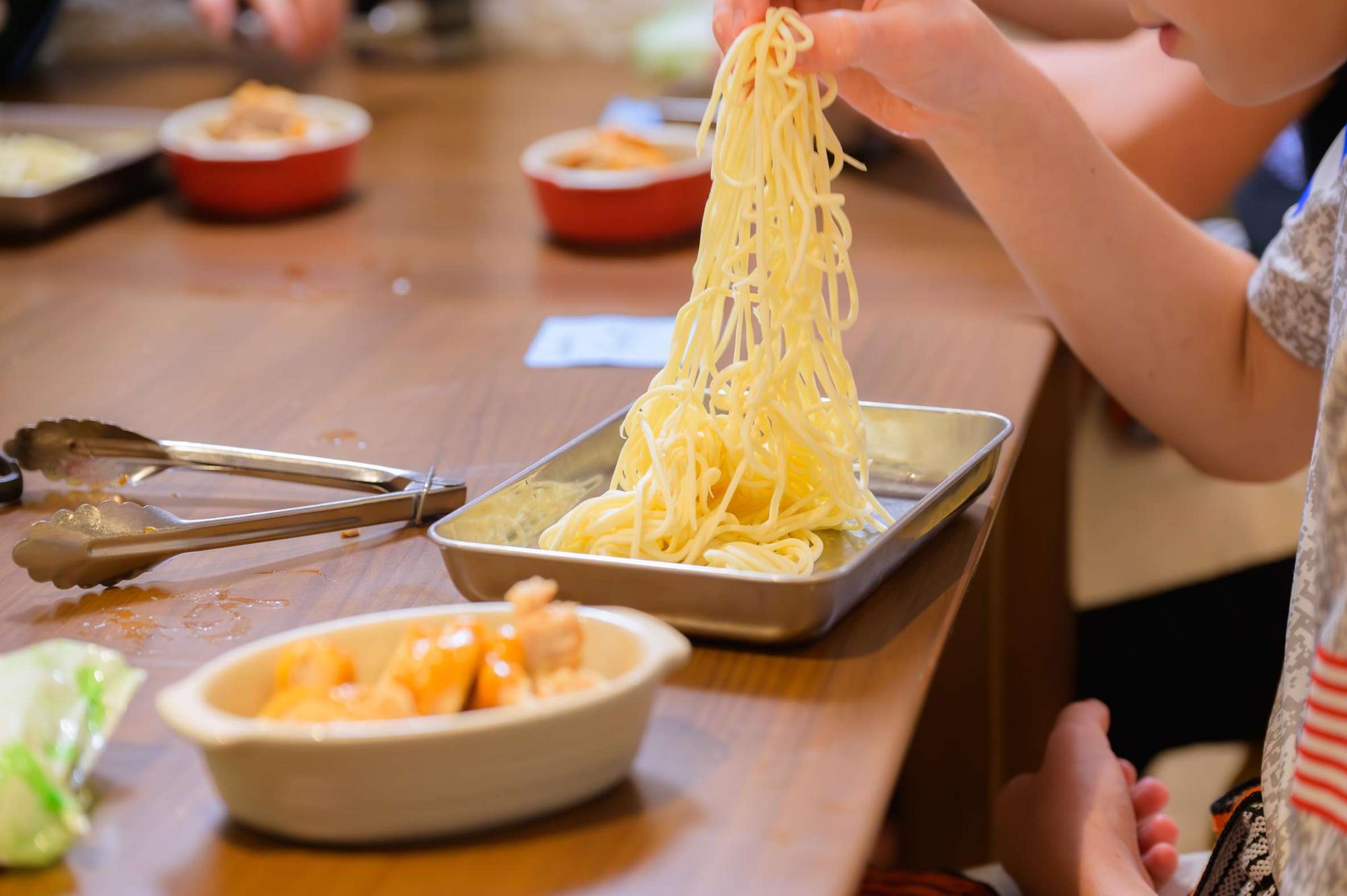
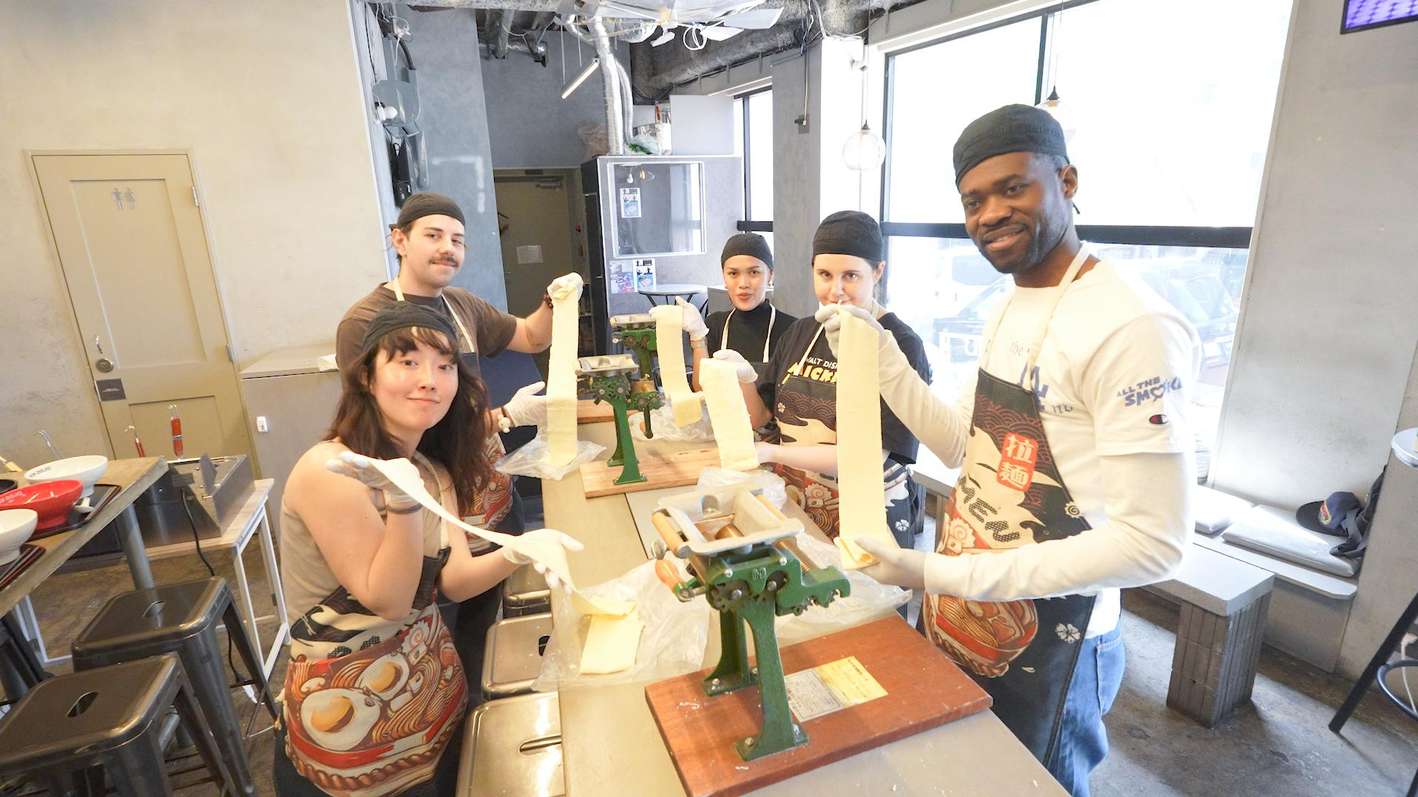
Aprons on, the counter to yourself, and a short history of how ramen reached Japan before any cooking starts. Then the work. In the from-scratch class the dough takes more than a hundred folds by hand before the machine rolls and cuts it; most guests lose count around thirty.
A two-hour class teaches broth and gyoza filling and wrapping but leaves the noodles alone, so check which parts your session really makes from scratch before you expect the whole bowl from raw flour.
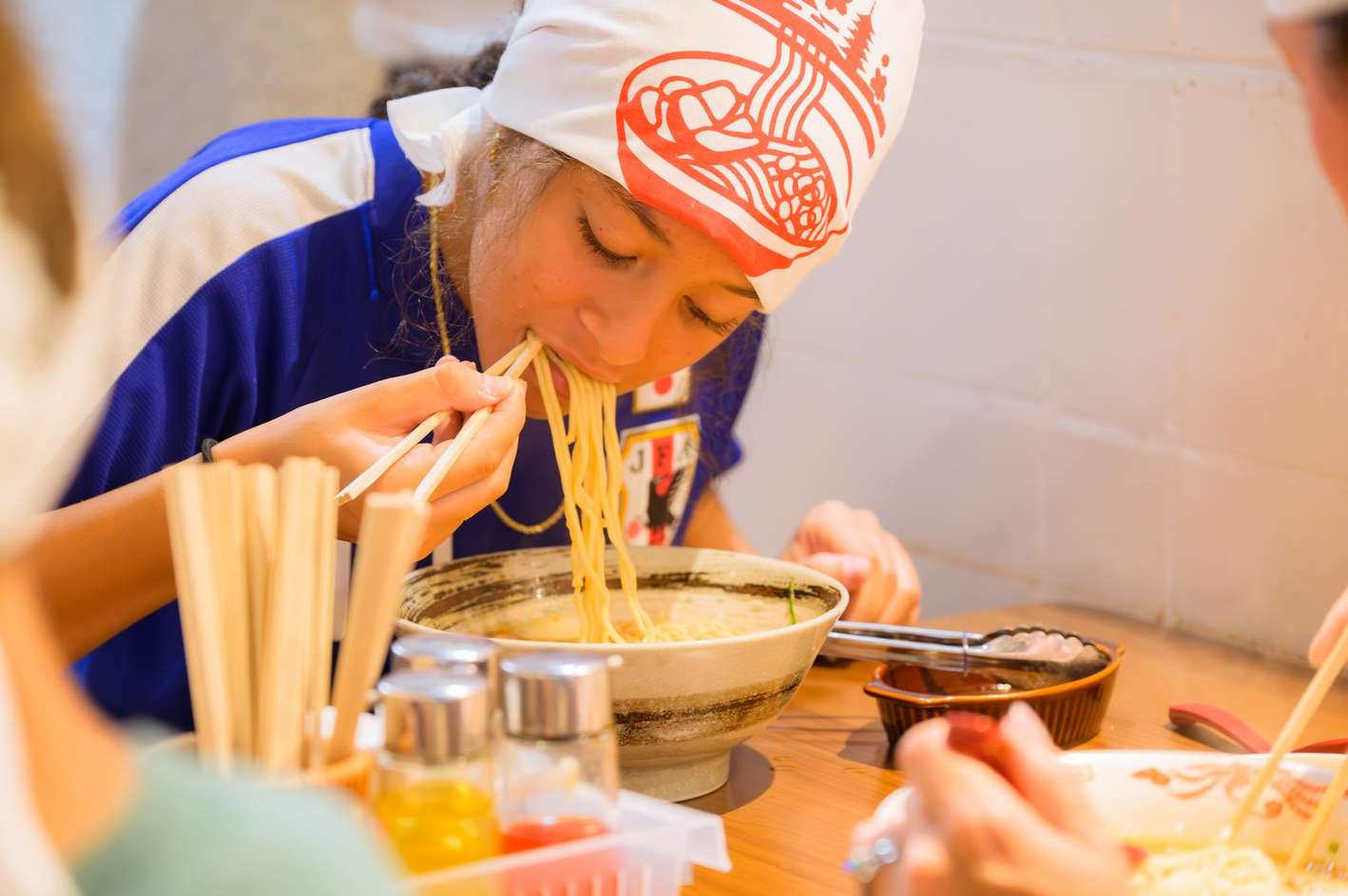
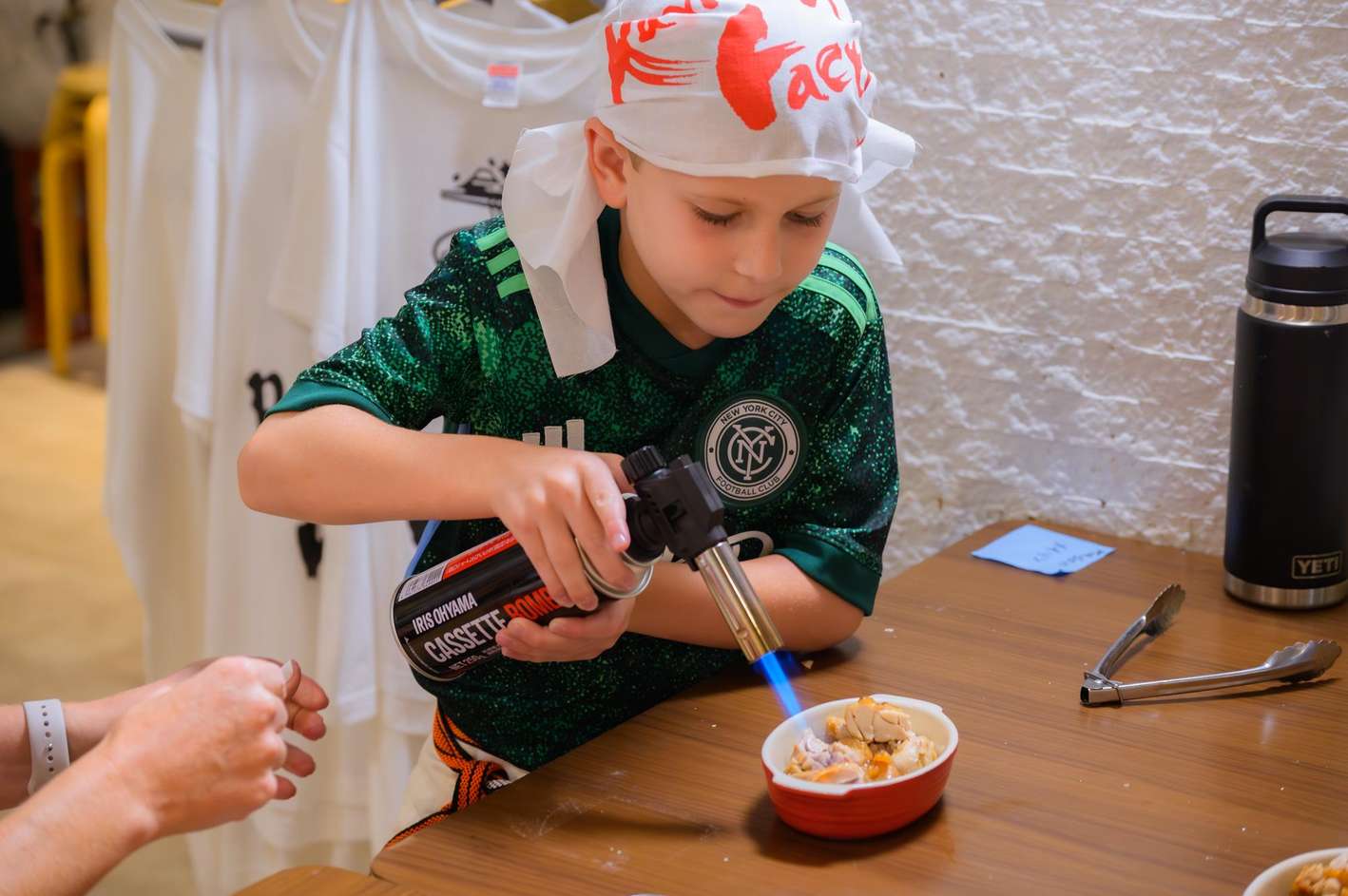
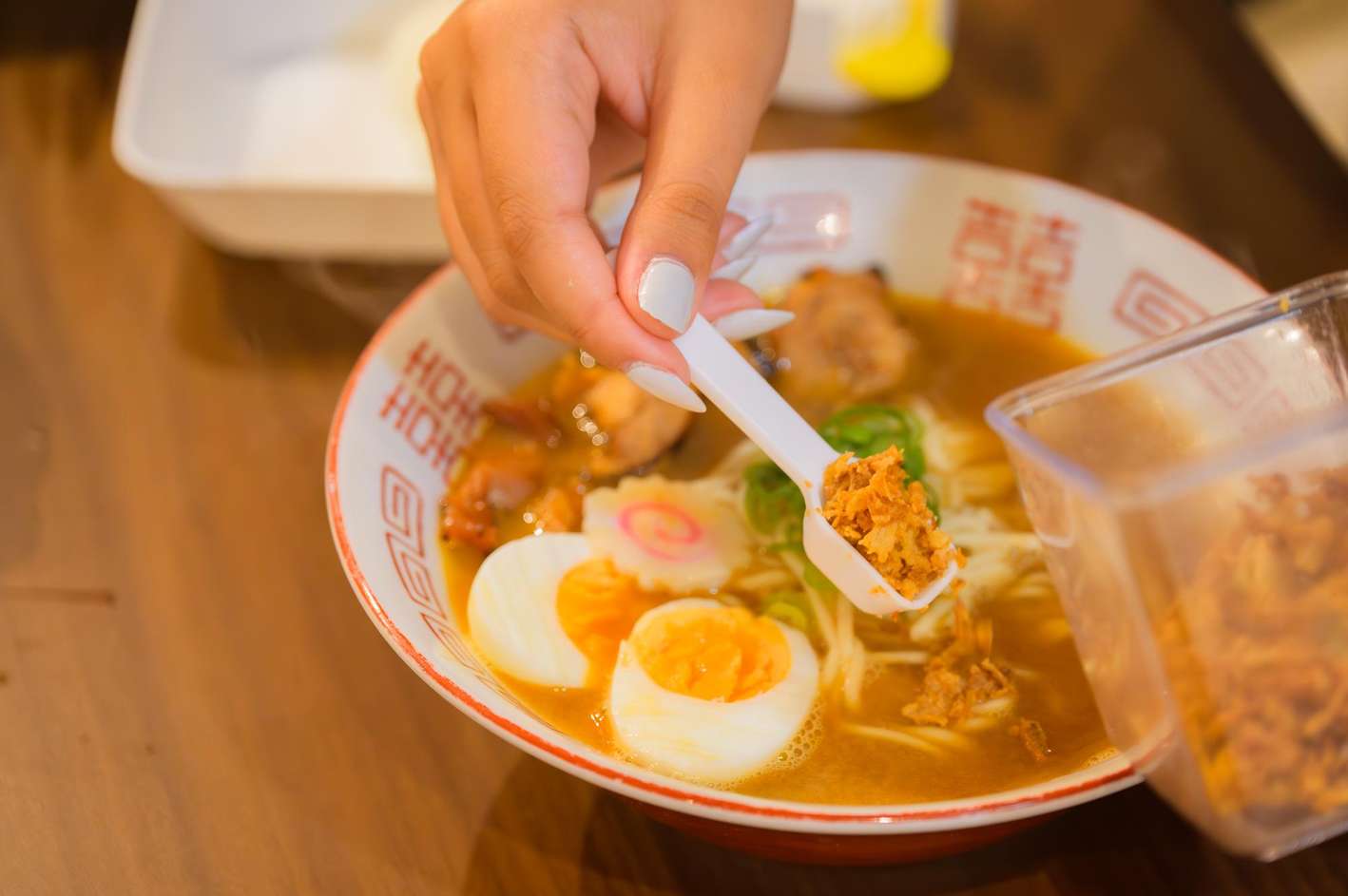
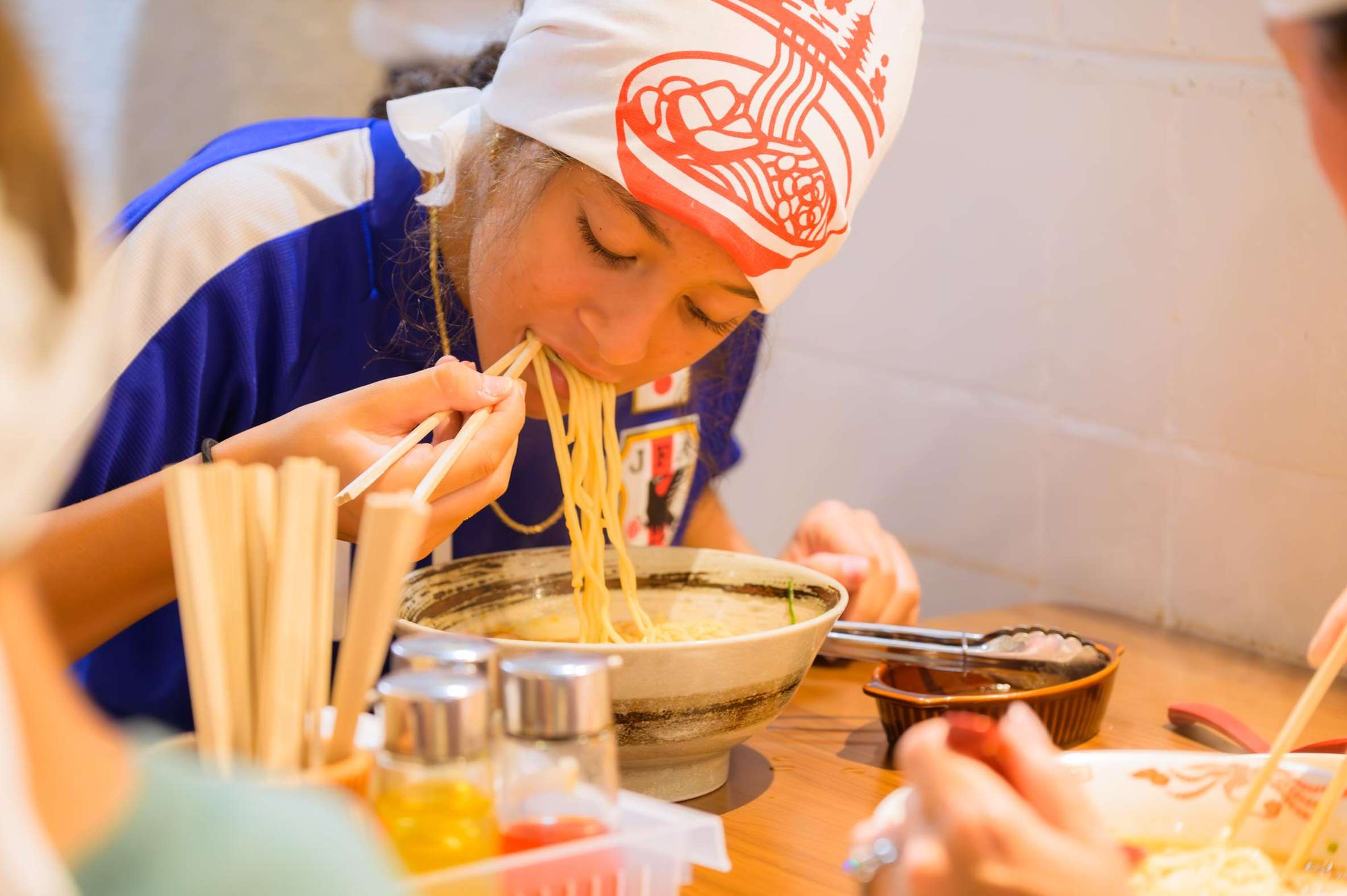
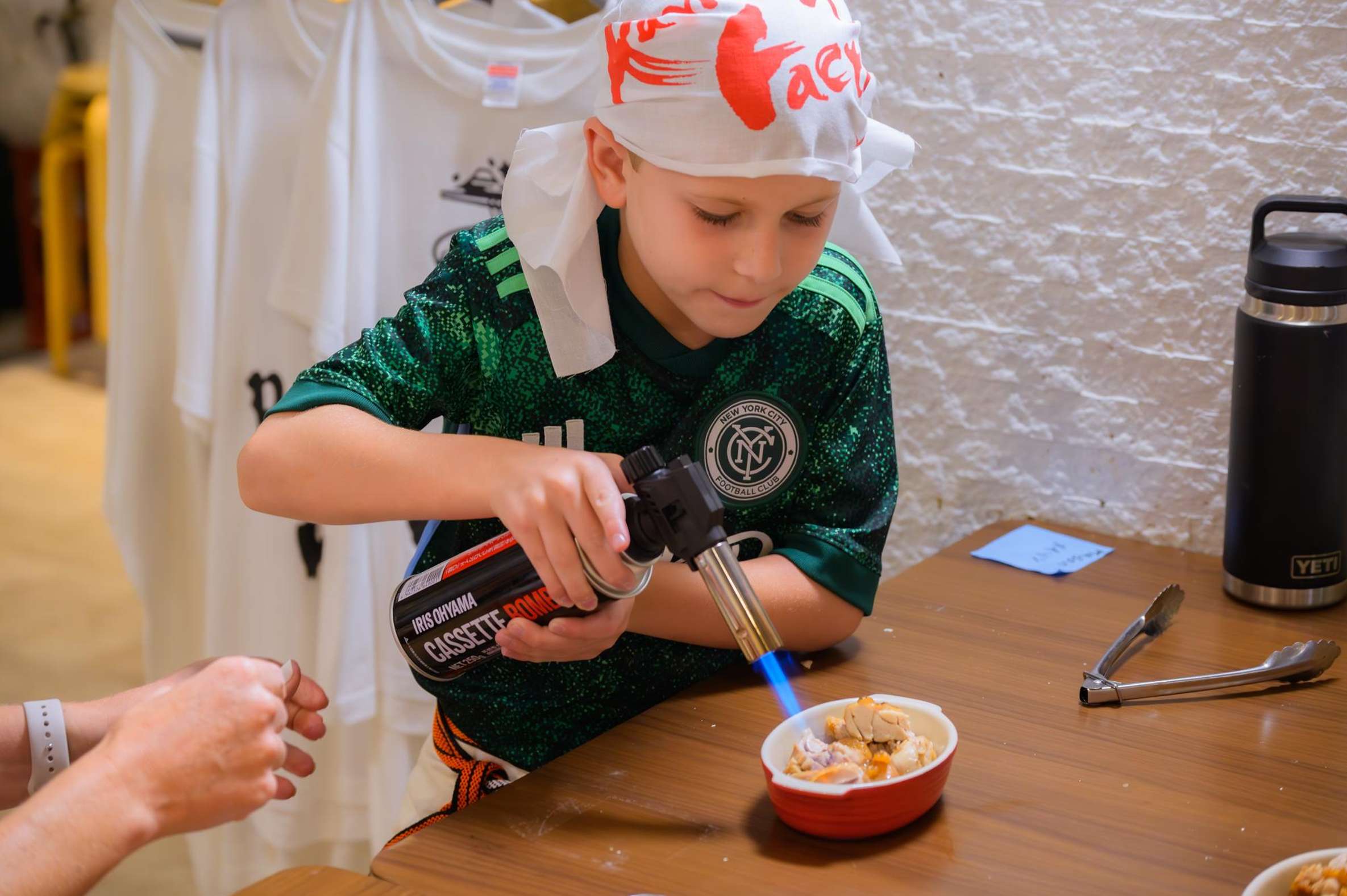
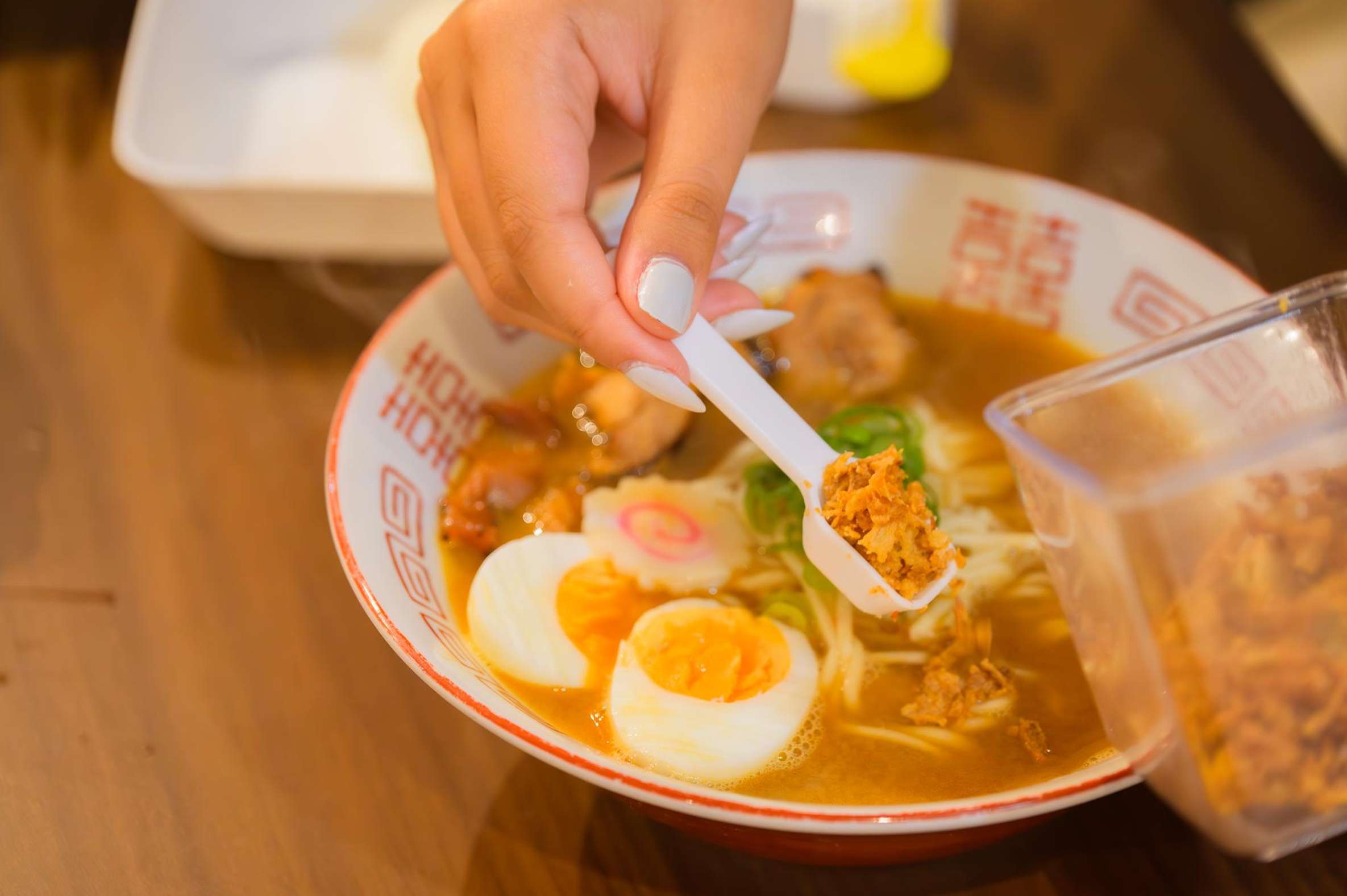
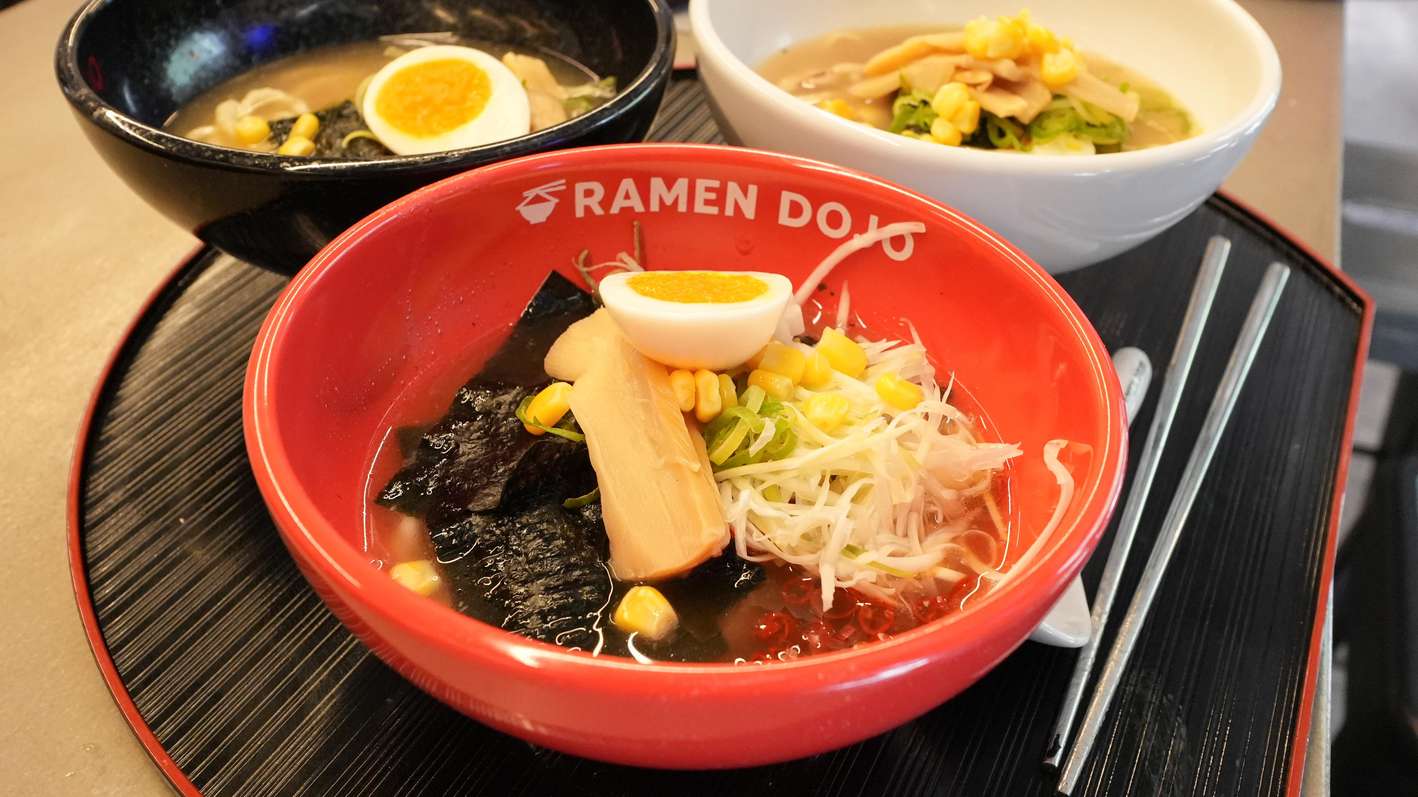
Assembly is where a vegan bowl becomes yours: soup base, oils, toppings chosen to your taste. Then the table. The finished bowl is generous enough to replace lunch or dinner, and six gyoza folded by hand come with it.
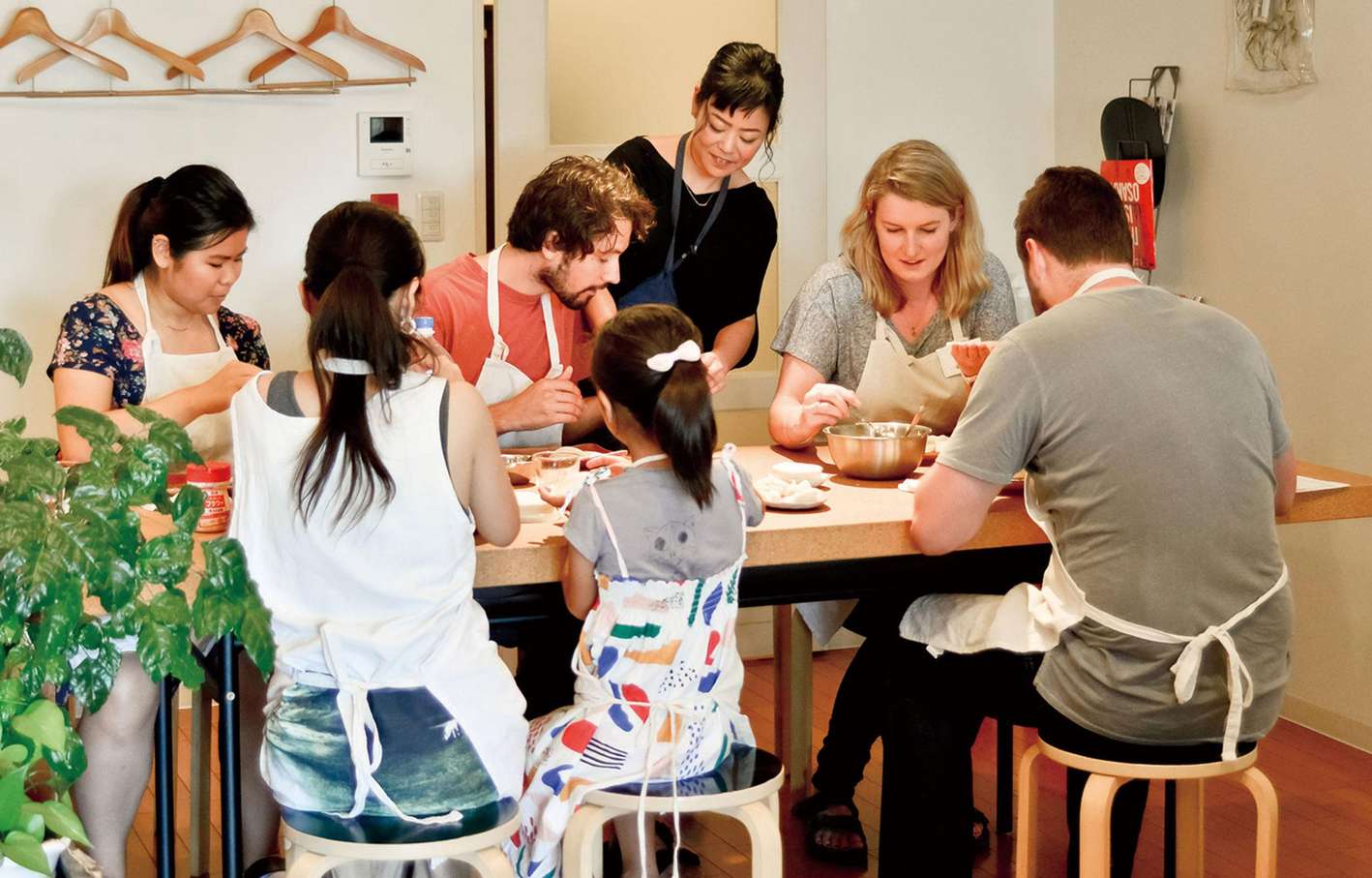
Some Kyoto sessions run in a host's home rather than a teaching kitchen, which turns the meal into conversation with the people who cooked beside you.
How a class day unfolds
1
Arrival
Aprons on, an introduction to the kitchen and the broth
Keep answers ready, one class opens with a ramen quiz
2
Broth and gyoza
Season the broth, fold gyoza by hand
Vegan ingredient swaps happen here
3
Assembly
Choose soup base, oils and toppings
Your bowl takes its final shape
4
The meal
Eat what you made as a full lunch or dinner
Come hungry; there is no takeaway
Two things follow from the timeline. Book the meal slot that matches your hunger, lunch or dinner, and skip any plan to eat a big meal beforehand.
Tour for this
Kyoto: Make Ramen from Scratch & Eat Your Own Bowl4.9★ (645) · 1.5 hours · Free cancellation
Kyoto's michelin-linked broth class - vegan cooking and chopsticks
The third workshop sits in Gion and builds the lesson around one thing: broth you can make again at home. The ramen involved comes from a shop whose Toronto restaurant has held a MICHELIN Guide listing for five years running, and the class ingredients are professionally prepared and sourced from the shop's Gion kitchen.
A Michelin listing names the restaurant, not the lesson, so judge the class on what it teaches rather than the citation.
Here the Michelin link is a good sign for a different reason: the broth recipe is built to survive a home kitchen, with substitutions for Japanese seasonings that are hard to buy elsewhere.
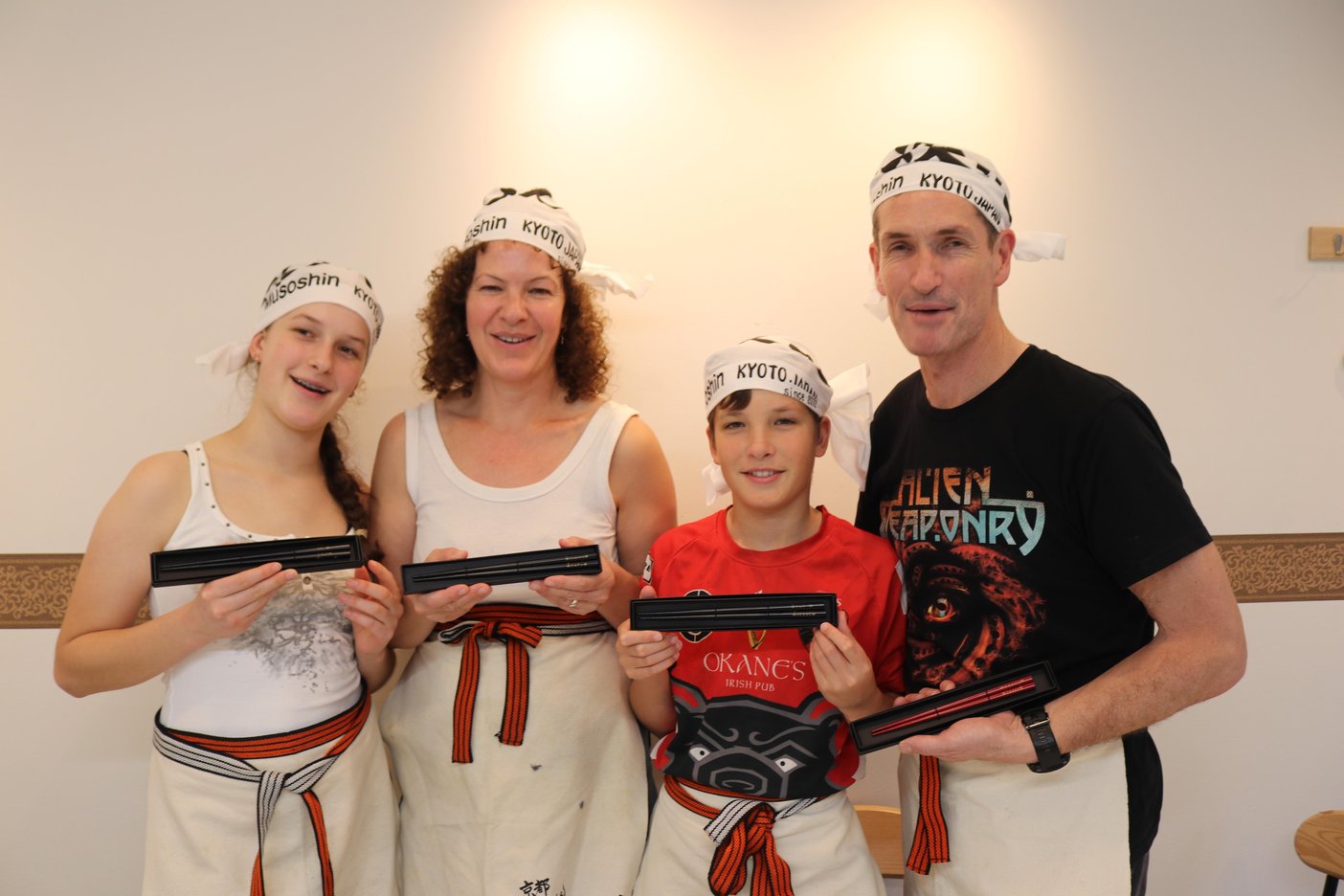
That is worth more than any workshop that mainly demonstrates a commercial noodle machine you will never own. You leave with chopsticks engraved with your name, the tenugui cloth you cooked with, and the soup recipe written for your own country's seasonings.
A traveler's note
Great cooking class you can recreate at home. The ramen were super tasty, and getting personalized chopsticks afterward made a really cool souvenir. Definitely recommend for something special in Kyoto.
When to book vegan cooking in Kyoto - the busy months
Kyoto's cooking calendar has a shape, and it bends hard in spring. April draws almost twice the participants of an ordinary month, which is why a Tuesday session that would be easy to book in February can be gone weeks ahead in cherry-blossom season.
May and November run about half again above normal, and March, with a third more participants than usual, is busier than most travelers expect.
Practical translation: if your dates fall in those months, book the class the moment your flights are fixed. Outside those windows, a booking a few days ahead is usually enough.
Weather is the other reason to hold a little slack. One Kyoto class may be canceled outright in unsafe weather, when roads and trains stop running. It rarely happens, but a morning session on a stormy day is the one to rebook rather than regret.
Getting to vegan cooking in Kyoto by train, not bus
Kyoto buses are wonderful until you need one to arrive at a set minute. Between 7 am and 9 am and again from 6 pm to 7 pm they are crowded and slow, and cherry-blossom and foliage seasons add more of the same.
One tour operator starts its class on time and does not admit late arrivals, so a bus gamble can cost the whole session.
For the class near Demachiyanagi, take the train. From Kyoto Station, ride JR to Tofukuji and change to the Keihan line. From Gion-Shijo, Keihan runs you there directly.
From Shijo-Kawaramachi, walk to Gion-Shijo first and board there. The venue is then a three-to-five-minute walk from Demachiyanagi. Budget ten extra minutes inside Kyoto Station to find your platform before any of it.
What to wear and ask at a vegan cooking class in Kyoto
The dress code writes itself once you picture the kitchen: boiling water, hot pans and flour in the air. Wear closed-toe shoes rather than sandals, clothes that can take a splash of broth, sleeves rolled up and dangling jewelry left off.
Aprons are provided, and breathable fabrics earn their keep in Kyoto's humid summer; light layers suit spring and autumn.
Allergies are the question that deserves a direct answer before money changes hands. Shared kitchens cook wheat, soy and sesame at every station, and at least one Kyoto class does not guarantee allergy-free meals no matter how carefully it swaps your ingredients.
A vegan label also says nothing about gluten. So message the operator with your specific exclusions and take their reply as the booking condition.
Allergies before you book
Shared kitchens cannot guarantee an allergy-free meal Message the provider with your exact exclusions before booking and book only on their reply
Settling this before payment is what keeps a dietary difference from ending a class half-made.
If plans change - cancellation rules for vegan cooking in Kyoto
The booking edges are simple, and knowing them before the day saves the awkward version of the conversation. Cancellation up to 24 hours ahead earns a full refund under the tours' own terms, which makes a late change of plan a reschedule rather than a loss.
Unsafe weather is the one cause outside your control: an operator may cancel a class outright when the transport system stops.
Lateness is handled differently. One operator starts on time and turns away late arrivals, which in practice means a taxi is a worse bet than the train route in the last chapter.
And the leftovers question has a firm answer: freshly cooked ramen generally cannot be taken away, for food-safety reasons. Eat your bowl at the counter, and come hungry enough to finish it.
When the day changes
If this happens
What happens then
Cancellation up to 24 hours ahead
Full refund under the tours' own terms
Unsafe weather on the day
The operator may cancel the class outright
Arriving after the start time
One operator starts on time and does not admit late guests
Leftovers after the meal
Freshly cooked ramen generally cannot be taken away, for food safety
None of these edges need to touch your day once you plan around them, which is why they are worth reading before the booking, and never after.
Around the vegan cooking class in Kyoto - what's in walking reach
The ramen-and-gyoza class venue sits at 91-35 Okazaki Enshojicho, along the street in front of Heian Jingu Shrine, next to Kyoto Travelers Inn.
That placement turns the class into an anchor for a central Kyoto day: the shrine itself is the obvious stop before or after, and the streets around Okazaki carry you toward Gion and the Kamo river on foot without another train ticket.
Give yourself an hour on either side. A class that ends with a full bowl of ramen sits better in a day with a short temple walk than with a packed itinerary, and the kitchen conversation tends to hand you restaurant and sightseeing recommendations worth more than any guidebook list.
Readers with a flexible itinerary sometimes build a second cooking day in Osaka, and the city earns it.
The classes cluster around Namba and Dotonbori, and the timing matters in both directions: one operator requires prior notice for vegan options, and one Dotonbori workshop asks for advance confirmation of dietary needs, so the vegan request travels with the booking.
Book further ahead around the domestic travel peaks. Golden Week runs 29 April to 6 May 2026, Obon falls around 13 to 16 August, a September holiday cluster covers 19 to 23 September, and the New Year break closes businesses across roughly 29 December to 3 January.
One more stop suits anyone planning to cook at home: Sennichimae Doguyasuji, the cookware street near Namba, where ramen bowls, strainers and noodle tools fill shopfronts at every price. A broth class plus a well-chosen ladle is a better souvenir than most.
The plant-based rule from Kyoto holds in Osaka too: list your ingredient exclusions in plain words, and confirm them with the operator before you travel.
Kyoto makes this easy for a plant-based traveler once the request is in. The from-scratch class suits anyone who wants the whole bowl, the Gion broth class suits anyone planning to cook at home, and the restaurant-kitchen class adds gyoza and a counter before opening time.
Book for a shoulder month, message the operator about the vegan version the same day you book, and take the train to Demachiyanagi.
Go ifYou want to eat the bowl you make, with the recipe to repeat it at homeYour dates fall outside April, or you can book the busy months well aheadYou are happy to state your ingredient exclusions with the booking
Skip ifYou need a guaranteed allergy-free kitchen; ask the provider firstYou want to take leftovers away; freshly cooked ramen is eaten on the spotYour dates are fixed to Golden Week or New Year and the classes are full
Our pick to book
Kyoto Ramen & Gyoza Class with Vegan and Gluten-Free Options5.0★ (6) · Free cancellation
How do I make sure my Kyoto ramen class is truly vegan?
Name your ingredient exclusions when you book: which animal products you avoid and why. The word vegan alone leaves room for interpretation, because in Japan a dish with no visible meat or fish can still contain animal ingredients.
Does a vegetarian menu in Japan mean the food is vegan?
A plant-based description is no guarantee. At Kyoto's ramen, gyoza and onigiri class, the vegetarian menu swaps pork for tofu and leaves every other ingredient unchanged, so check each dish before you assume it suits you.
Which animal ingredients hide in ramen that looks plant-based?
Broth can be made with fish stock, noodles can contain egg even when they are not described as egg noodles, and tofu and cooked vegetables may carry seasonings with animal products. Ask about broth, dough and seasonings separately.
Can I eat vegan in Kyoto outside my cooking class?
It takes some planning. Use HappyCow to map vegan meals around your class, and for strict vegan eating choose fully vegan restaurants, since mixed-menu places may be unable to remove every animal ingredient.
Can children join a vegan ramen class in Kyoto?
Some classes give children age-appropriate cooking tasks with patient guidance. Steps involving knives or hot broth need adult supervision, so check the age rules for the class you pick.
What should I say in Japanese to explain a vegan diet?
Say what you actually exclude: no meat, no fish stock, no egg, whatever applies to you. Explaining your specific ingredient exclusions works far better in a Kyoto kitchen than relying on the word vegan on its own.
Is a vegan ramen class worth it compared with just eating out?
A class gives you hands-on cooking, the recipe and the meal, while Kyoto restaurants give you dinner only. For strict vegan eating outside the class, prioritize fully vegan restaurants rather than assuming mixed-menu places can remove every animal ingredient, and use HappyCow to plan meals around your workshop.
When should I tell the class about my vegan diet?
When booking, every time. The ramen-and-gyoza class requires dietary arrangements at booking, and the Ramen Factory asks guests to contact the supplier after booking. Booking early matters too, because Kyoto cooking classes fill up fastest in April, May and November.
Can children join a vegan ramen class in Kyoto?
Yes, some classes give children as young as four age-appropriate tasks with patient guidance. The broth class in Gion has its own rule: children under ten cannot participate. Check each class's age policy when you book.
Vegan cooking in Kyoto - take the ramen counter before opening time
You get a working ramen kitchen to yourself before the first customer walks in, and free cancellation up to 24 hours in advance keeps the plan flexible.