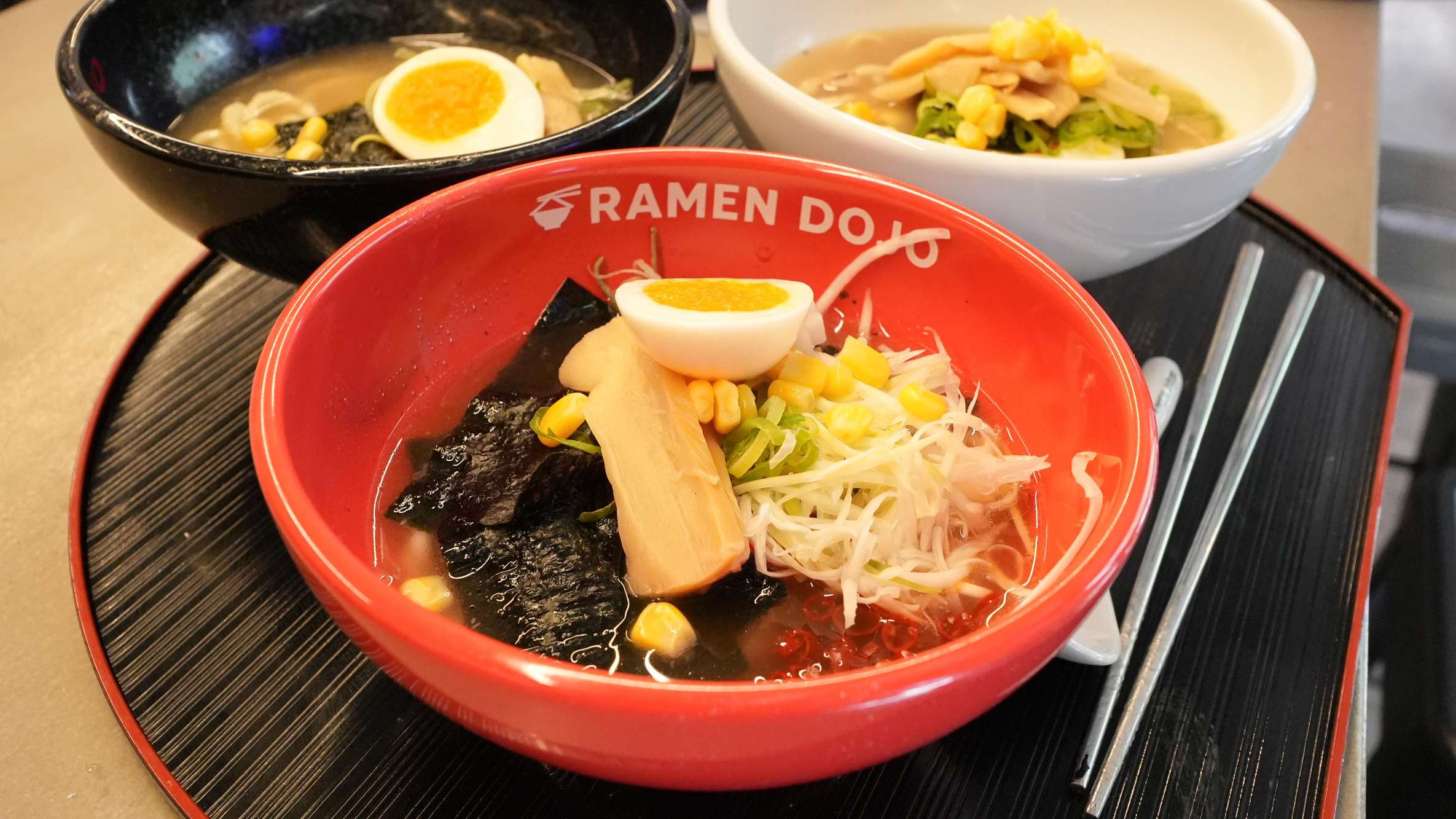
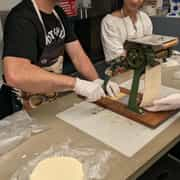
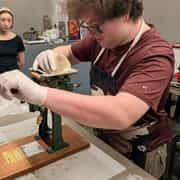
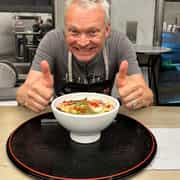
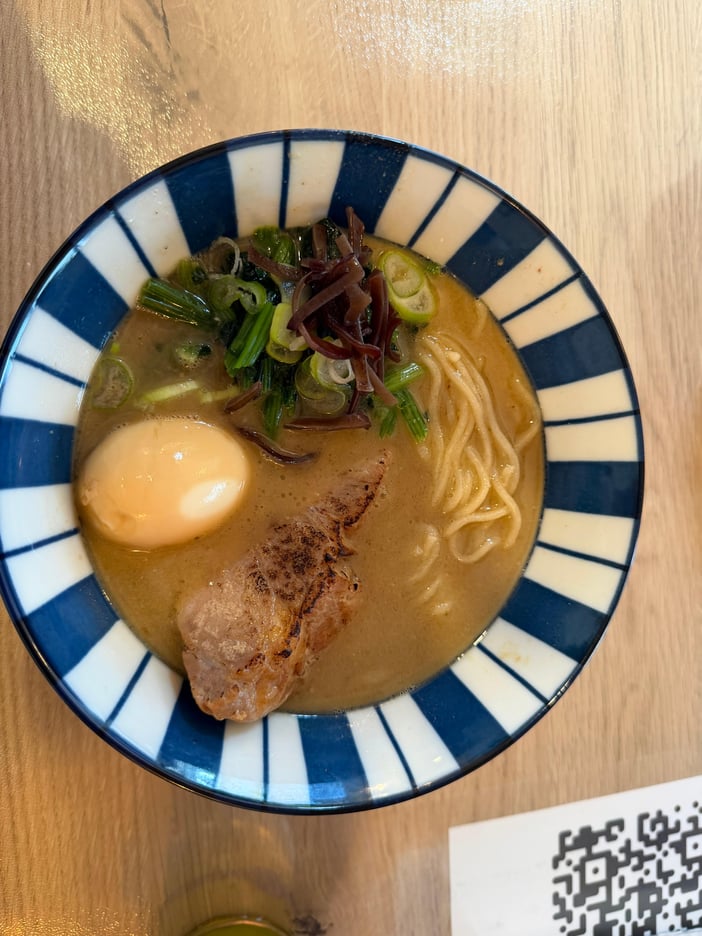
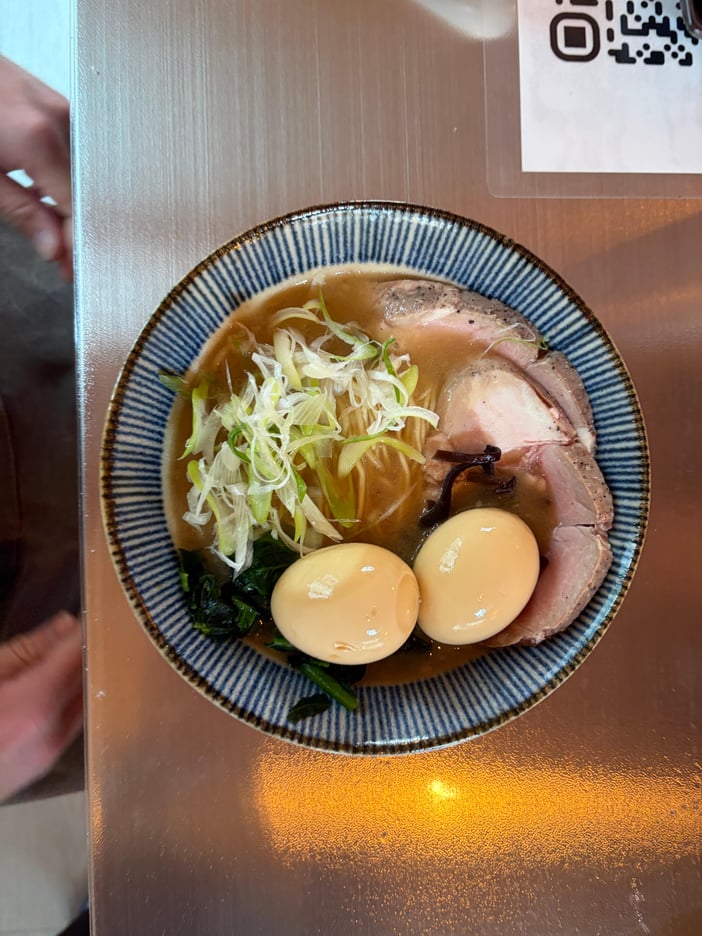
4.8684 travelers slurped the vegan bowls they made
Vegan Ramen Cooking Class in Tokyo Plant-Based Workshop Options
Book a vegan ramen cooking class in Tokyo and eat the bowl you make. Skip the awkward special request - in Shibuya, knead, roll and cut your own noodles with a professional machine, then customize and finish a plant-based bowl in 90 minutes. Choose the Vegan & Halal-friendly Ramen option when you book.
4.8★average rating684traveler reviews100%free cancellation29countries travelers came from
Vegan cooking in Tokyo - pick your ramen class
Three Tokyo workshops make room for plant-based eaters, and they differ mainly in how much you cook yourself. In one you make three mini bowls from dough to toppings; in another you fold gyoza and assemble bowls from a prepped soup; a third focuses on hand-cutting noodles. A fourth runs inside a working restaurant and caters to vegetarians with advance notice.
Broth checkAsk about fish ingredients in the broth as well as the toppings, because in Japan a dish with no visible meat or fish is not automatically vegan.
SeasoningsTofu and cooked vegetables can carry animal-based seasonings, so list your exact exclusions for the host.
Advance noticeTell the host about a plant-based preference when booking, since the Nerima class cannot take same-day requests for its vegetarian ramen.
AllergiesThe Shibuya studio is unsuitable for severe wheat, egg or soy allergies and severe airborne flour sensitivity, and the Kappabashi workshop excludes guests with buckwheat allergies.
ArrivalReach the studio 10 to 15 minutes before the start; doors at the Shibuya class open only 15 minutes early, and guests 5 or more minutes late may be refused entry.
TimingAllow 30 extra minutes on Tokyo trains during weekday rush hours, roughly 7:30 am to 9:30 am and 5:30 pm to 7:30 pm.
SeasonSpring, especially April and May, and November fill Tokyo-area cooking classes fastest, so book early for those months.
ClothingWear closed-toe shoes and clothes that can take flour or sauce splashes, with long hair tied back; aprons are usually provided.
Cold ruleSkip the hands-on Kappabashi session if you have cold symptoms, since it is not suitable for guests with a cold.
RecipesThe Shibuya class sends a digital recipe afterwards, and the restaurant masterclass includes a 52-page professional ramen recipe e-book.
importantA vegan label is a starting point in Tokyo, because ramen broth can contain fish ingredients even when no meat or fish is visible.
When you book, tell the host about your diet in advance and name your exact ingredient exclusions, including fish stock, soy, and the seasonings on tofu and vegetables, so the kitchen can confirm what will go into your bowl.
Vegan cooking in Tokyo - which ramen class fits
Most popular
50 minutes·Japanese, English
4.8(28)
Made from flour in 30 Minutes! Ramen Noodle-Making Experience!
Nearly 560 travelers rate it 4.9, and the vegan ramen is its own bookable option, so you select it when you book.
Free cancellationRamen Making ExperienceDining on Ramen cut by yourself
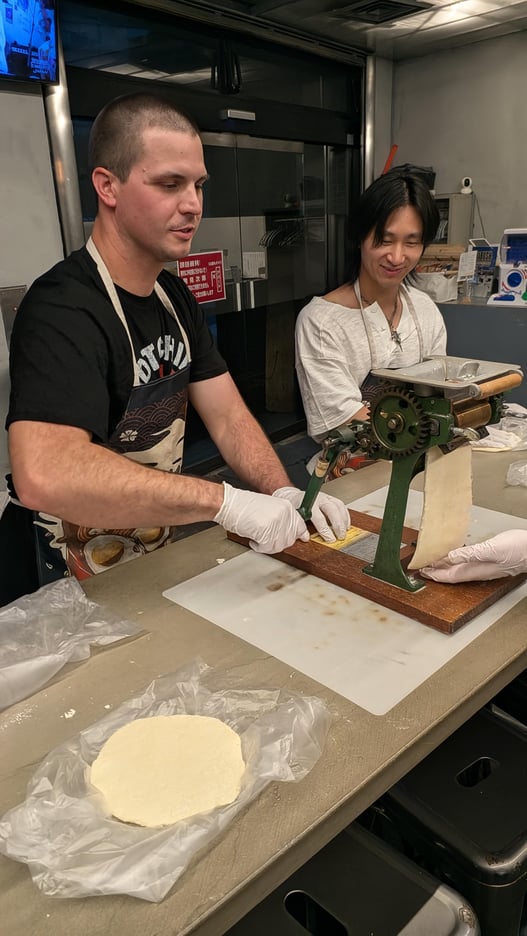
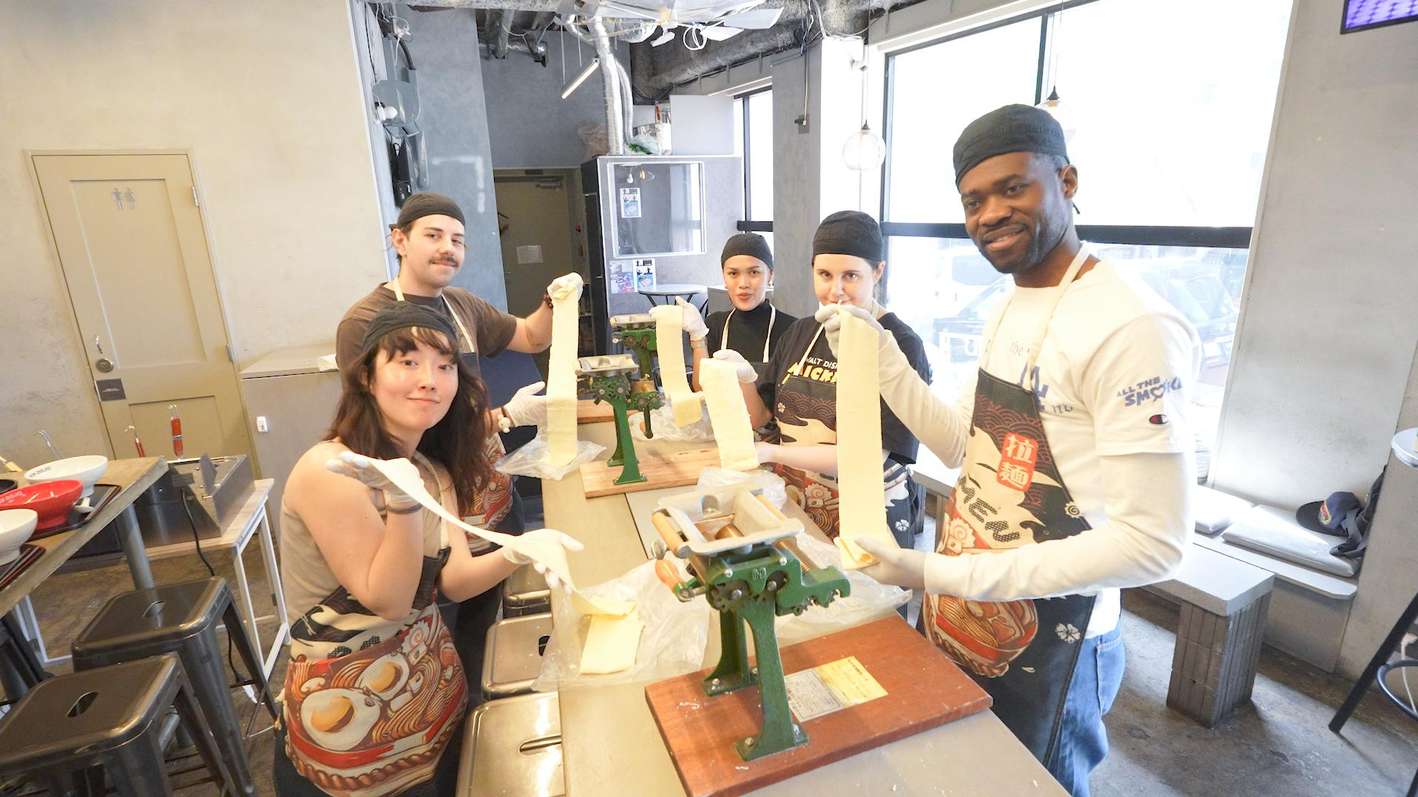
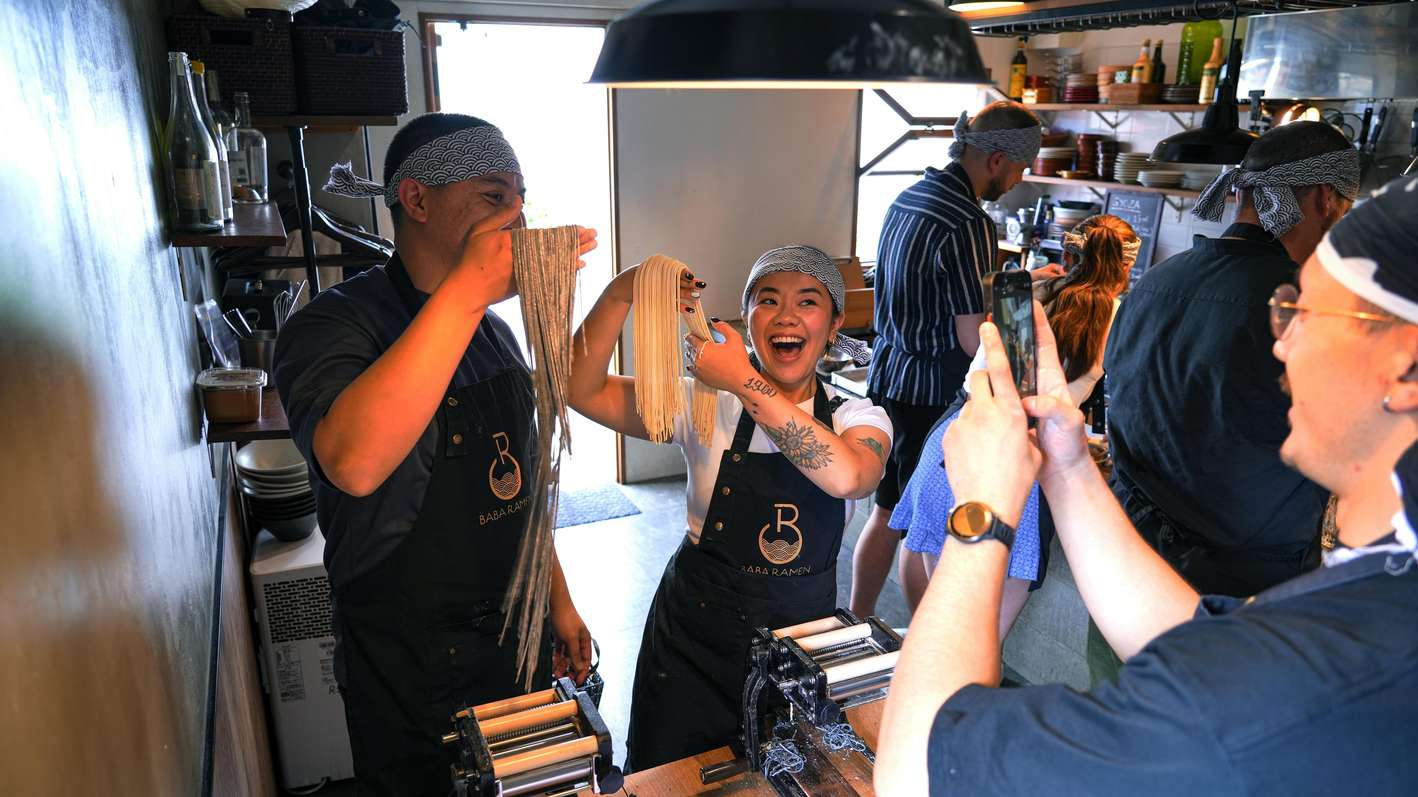
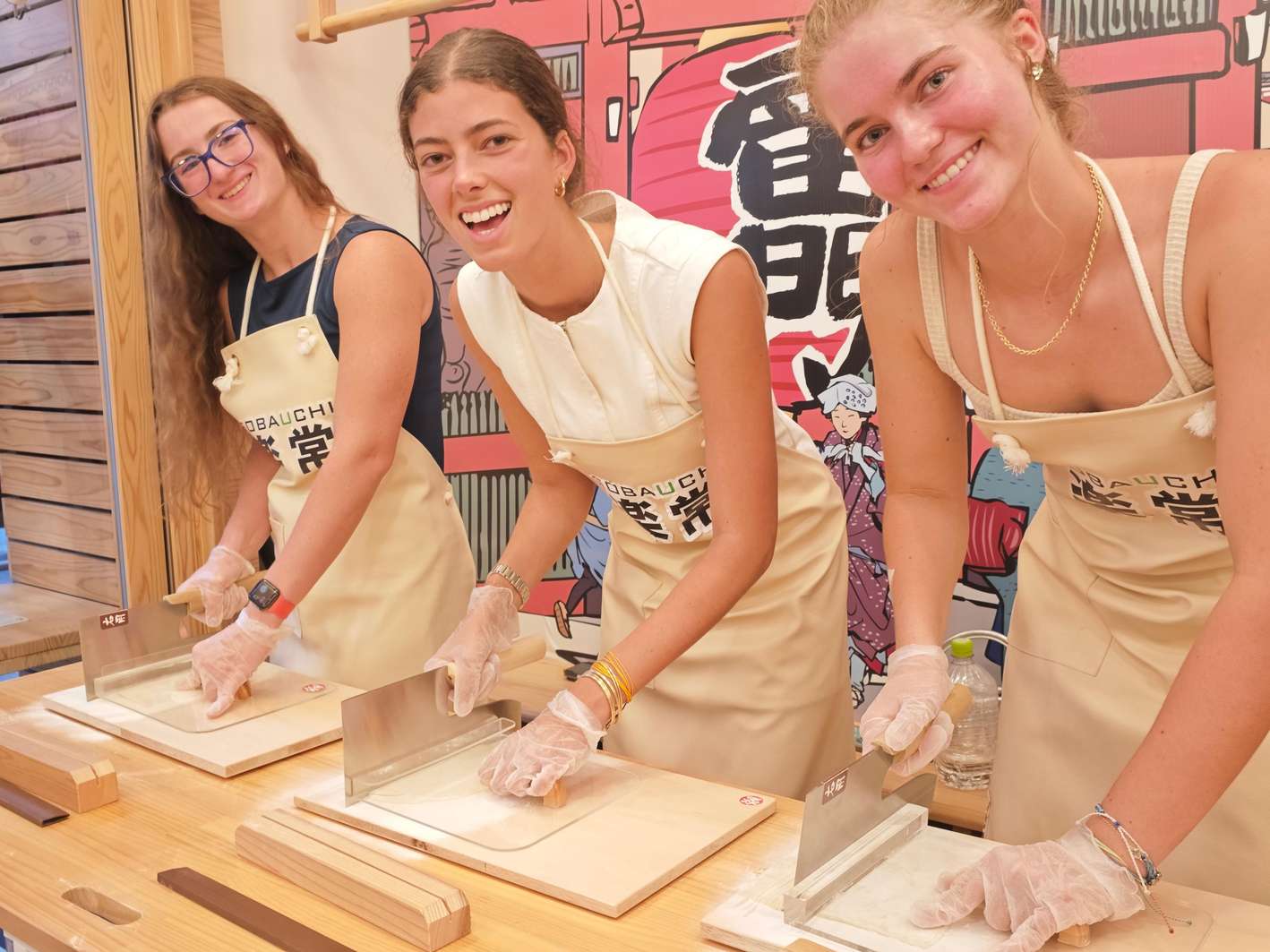
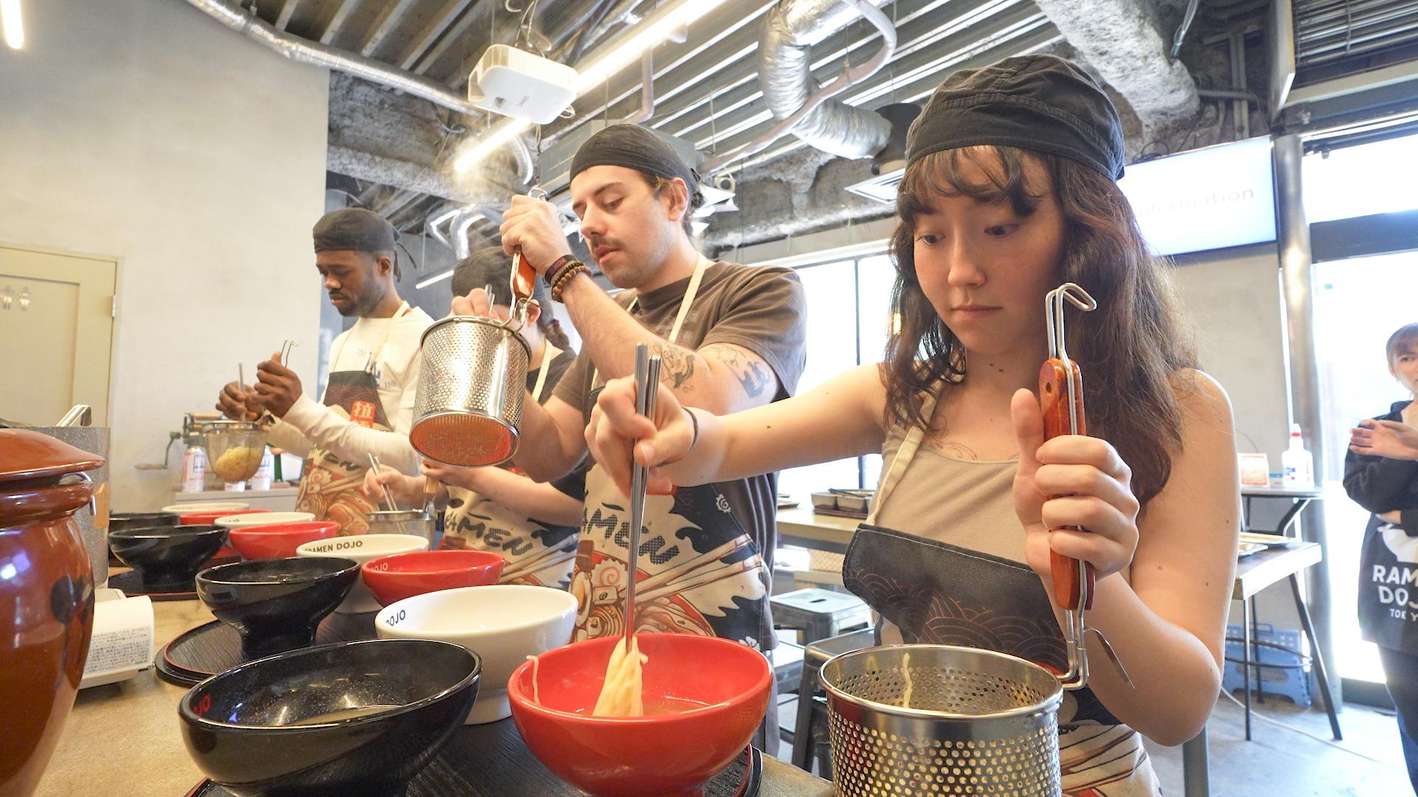
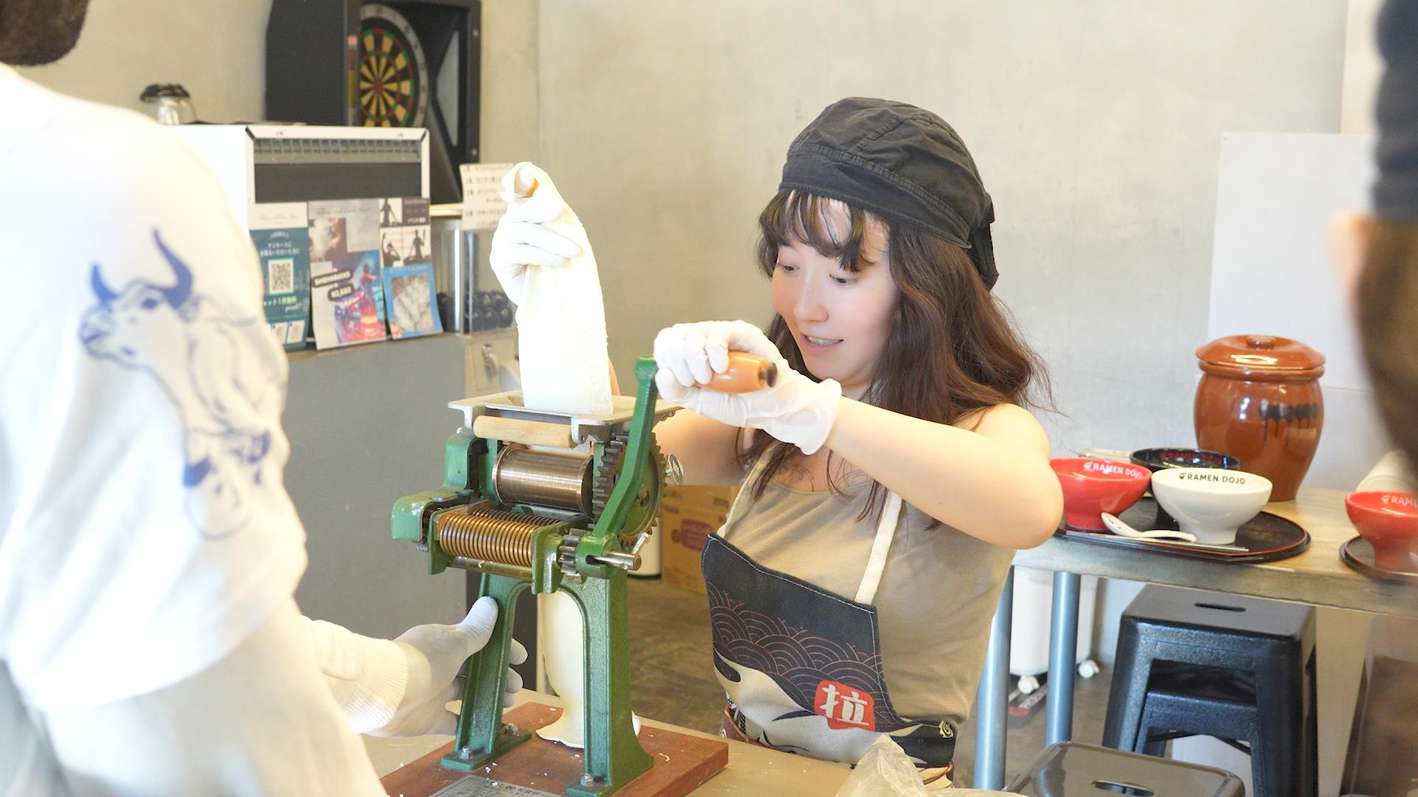
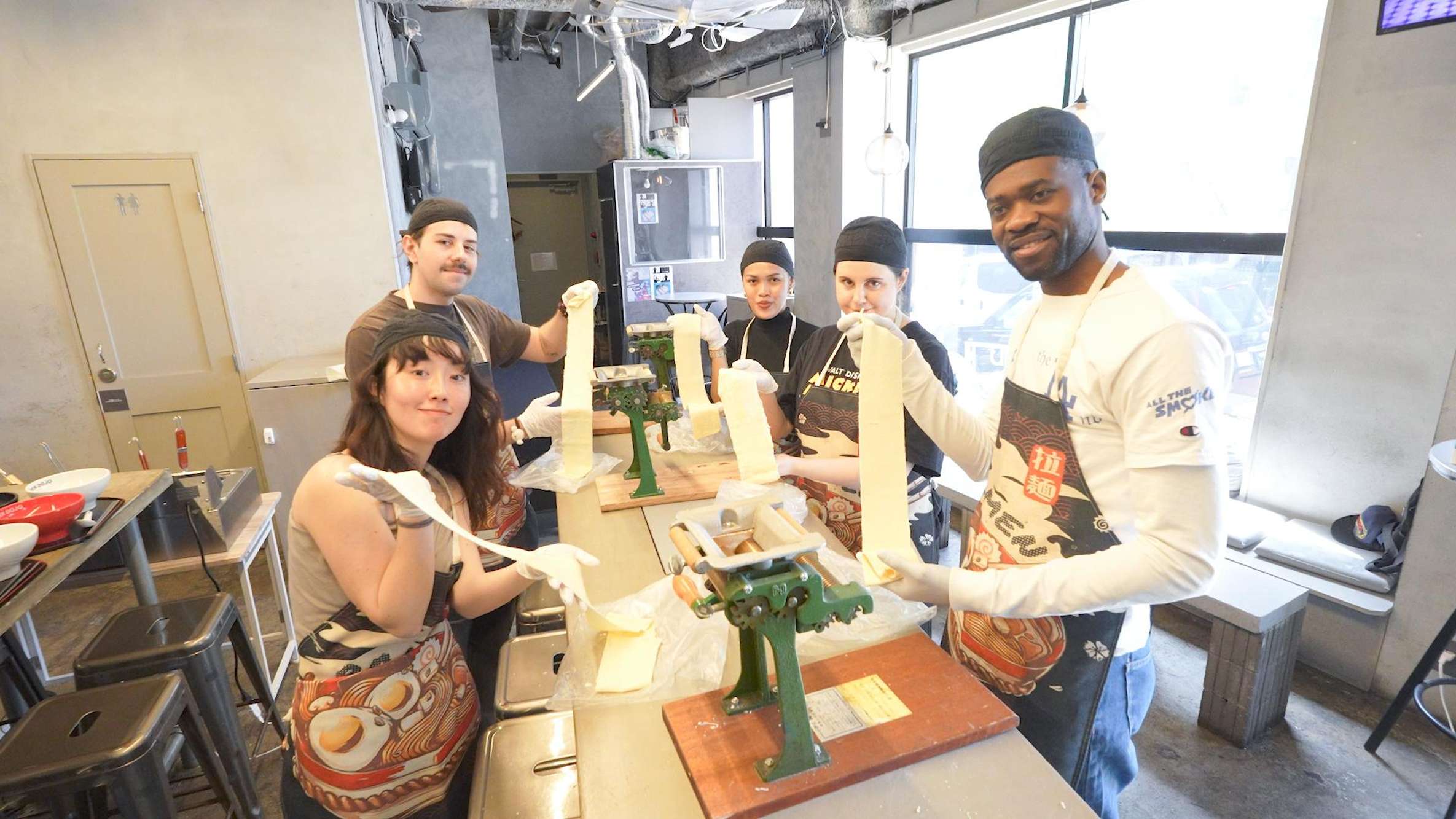
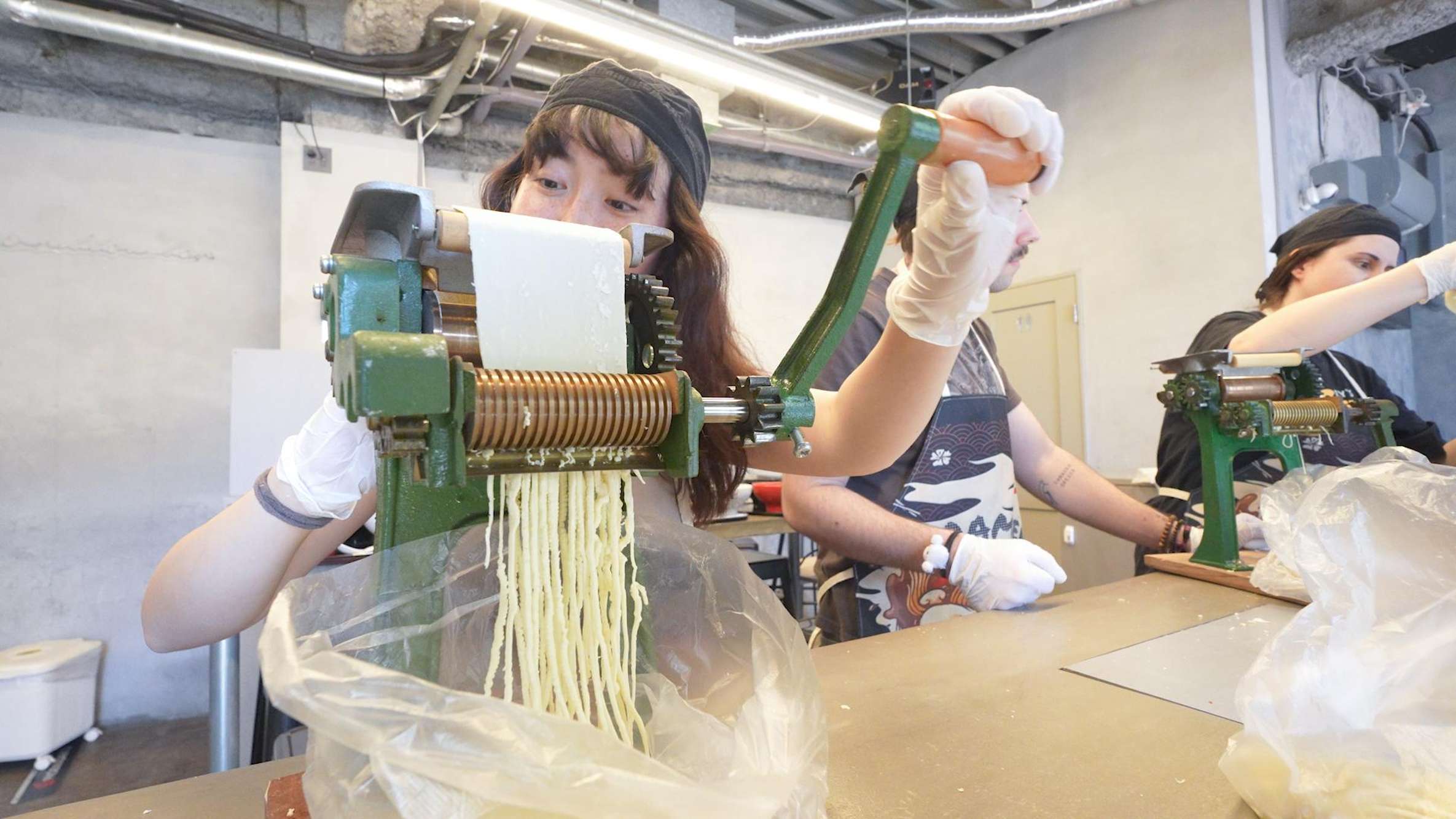
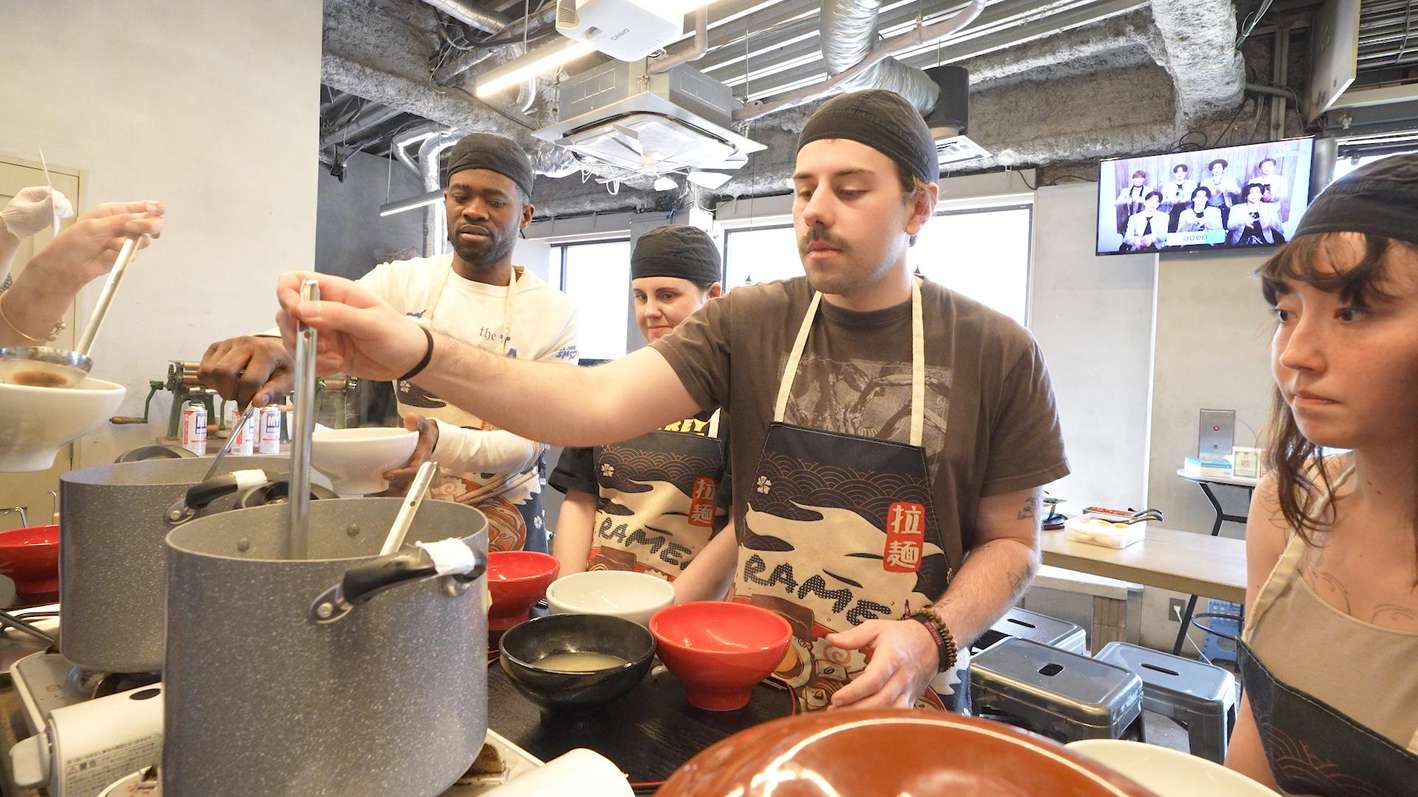
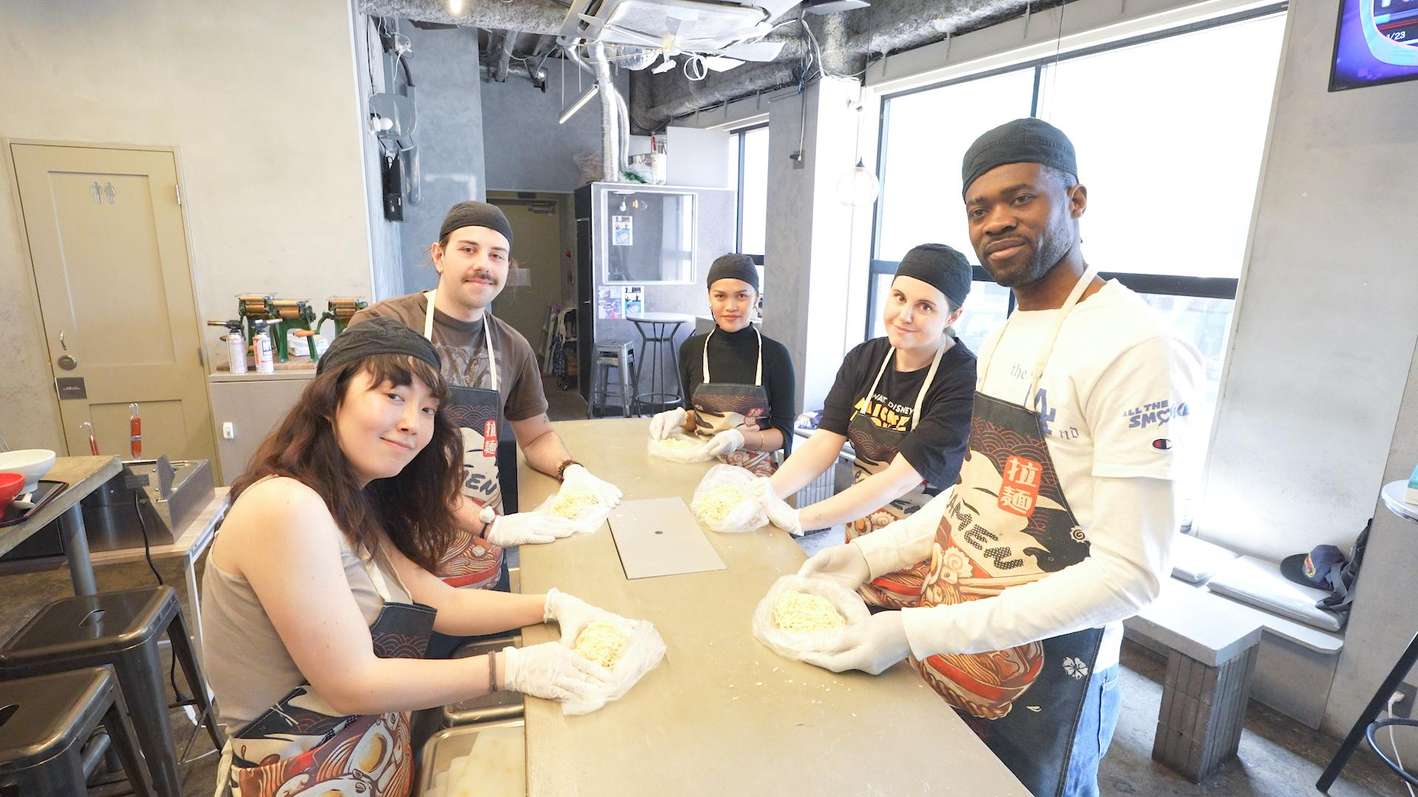
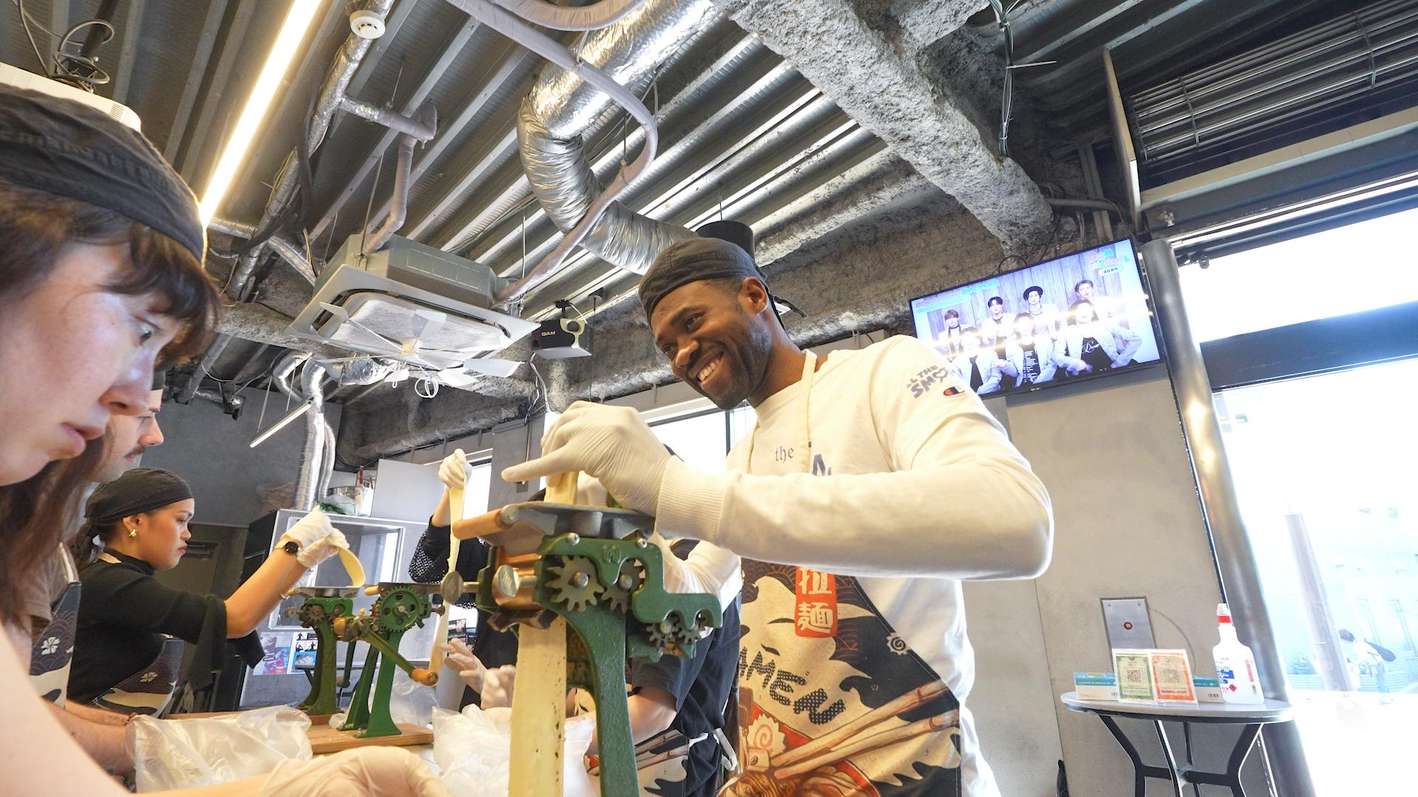
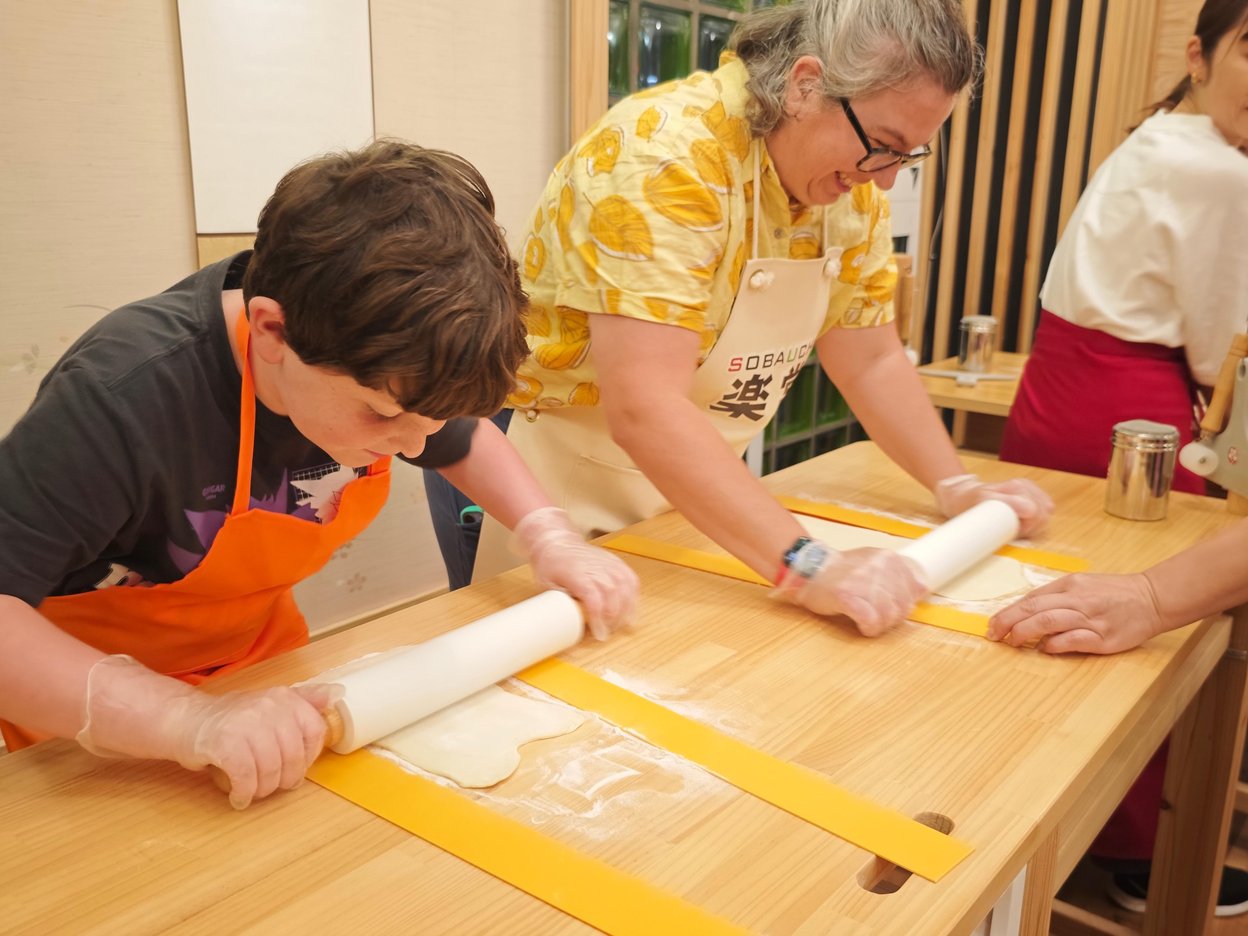
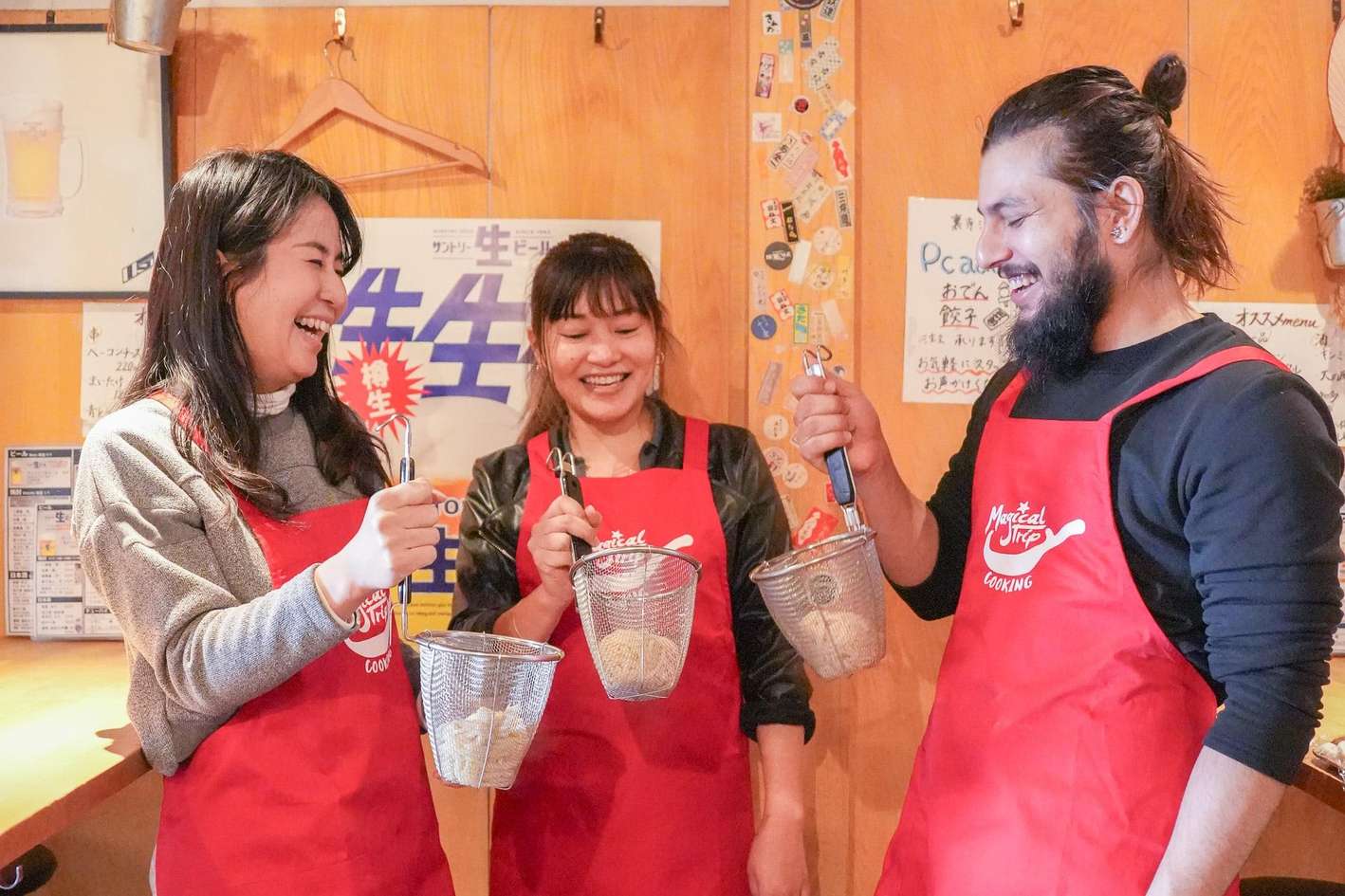
Ninety minutes in a studio in Ohashi, Meguro-ku, and you leave having made and eaten your own ramen. Book the Vegan & Hal-friendly Ramen option and the same hands-on session runs around you: kneading the dough, cutting noodles, dressing your bowls.
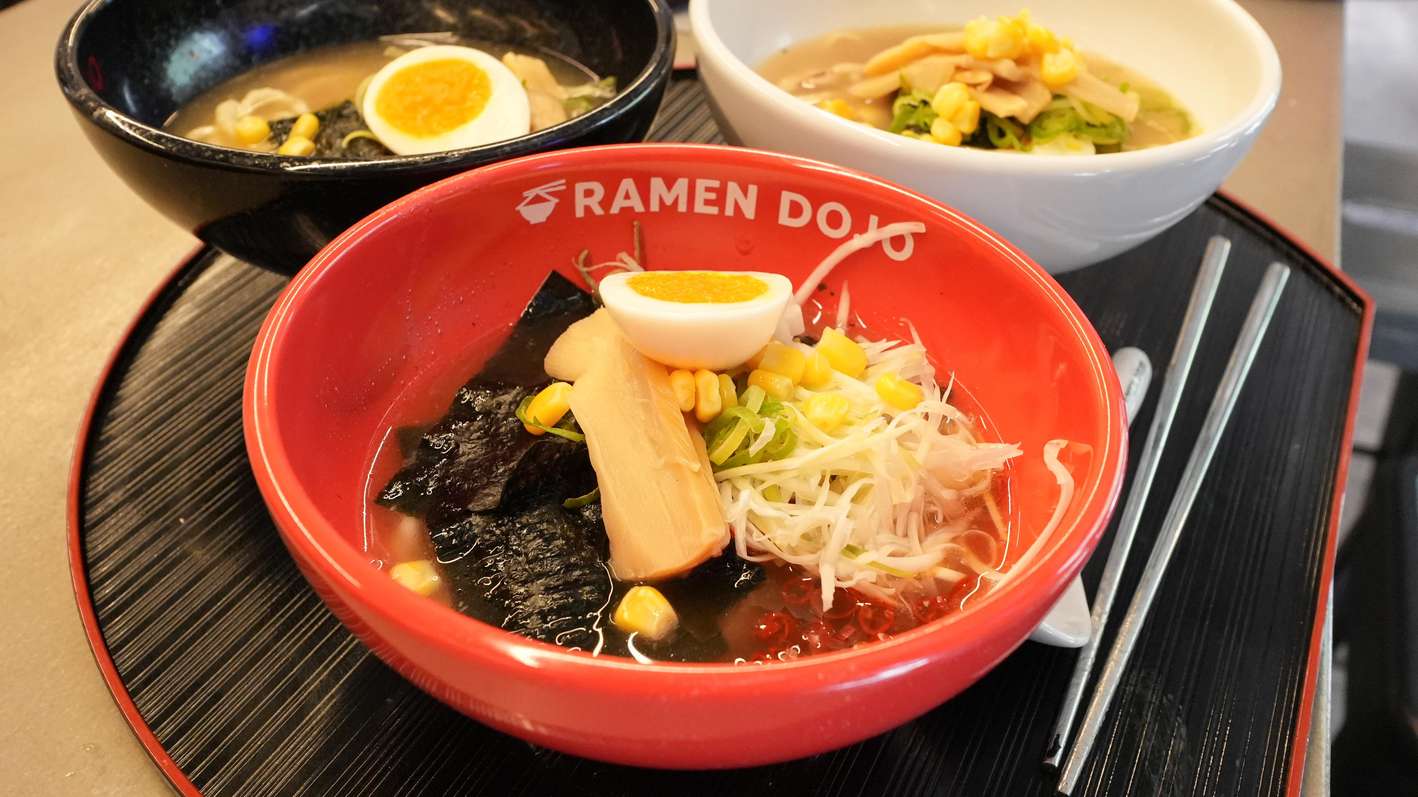
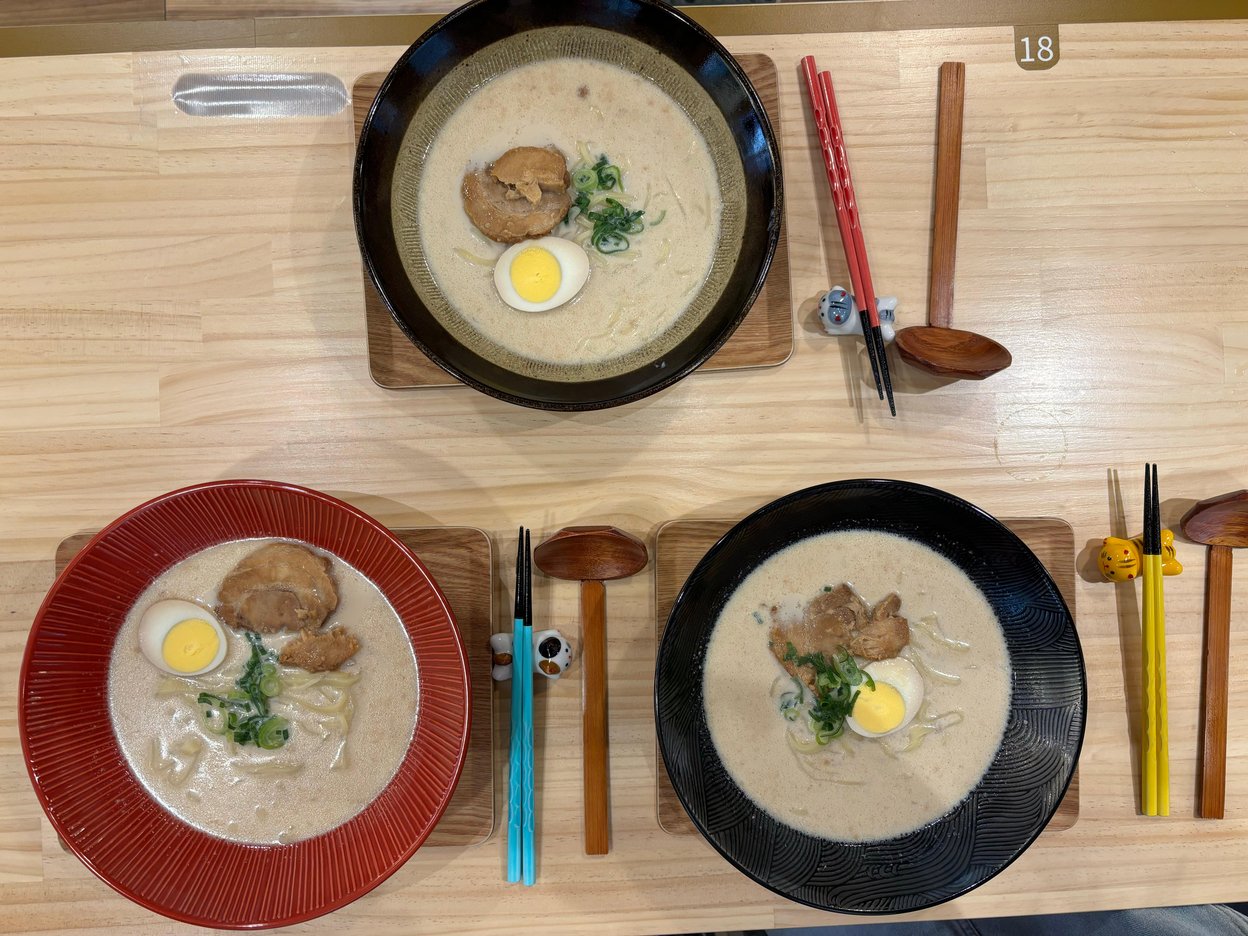
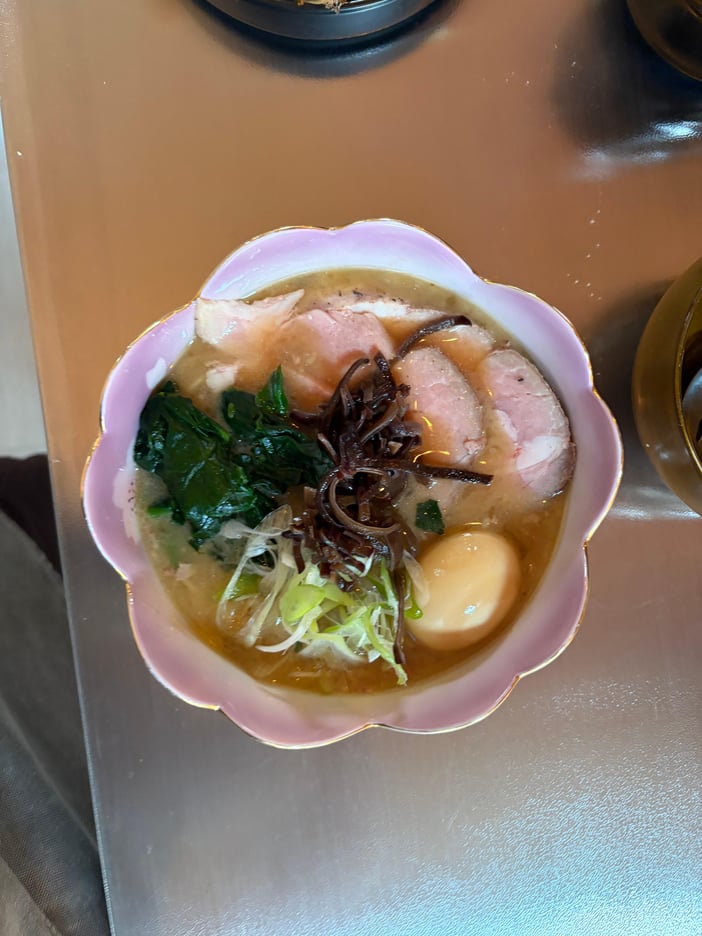
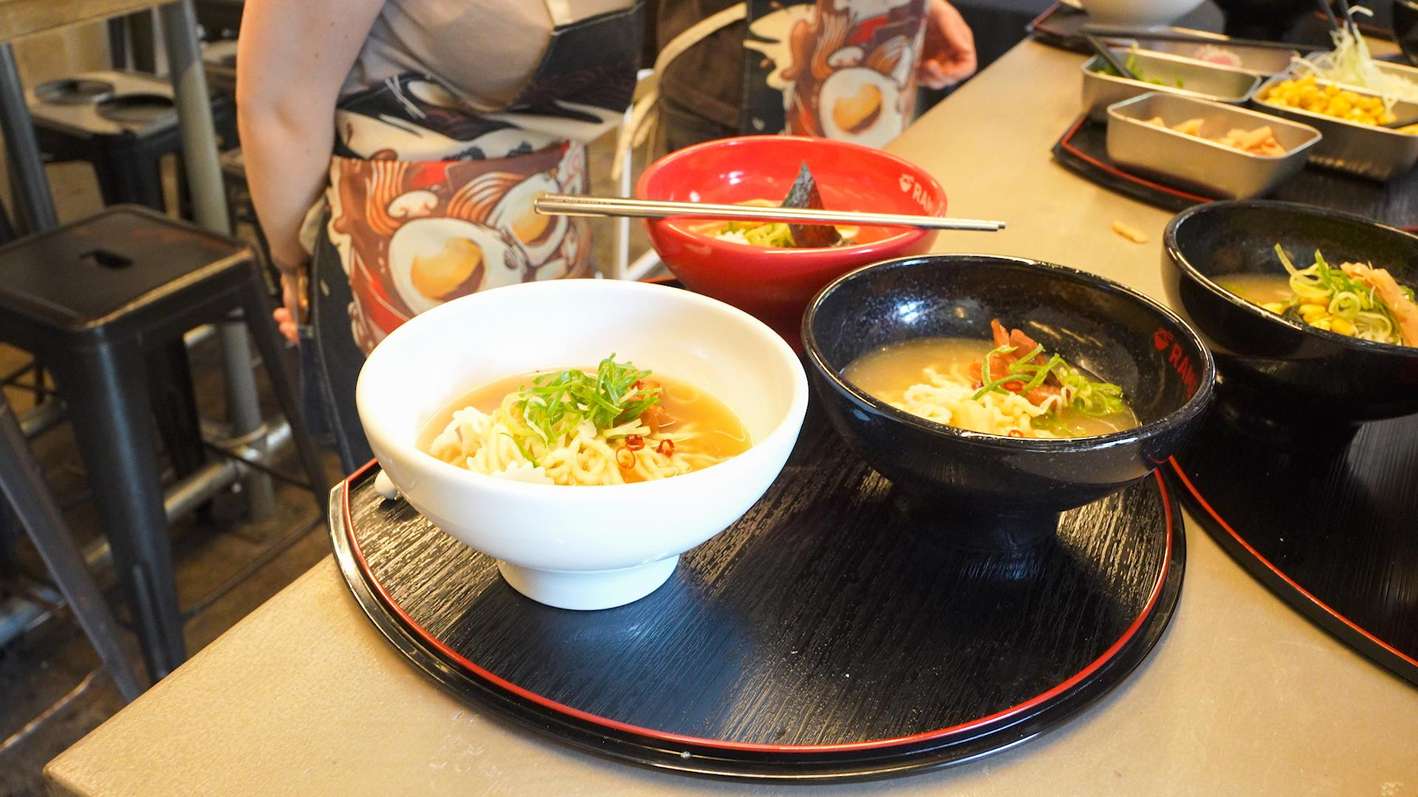
The standard class compares tonkotsu, shoyu and miso side by side in three mini bowls; the vegan option swaps the usual meat and fish bases so everything you cook and eat is yours to finish.
An English-speaking instructor guides the whole thing, an apron and all ingredients come included, and the digital recipe arrives after class so you can repeat it at home. Come hungry, because three bowls replace a meal.
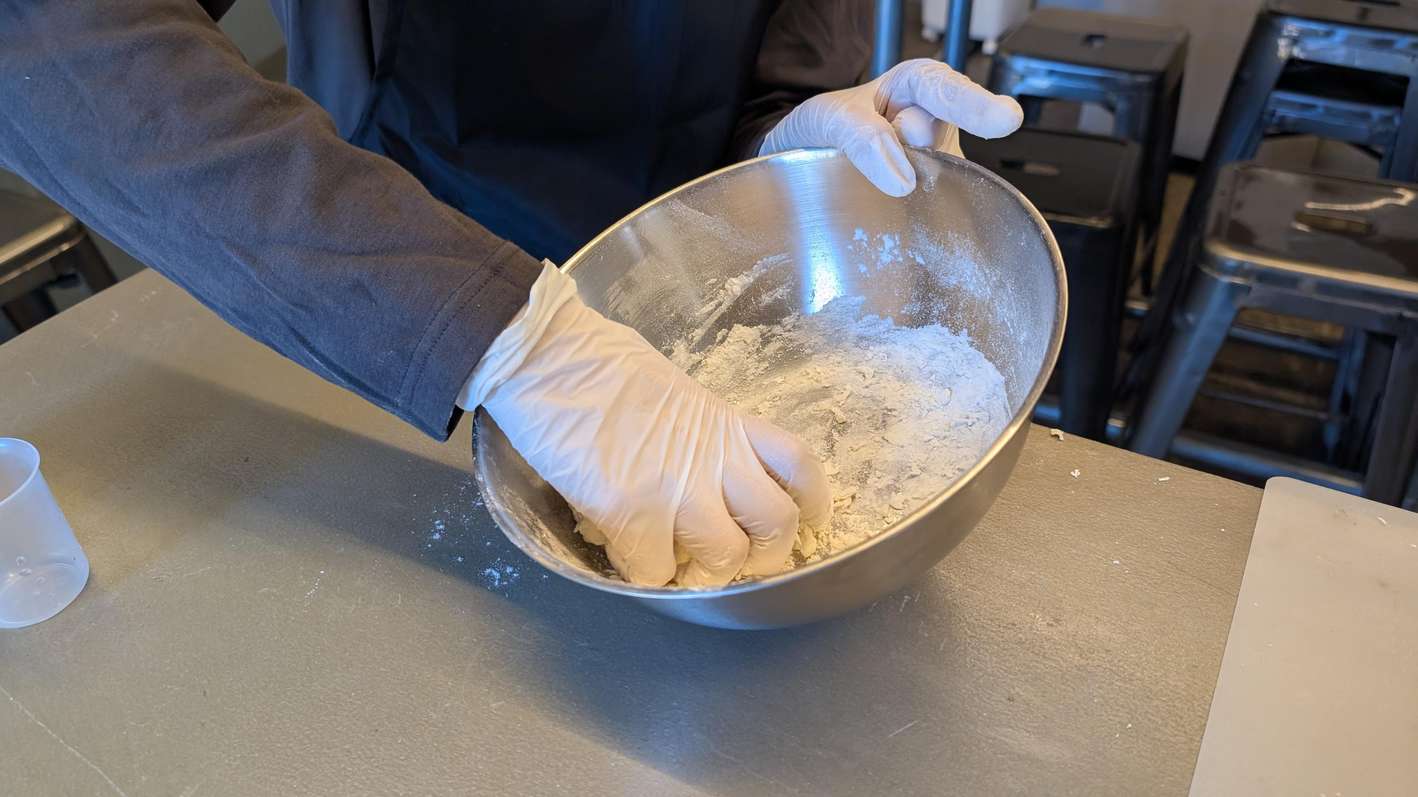
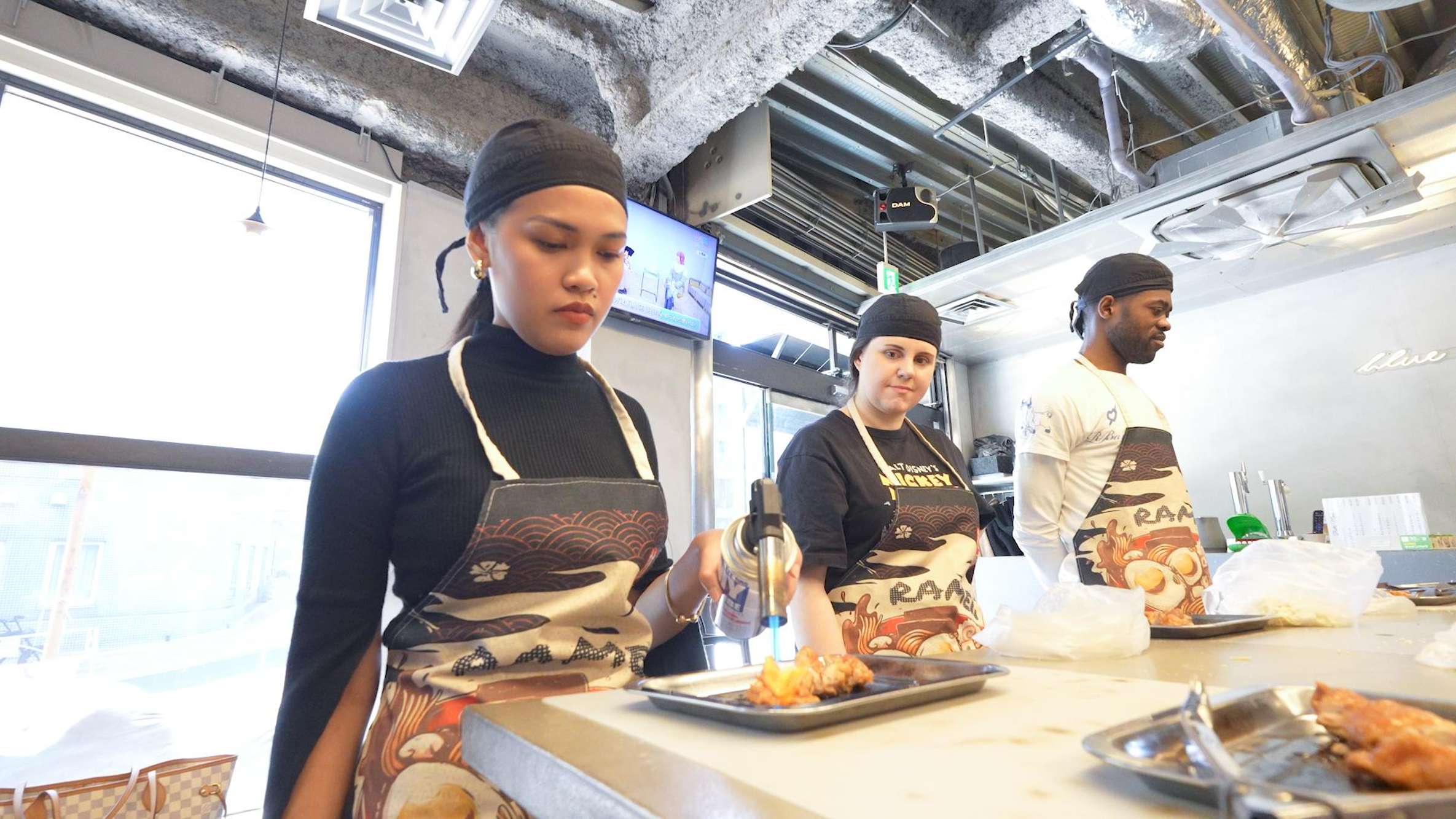
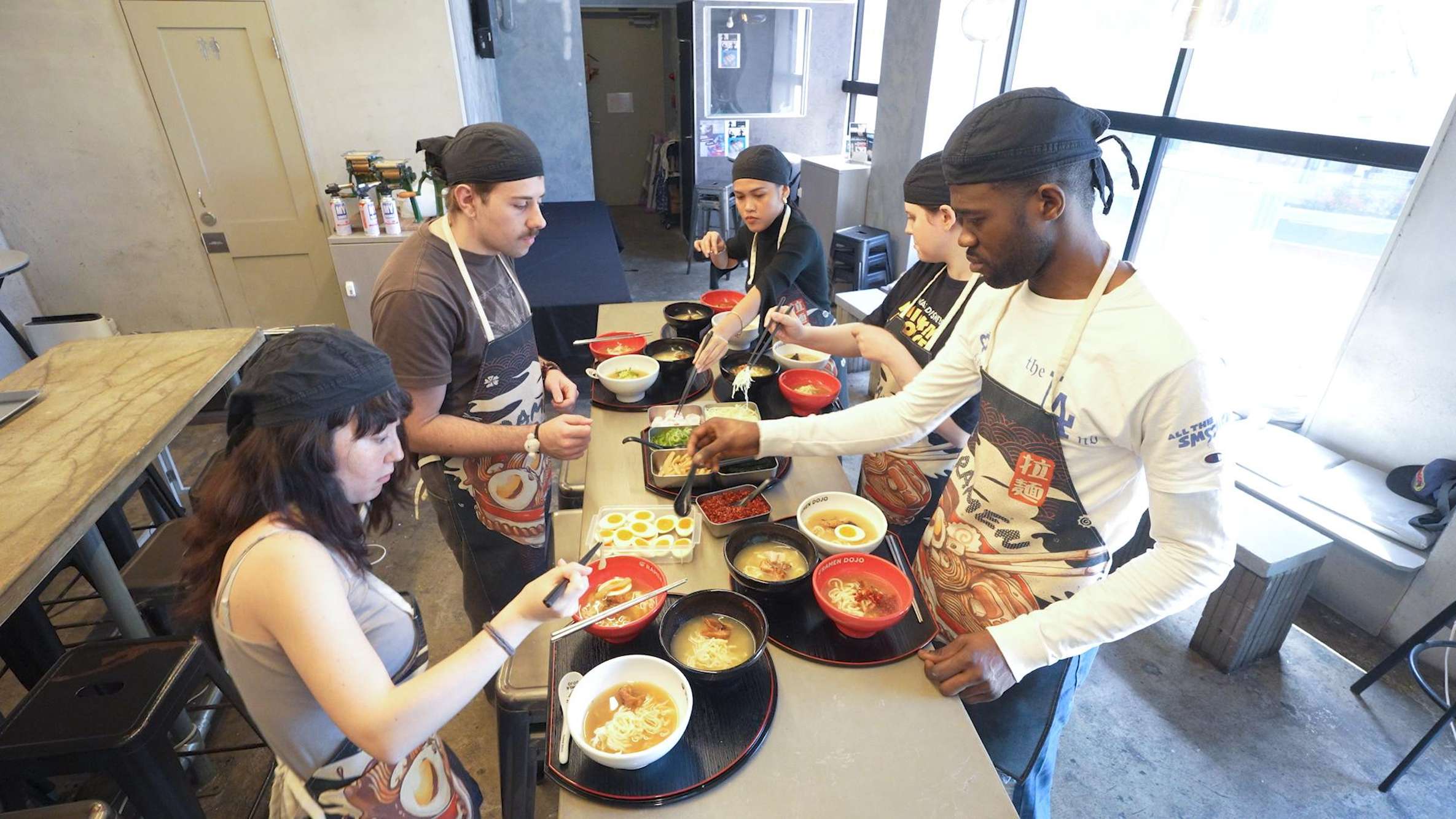
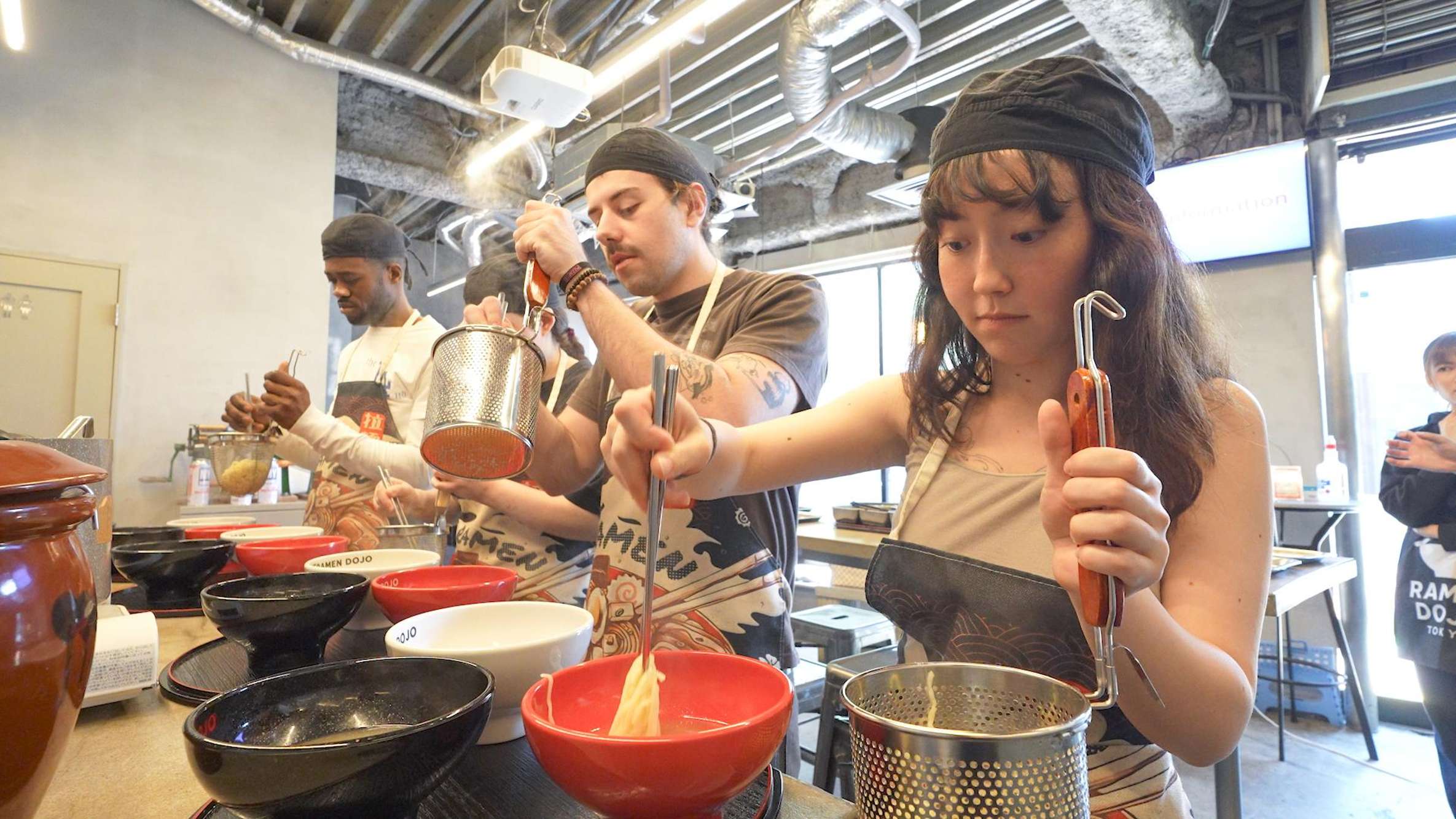
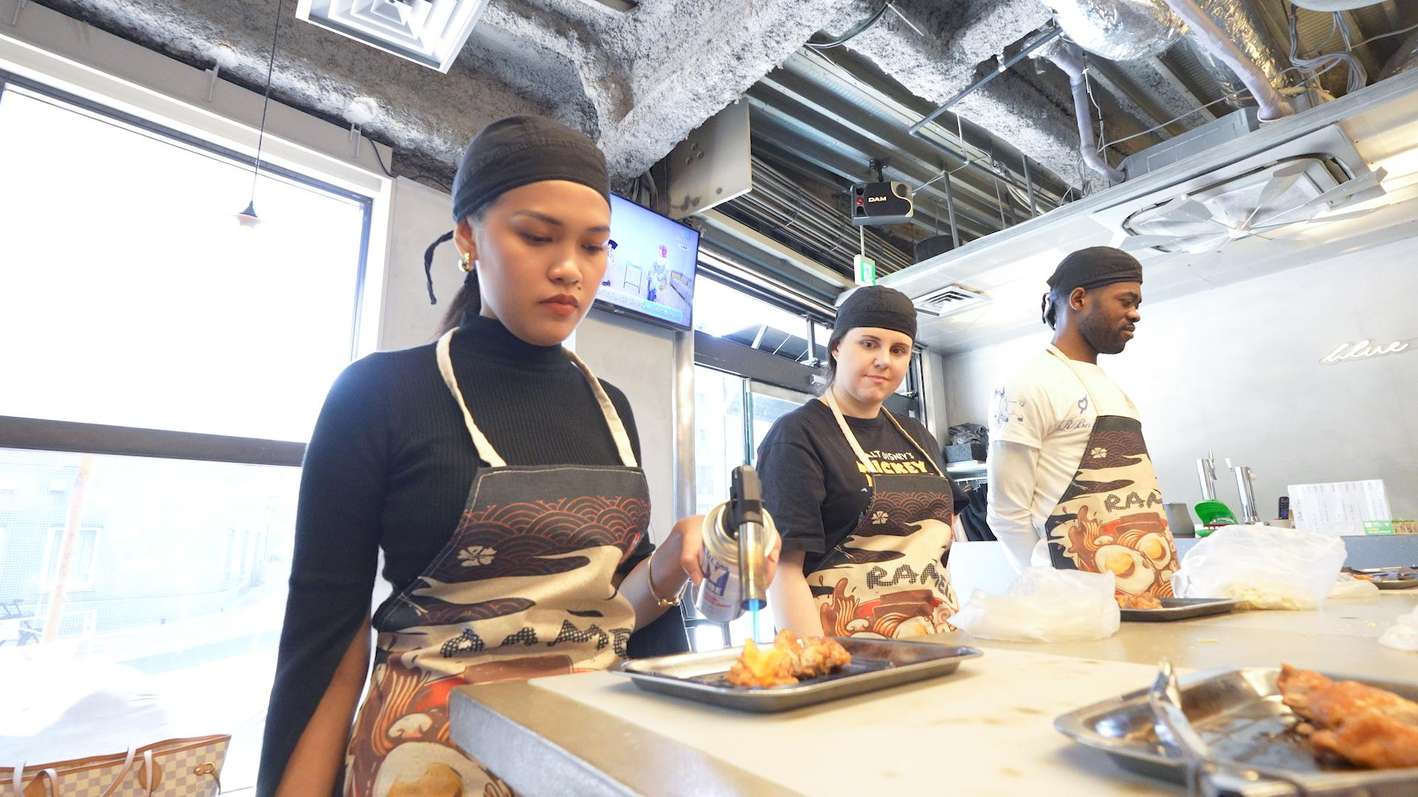
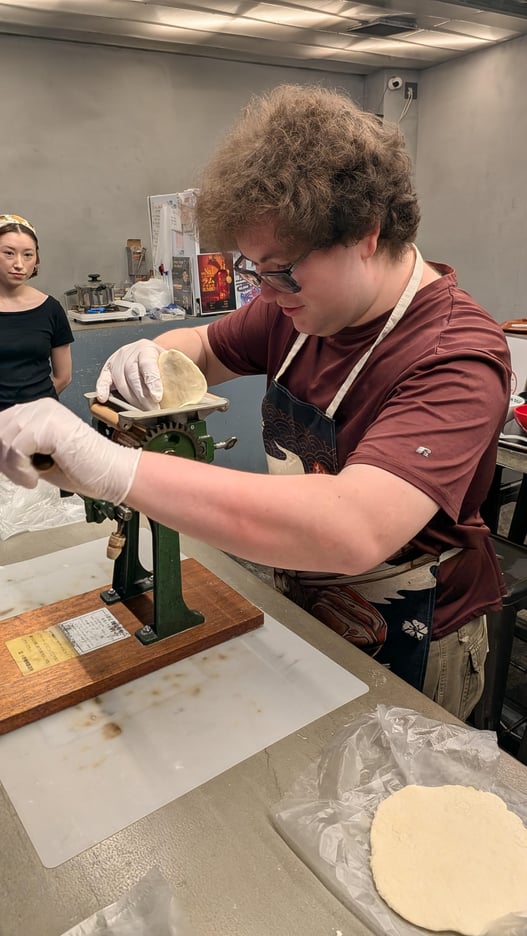
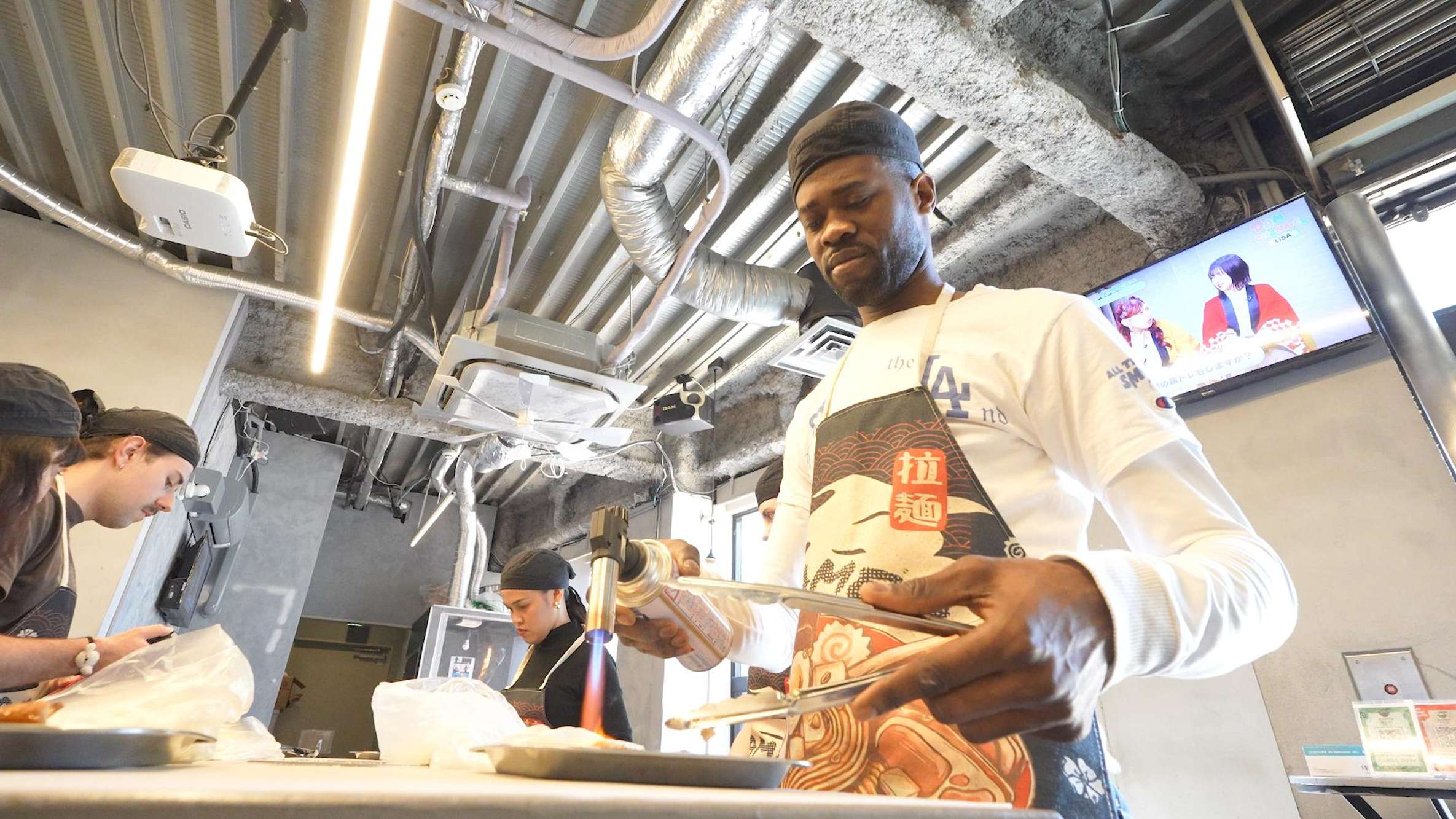
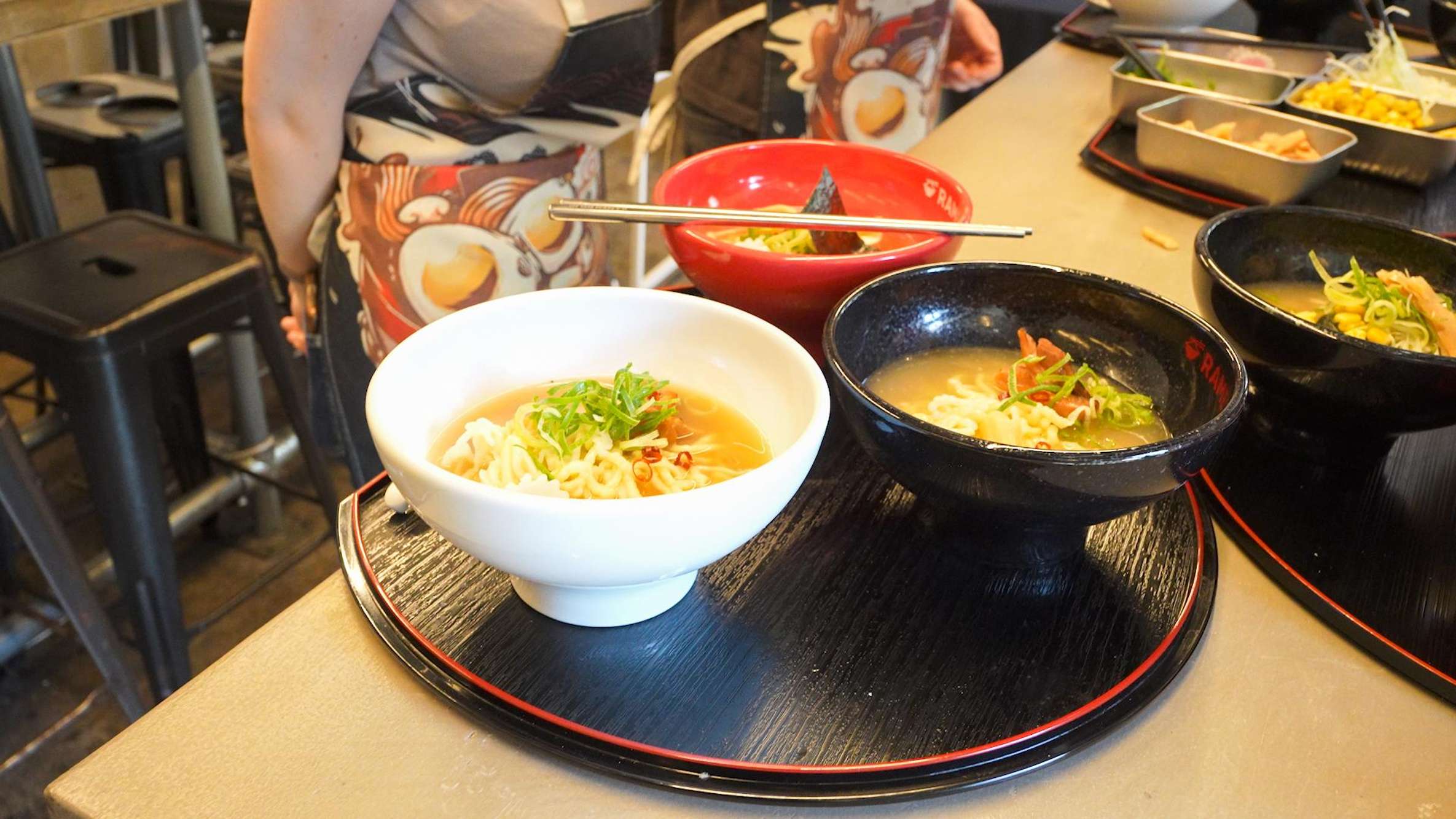
1Arrival at the Ohashi studio· about 10 minDoors open 15 minutes before class, so arrive 10 to 15 minutes early, meet your instructor and put on the apron provided.2Kneading and cutting the noodles· about 25 minKnead your dough by hand, then roll it and cut it into springy noodles on a professional noodle machine, with step-by-step help throughout.3Broth, chashu and toppings· about 25 minOn the vegan booking you build your bowls plant-based instead of preparing the chicken chashu; everyone sears, seasons and customizes with the included toppings.4Three mini bowls at the table· about 25 minSit down and taste what you made. The standard session compares tonkotsu, shoyu and miso; your vegan bowls follow the same formats without the animal bases.5Leaving with the recipe· about 5 minTake a digital recipe home after class, and browse wagyu toppings, drinks and aprons on-site if you want extras before you go.
Included
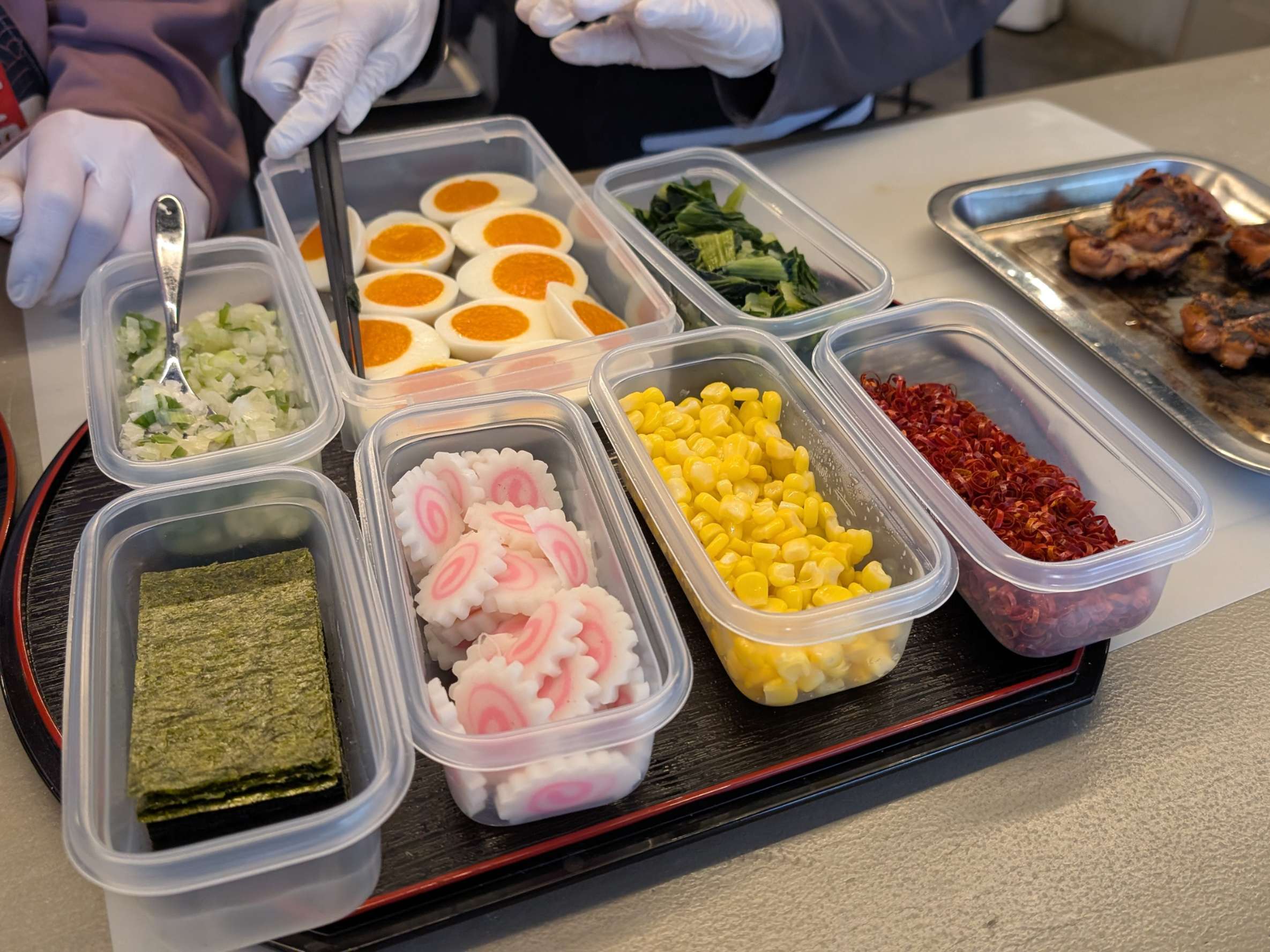
English-speaking instructorAll ingredients to make and taste three mini ramen bowls: tonkotsu, shoyu, and misoA wide selection of standard toppings at no extra chargeUse of cooking equipment and a professional noodle machineApron for use during the classDigital recipe provided after the class
Not included
Transportation to and from the studio
Ramen classes side by side for vegan cooking in Tokyo
Green marks the lowest price. Prices per person.
Tour
Price
Duration
Pickup
Languages
Best for
Our pick
Tokyo: Shibuya Ramen Class: Make Tonkotsu, Shoyu & Miso
4.9★ (560)
from $126per person
1.5 hours
no
English, Japanese
vegans who want a named plant-based option and three bowls to make and eat
Patient, step-by-step instruction in clear English runs through nearly every review, and the finished bowls get called some of the best of the trip.
Best surprise
Several travelers booked a group slot, found the room nearly empty, and ended up with a private lesson instead.
Most common wish
A few wished for smaller groups so everyone could work through every step themselves rather than share the tasks.
How to book a vegan cooking class in Tokyo
01
Pick a date with a buffer
Choose a day that leaves your morning or afternoon free around the class, since sessions run 50 minutes to about two hours. Every one of these workshops lets you cancel up to 24 hours in advance for a full refund.
Pro tipBook an early session so a delayed train or a wrong exit never threatens the start; you keep the rest of the day for sightseeing either way
02
Choose the vegan option
For the Shibuya class, pick the option called Vegan & Halal-friendly Ramen when you book. The standard choice covers tonkotsu, shoyu and miso mini bowls with chicken chashu, so the option you click decides what you cook and eat.
Common mistakeBooking the default three-flavour option and expecting the host to swap ingredients on the day; the vegan bowls come as their own booking option
03
Flag your diet early
If you book the indoor ramen and dumpling class in Nerima, tell the host about your plant-based diet as soon as you book. The vegetarian ramen there needs advance notice, and a same-day request may not be possible.
ImportantA vegetarian label in Japan is a starting point, so spell out your exclusions in plain words, broth and seasonings included, when you message the host
04
Save the meeting details
Screenshot the address the moment your confirmation arrives. The Shibuya studio sits at 1F, 2-16-29 Ohashi in Meguro-ku, a 3 to 5-minute walk from Ikejiri-ohashi Station, and it hides inside a craft beer bar, so check the building before you set out.
RecommendedLook at the street view of the entrance the night before; a traveler in July 2026 spent extra minutes hunting for a first-floor studio behind a bar front
05
Time your arrival
Aim to reach the studio 10 to 15 minutes before the start. Doors open 15 minutes before class, so an earlier arrival means waiting on the street. Arriving 5 minutes late or more can mean joining in progress or being turned away.
Pro tipAdd 30 minutes to any Tokyo train estimate on weekdays, and up to an hour for a route with transfers or luggage, so you walk in calm instead of running
What to know before booking a vegan cooking class in Tokyo
Can stop the dayGood to knowGood news
01
ChoosingWhat it is, who it suits, when to go
2
Vegan labels
Read the ingredients behind any plant-based label. In Japan, a broth can contain fish even when the bowl shows no meat, and tofu and cooked vegetables can carry animal seasonings. The classes on this page name their plant-free options openly, so you can check what you will actually eat.
Booking option
For the Shibuya class, pick the option named Vegan & Halal-friendly Ramen when you book. The standard option covers tonkotsu, shoyu and miso, which are built on animal broths. Both options run the same 90-minute workshop with the same noodle machine and instruction.
02
BookingHow far ahead, and what happens if plans change
2
Advance noticeCan stop the day
The indoor ramen and dumpling class in Nerima offers a vegetarian ramen, and the host asks for notice in advance. Message when you book, because the request cannot be handled on the day of the class. It costs you one message and secures the bowl you came for.
Cancellation
All three classes let you cancel up to 24 hours in advance for a full refund. That gives you room to hold a slot while you settle the rest of your Tokyo plan, and to switch days if your itinerary shifts.
03
Before you goPapers, health, what to bring
3
AllergiesCan stop the day
The Shibuya class is unsuitable for severe wheat, egg or soy allergies, coeliac disease, or sensitivity to flour in the air, since dough work fills the room. The Kappabashi noodle studio excludes guests with buckwheat allergies. If any of these apply to you, another format is the safer pick.
Health limits
Skip the Kappabashi noodle session if you have a cold, because it is a hands-on food workspace. Its method asks you to knead dough and cut noodles with a large, heavy knife, so children working on their own need the strength to handle both.
What to wear
Wear closed-toe shoes and clothes that can survive a splash of flour or soup, with sleeves you can roll up. Aprons are provided where the class uses them. Leave dangly jewelry at your hotel so it stays out of the dough.
04
On the dayWhere to be, when, and how you get there
3
Finding the studio
The Shibuya class runs from a first-floor studio at 2-16-29 Ohashi in Meguro, a three-to-five-minute walk from Ikejiri-ohashi Station. Check the building details before you leave, because the entrance sits inside a craft beer bar and one traveler in July 2026 had trouble spotting it.
Arrival window
Plan to reach the Shibuya studio 10 to 15 minutes before the start. Doors open 15 minutes before class, so earlier arrival gets you a closed door, and guests who are 5 or more minutes late may have to join in progress or be turned away.
Vegan broth
A short workshop shows how plant-based broth builds depth by layering kombu, dried shiitake, miso and aromatics, since a traditional meat stock needs many hours. Kombu and shiitake benefit from overnight steeping, so part of the prep may be done before you arrive.
A vegan cooking class day in Tokyo, from choice to bowl
Three Tokyo workshops teach you to make plant-based ramen, and each works in a different way. Which one fits depends on how you like to cook, how long you have and how the class advertises its vegan option.
Tokyo
If you only remember three things
1
Book the Vegan & Halal-friendly option in Shibuya as its own choice on the booking page.
2
Doors open just 15 minutes before a Shibuya class starts, so time your arrival to the minute.
3
Check the broth for fish as well as the toppings, and remember the noodle dough itself can hide egg.
Why join a vegan ramen cooking class when Tokyo has vegan shops already?
A good vegan ramen shop feeds you for one evening. A class sends you home able to cook the dish, which is why these workshops suit travelers who want techniques and practical advice for recreating Japanese food in their own kitchen.
A traveler's note
Amazing! Smiley Amo met us at the subway, Yoshi warmly welcomed us. Kitchen perfectly set up, every step explained, patient hosts with tons of experience. Recipes emailed after. Yummy food, cool t-shirts!
Eating out wins on speed; the class costs you an hour or two and hands back skills instead. People who take the classes tend to remember the lesson longer than the meal.
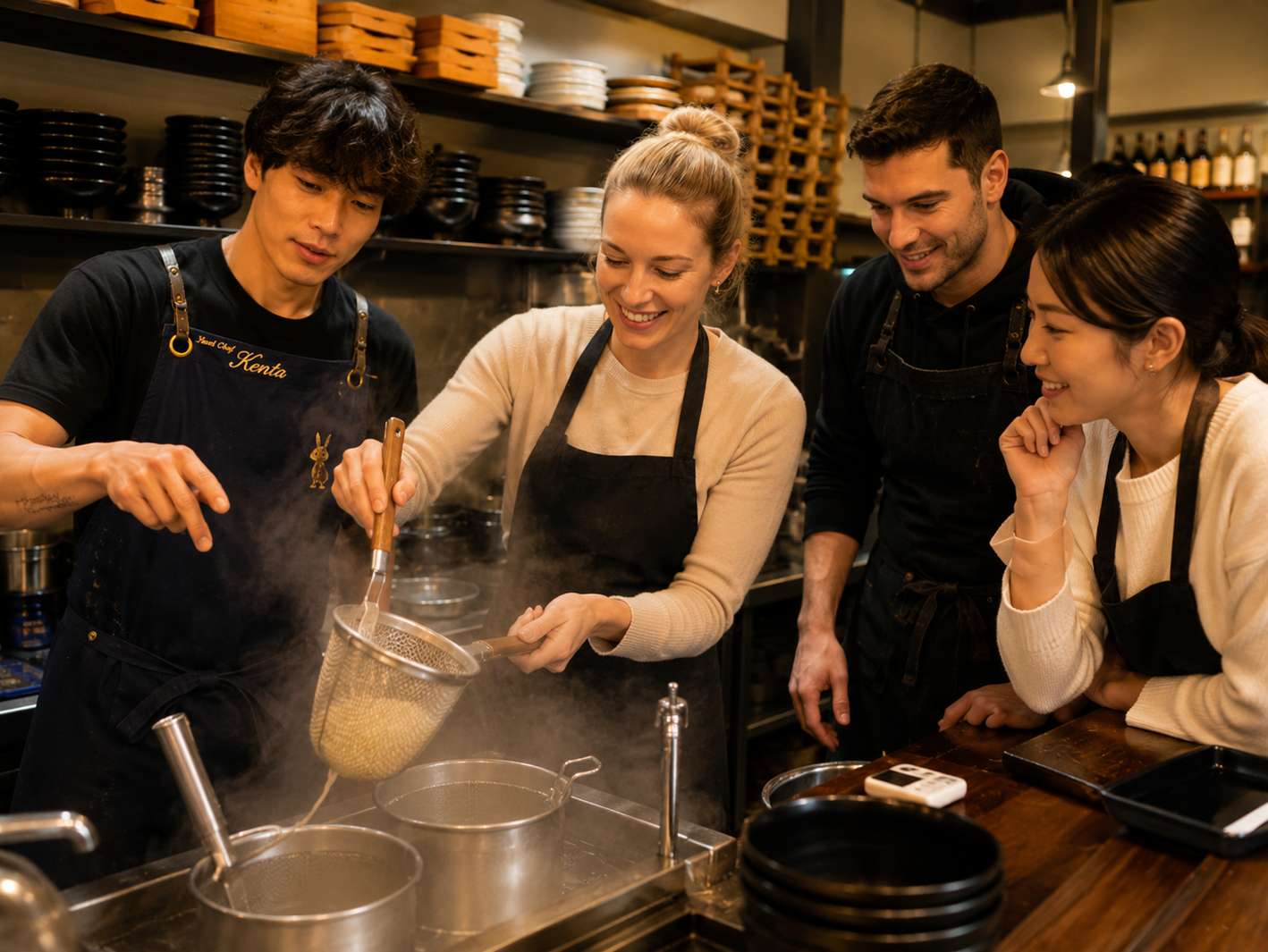
One further option sits close to this choice. Become a Ramen Chef for a Day: Tokyo Restaurant Experience runs 2 to 3.5 hours in a working Minami Aoyama kitchen, with bone breaking, noodles from scratch and gyoza made the restaurant way.
It caters to vegetarians if you ask in advance, though its daily broths contain chicken, pork and fish. It suits readers who want the professional-kitchen session in a real restaurant; for plant-based eating, one of the three vegan classes fits better.
Tour for this
Become a Ramen Chef for a Day: Tokyo Restaurant Experience4.7★ (51) · 2 - 3.5 hours · Free cancellation
What to check before you trust a vegan ramen cooking class in Tokyo
Treat a plant-based description as a starting point for checking ingredients. The words vegan and vegetarian also point to different bowls with different rules: one Tokyo indoor ramen-and-dumpling class offers vegetarian ramen with advance notice, while the city's vegan food tour states that everything it serves is vegan. Read which word the listing uses.
Three checks do most of the work. First, the broth: fish ingredients can hide there even when every topping looks plant-based, so ask about the broth itself. Second, the noodles: ramen dough can contain egg even when it is never described as egg noodle.
Third, the booking option: some classes bake the plant-based version into a named option you select when booking, others take it as a request you must raise ahead of the day.
How to choose a vegan ramen cooking class in Tokyo
Check
Why it matters
Our pick
A vegan option named on the listing
A vegetarian label can mean a different bowl with different rules
The Shibuya class lists a Vegan & Halal-friendly Ramen option by name
Broth and seasonings covered
Fish stock and seasoned tofu hide below the toppings
All ingredients for your option come with the booking
Egg in the dough checked
Noodles can carry egg without saying so
Your option's recipe arrives as a digital download after class
A booking option, a same-day request
Same-day dietary requests are often refused
Pick Vegan & Halal-friendly Ramen as the option when you book
Ask those questions against each listing before you pay, and the choice usually makes itself.
What you make and eat in a vegan cooking class in Tokyo
The heart of the lesson is broth. A short Tokyo workshop can teach how vegan broth builds depth by layering kombu, dried shiitake, miso and aromatics, instead of the long meat-stock simmer one ramen kitchen runs, a 10-hour chicken, pork and fish broth. That layering technique is what travels home with you.
Preparation still counts. Kombu and shiitake can steep overnight or warm gently, so a short lesson may use ingredients prepared ahead. Hosts plan for that; the steeping happens before you arrive.
How a hand-cut noodle session unfolds
1
Arrival
Settle in at the open kitchen studio in Kappabashi
Wear washable casual clothes; aprons come with the class
2
Noodle cutting
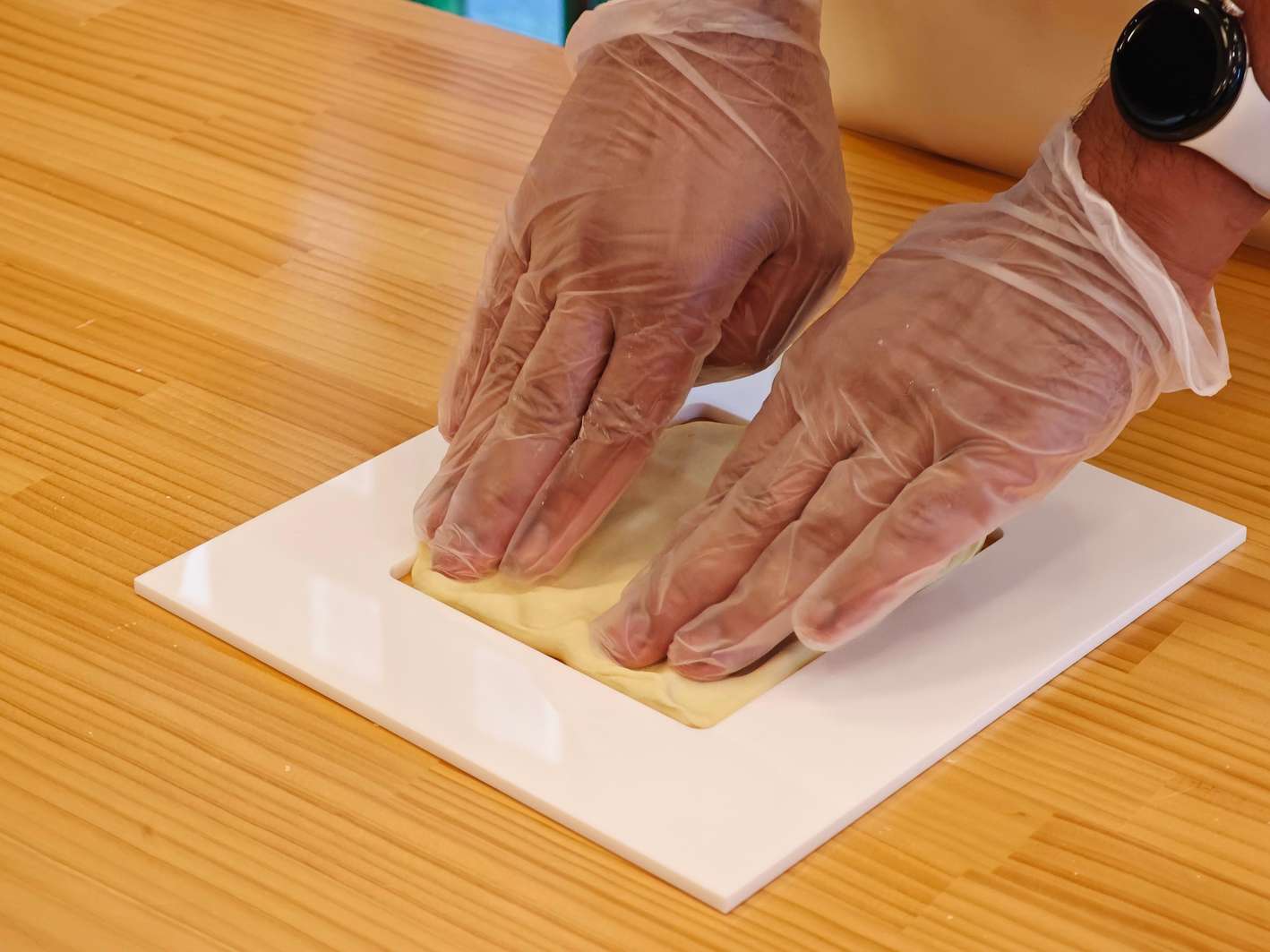
Mix flour with water, knead, stretch the dough flat
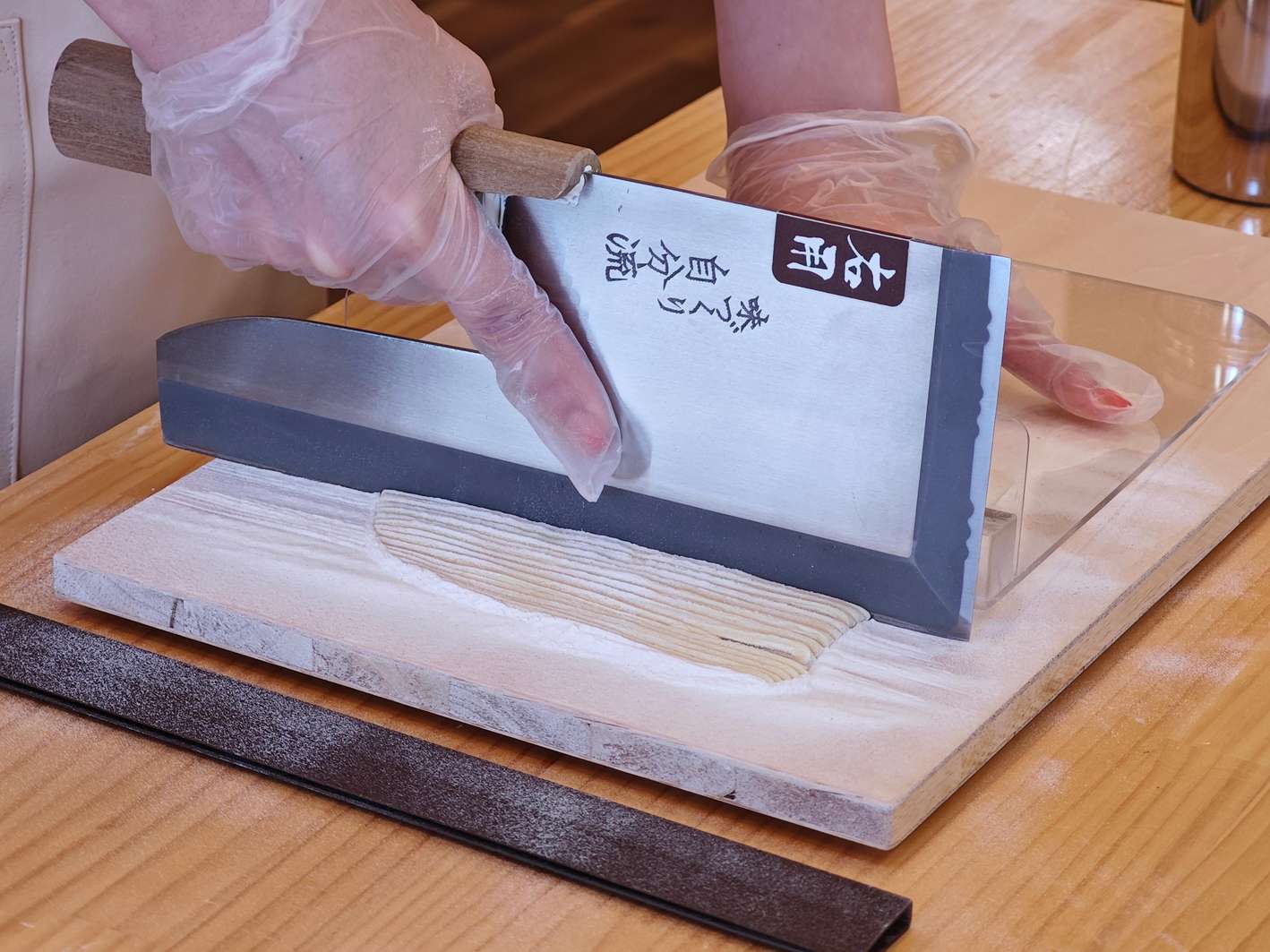
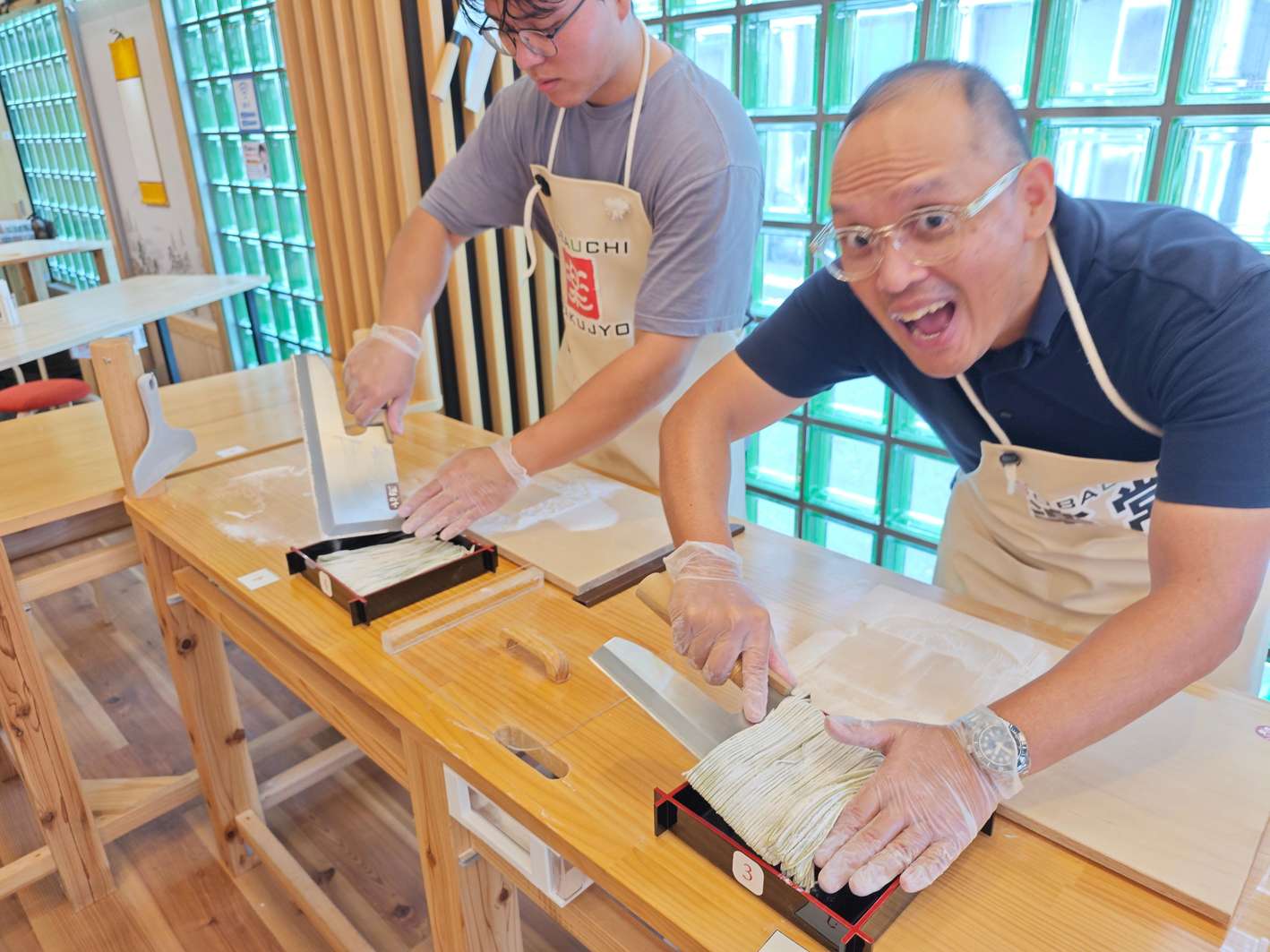
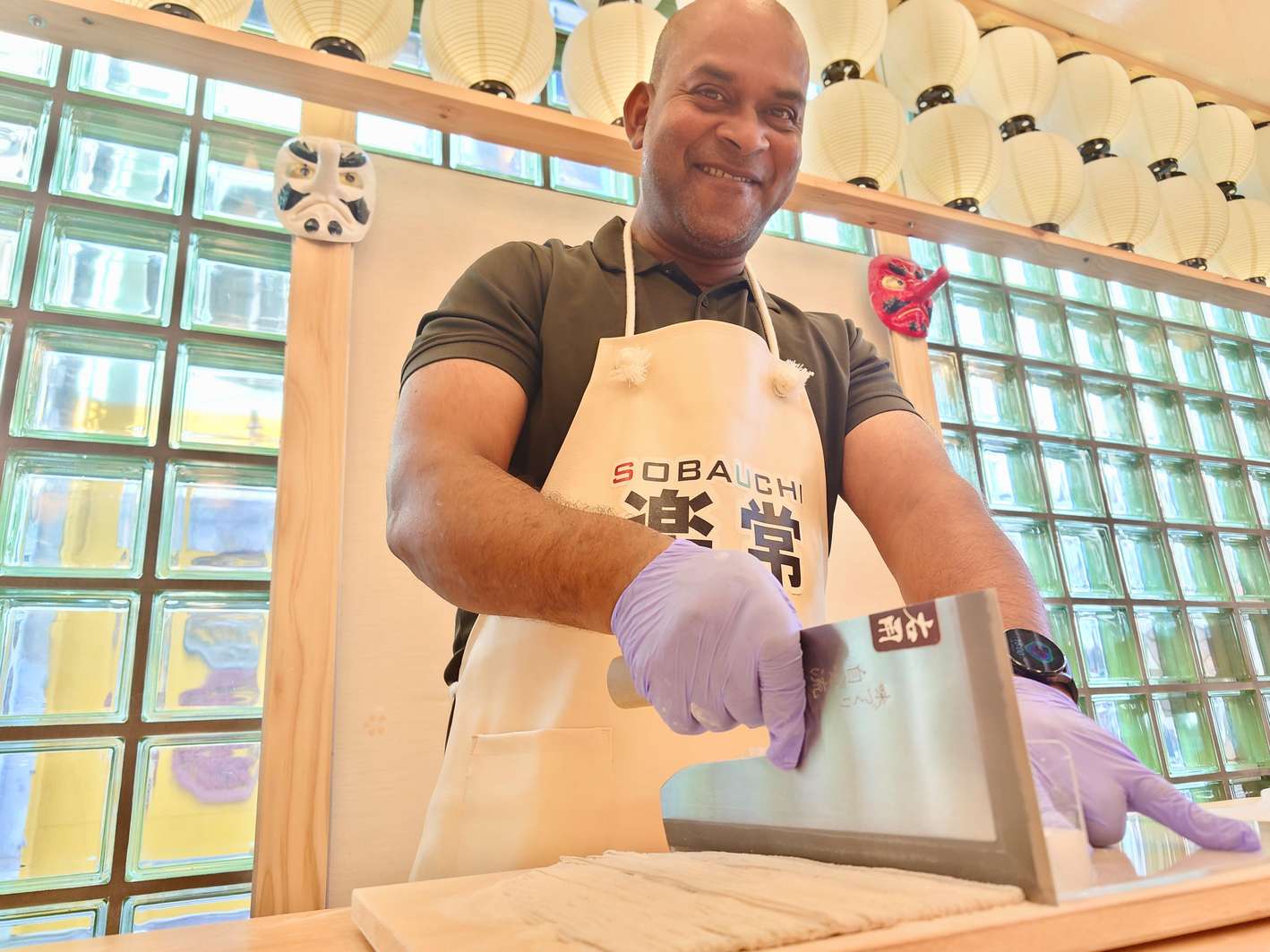
Cut the strands one by one with a large noodle knife, an Edo-period technique
3
Boiling
Staff cook your noodles for you
Separate the strands well or they clump into one mass
4
The meal
Sit down to the bowl you cut yourself
One drink is included, plus unlimited snacks from Japanese makers
One thing to plan around: some Tokyo classes permit no takeaway or leftovers for food-safety reasons, so come hungry and finish the bowl in the studio. Even the mini bowls run generous enough to stand in for lunch.
Tour for this
Made from flour in 30 Minutes! Ramen Noodle-Making Experience!4.8★ (28) · 50 minutes · Free cancellation
Picking between Tokyo's vegan ramen classes - what sets each apart, and which to book
The three matching workshops split along three lines: how the noodles are made, whether the broth is yours to build, and how the plant-based option reaches the booking page.
The three Tokyo workshops for a vegan traveler
Made from flour in 30 Minutes
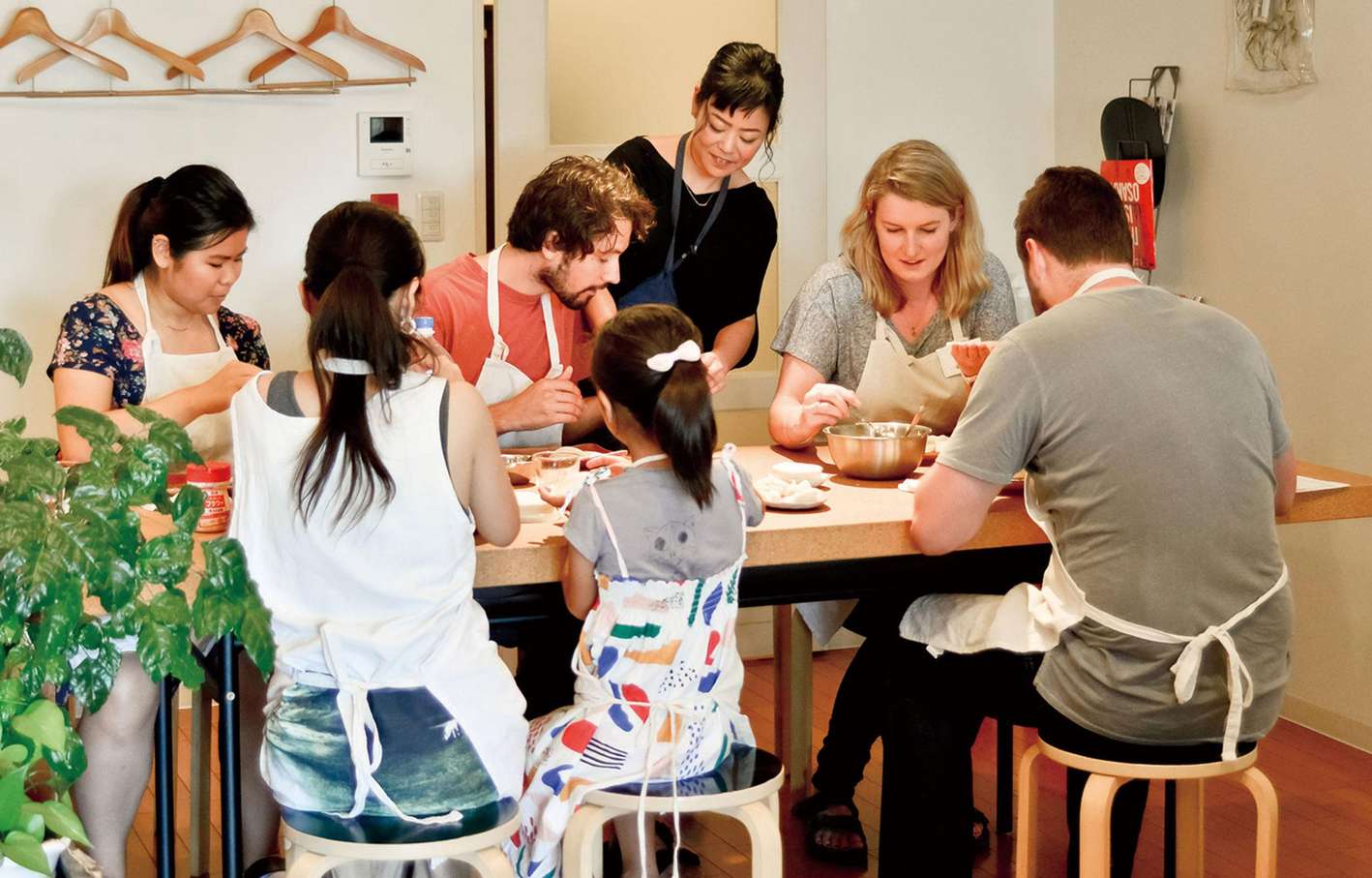
Tokyo: Indoor Ramen & Dumpling Cooking
Tokyo: Shibuya Ramen Class
Session length
50 minutes
2 hours
1.5 hours
Noodles
Hand-cut with a large knife
Made in class
Cut on a professional noodle machine
Broth
Chosen from four bases
Pre-prepared by the host
Made with your option's ingredients
Vegan availability
Listed vegan ramen option
Vegetarian ramen, advance notice required
Named Vegan & Halal-friendly Ramen option
How to book
Single option
Message the host before the day
Select the vegan option as its own booking
Made from flour in 30 Minutes
Session length
50 minutes
Noodles
Hand-cut with a large knife
Broth
Chosen from four bases
Vegan availability
Listed vegan ramen option
How to book
Single option
Tokyo: Indoor Ramen & Dumpling Cooking
Session length
2 hours
Noodles
Made in class
Broth
Pre-prepared by the host
Vegan availability
Vegetarian ramen, advance notice required
How to book
Message the host before the day
Tokyo: Shibuya Ramen Class
Session length
1.5 hours
Noodles
Cut on a professional noodle machine
Broth
Made with your option's ingredients
Vegan availability
Named Vegan & Halal-friendly Ramen option
How to book
Select the vegan option as its own booking
Hand-cutting in Kappabashi suits anyone who wants a skill with no machinery behind it; it is also the shortest session of the three. The Nerima class fits families who want ramen plus gyoza in one sitting, as long as you give notice.
The Shibuya class suits anyone who wants the vegan choice settled at booking time, and its 1.5 hours leaves most of the day free; quiet weekday slots there often turn into something close to a private lesson.
Whatever you book, dress for the kitchen, and this list covers it.
What to wear for ramen making
Comfortable, washable clothesChoose casual clothing you do not mind getting flour or sauce on.
Closed-toe shoesPrefer covered shoes to open-toed footwear for kitchen work.
Sleeves rolled up, no loose jewelryKeep loose sleeves rolled up and avoid dangling jewelry while cooking.
ApronAprons are usually provided for class.
Spring and autumnIndoor and outdoor temperatures can differ; wear light layers.
SummerTokyo and Osaka can be hot and humid; choose breathable clothing.
WinterWear warm outer layers that you can remove in a heated kitchen.
Flour and sauce splashes are part of the session, so wear clothes you can wash afterwards. The Shibuya studio sits on the first floor of a craft beer bar, easy to walk past, so leave a few minutes to find the door.
Book the Vegan & Halal-friendly option in Shibuya and the diet question is settled before you arrive; its 1.5 hours still leaves most of your day free.
The hand-cut session in Kappabashi is the shortest and teaches a skill with no machine behind it. The Nerima class suits families, with advance notice for the plant-based bowl.
Go ifYou want the vegan option settled as its own booking choiceYou want skills for cooking ramen at home, with the meal as part of itYou can arrive 10 to 15 minutes before the start time
Skip ifYou need strict dietary compliance the class cannot promiseYou cannot manage stairs at the Shibuya studioYou want to take leftovers away with you
Vegan cooking in Tokyo - questions before you book a ramen class
Short answers to the things people ask before booking a plant-based ramen workshop in Tokyo.
Tokyo2026
The broth here gets its depth from kombu and shiitake, no bones in sight. Book the vegan option ahead so it is waiting for you.
Does a ramen class labeled vegan in Tokyo really mean vegan?
Treat a plant-based label as a starting point and check the ingredients behind it. Ramen broth can contain fish even when no meat is visible, and noodles can contain egg without being described as egg noodles. Tofu and cooked vegetables also need a seasoning check before you count them as vegan.
Which class in Tokyo has a properly named vegan option?
The Shibuya ramen class has a Vegan & Halal-friendly Ramen booking option you can select directly. It runs the same 1.5 hours as the standard session. Note that the studio cannot guarantee strict dietary compliance, so if your eating is fully strict, mention your needs ahead of the date you book.
What is the difference between a vegetarian and a vegan ramen option?
The indoor ramen-and-dumpling class in Nerima offers a vegetarian ramen option with advance notice, and a vegetarian dish can still include egg, dairy or fish stock. If you need the bowl fully plant-based, state the exact ingredients you exclude when you contact the host after booking.
How far in advance should I request a vegan or vegetarian ramen option?
For the Nerima ramen-and-dumpling class, the host asks for notice ahead of time and cannot take same-day requests for the vegetarian option. Choose your date, book, then message the host with your dietary needs so the right ingredients are ready when you arrive.
Do vegan ramen noodles exist, or does the dough always contain egg?
Noodles can contain egg even when they are not described as egg noodles, so the dough is the part to ask about. In Tokyo, the Kappabashi noodle-making class lists a vegan ramen choice among its miso, soy sauce and shio options, and the Shibuya class offers a dedicated vegan booking option.
Can a short class really teach vegan broth from scratch?
A short Tokyo workshop can teach how plant-based broth builds depth by layering kombu, dried shiitake, miso and aromatics. Real broth benefits from time, and kombu or shiitake can steep overnight, so a 90-minute lesson may use some ingredients prepared in advance while you learn the method.
I have a severe food allergy. Is a vegan ramen class safe for me?
Vegan and allergy-free are separate questions. The Shibuya class is unsuitable for guests with severe wheat, egg or soy allergies or a severe airborne flour sensitivity, because the kitchen works with those ingredients. If you have a serious allergy, confirm with the host before booking whether the kitchen can accommodate you.
Which parts of the bowl should I check to be sure the ramen is plant-based?
Check the broth as well as the toppings, because fish stock hides where you cannot see it. Then check the seasonings on tofu and cooked vegetables, and the noodle dough itself. In Japan, a dish with no visible meat or fish is not automatically vegan.
Will a vegan class let me eat the bowl I make?
The point of a named vegan option is that the bowl you cook is one you can finish. On the Shibuya class's vegan booking, you make and eat your own plant-based ramen during the session. If you are arranging something similar elsewhere, ask the host whether the vegan version covers the full bowl, broth included.
How do I explain a vegan diet to a Japanese host if I do not speak Japanese?
Say which ingredients you leave out: fish, meat, egg, dairy, whatever applies to you. A vegan label on its own tells a Japanese host little, because broths and seasonings often carry hidden animal ingredients. A short written list of excluded ingredients makes the request clear even with a language barrier.
Where can I find other vegan meals around my class in Tokyo?
HappyCow helps you locate plant-based meals near your class and your accommodation. Check locations against your itinerary, because a well-reviewed spot can sit inconveniently far from where you stay. The Tokyo Vegan Food Tour is another option, since every stop on it serves vegan food.