- 1
Book a weekday and skip Golden Week, Obon and New Year, when the trains and the streets fill with domestic travel.
- 2
Tasting portions run a quarter to a third of a full bowl, so eat lightly beforehand and arrive hungry anyway.
- 3
Cancel up to 24 hours before the start for a full refund, so an uncertain forecast never costs you the booking.
What Tokyo food tour travelers said in reviews
Most reviewers praised their guides as knowledgeable, friendly company who led them to spots they would never have found alone.
Several reviewers cancelled their dinner plans because the five stops filled them up more than they expected.
Many reviewers wished they had more time to revisit the shops their guides introduced that same day.
 ★★★★★
A brilliant intro to vegan Tokyo. Tons of stops, varied delicious food, and Bunga's advice.
Lesley · United Kingdom ★★★★★
Daisy was knowledgeable and passionate about Japanese food, kind and upbeat even in awful rain. Each spot had its own signature dish, all yummy! Great for finding small vegan places with personality.
Natalie · United Kingdom ★★★★★
Bunga was awesome company, touring and eating like a local. I learned how many vegan options the city has and about Japan's plant-based history. Left with a full brain and stomach.
Iddan · United States ★★★★★
Wonderful tour. My daughter worried about her dietary restrictions, but Bunga was understanding and accommodating, and the food was so good we cancelled our dinner plans.
Allen · United States ★★★★★
Great food and company! Non-vegans in our group got options too, plus tips for eating vegan in Japan.
Sonja · Austria ★★★★★
Amazing. Brian picked great spots, respected our preferences, and shared a list of vegan options that made everything easier. Worth every penny, Brian, you were the best host :)
Krina · India ★★★★★
Great tour, we'd never have found these places ourselves. The food was excellent and plentiful, and our guide was friendly and informative. Definitely recommend!
Ignacio · United States
Is a ramen food tour in Tokyo worth it for you
The queue outside a famous ramen shop does the marketing for it, and ordering there on your own works fine. What a guided outing adds is the guide: the neighborhood behind the shopfronts, the story of each dish, and stops you would never find from a map app.
Judge a food tour by its guidance and the places it opens up, as much as by the food itself.
Then there is the shape of the afternoon. Some readers want ramen on a plate, some want to watch a kitchen at work, and some want to cook. Tokyo's formats split along exactly that line.
Side by side: three ways to spend a ramen day
| Eat and explore | Behind the counter | Cook it yourself | |
|---|---|---|---|
| What you do | Walk Shimo-Kitazawa and taste five dishes | Step into a working ramen shop's kitchen | Make noodles, broth and chashu from scratch |
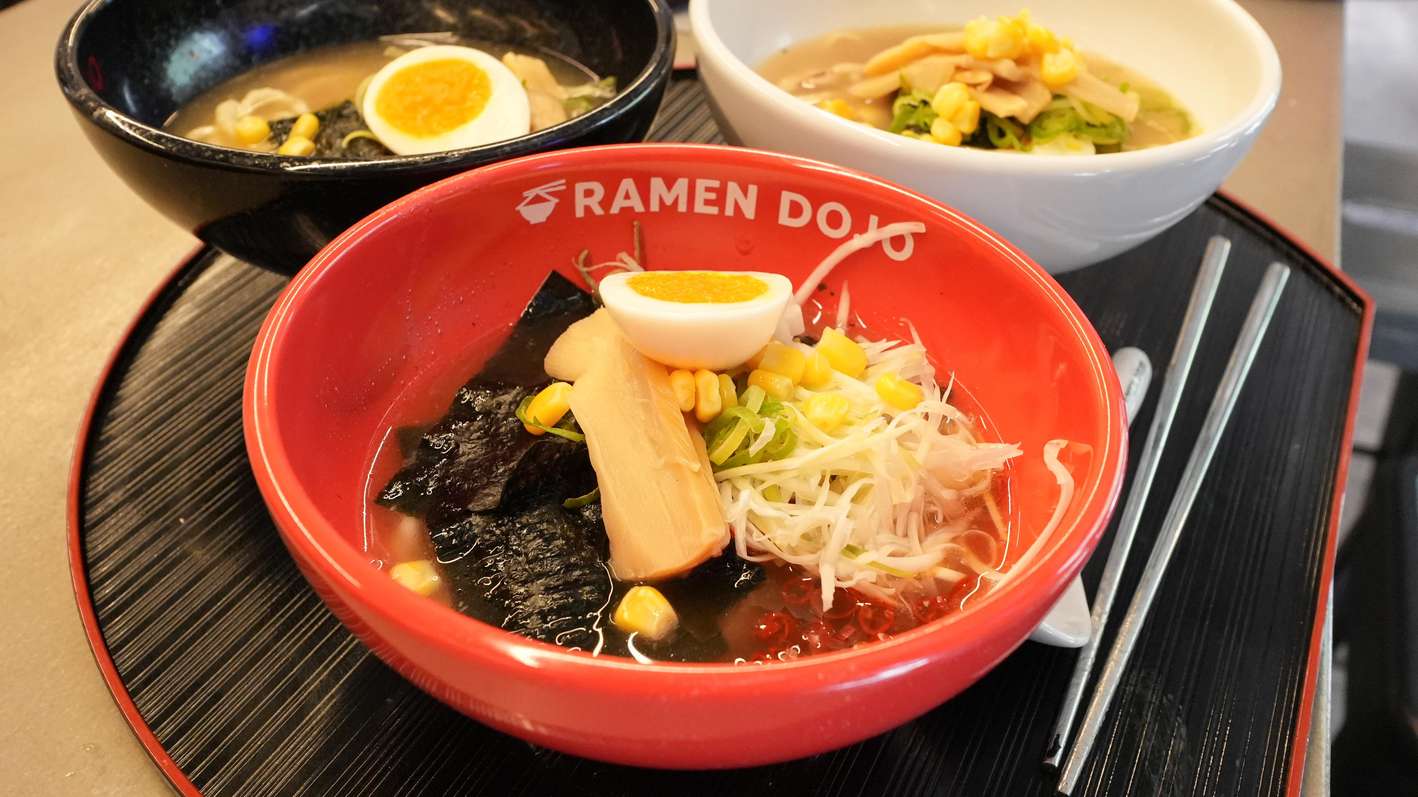
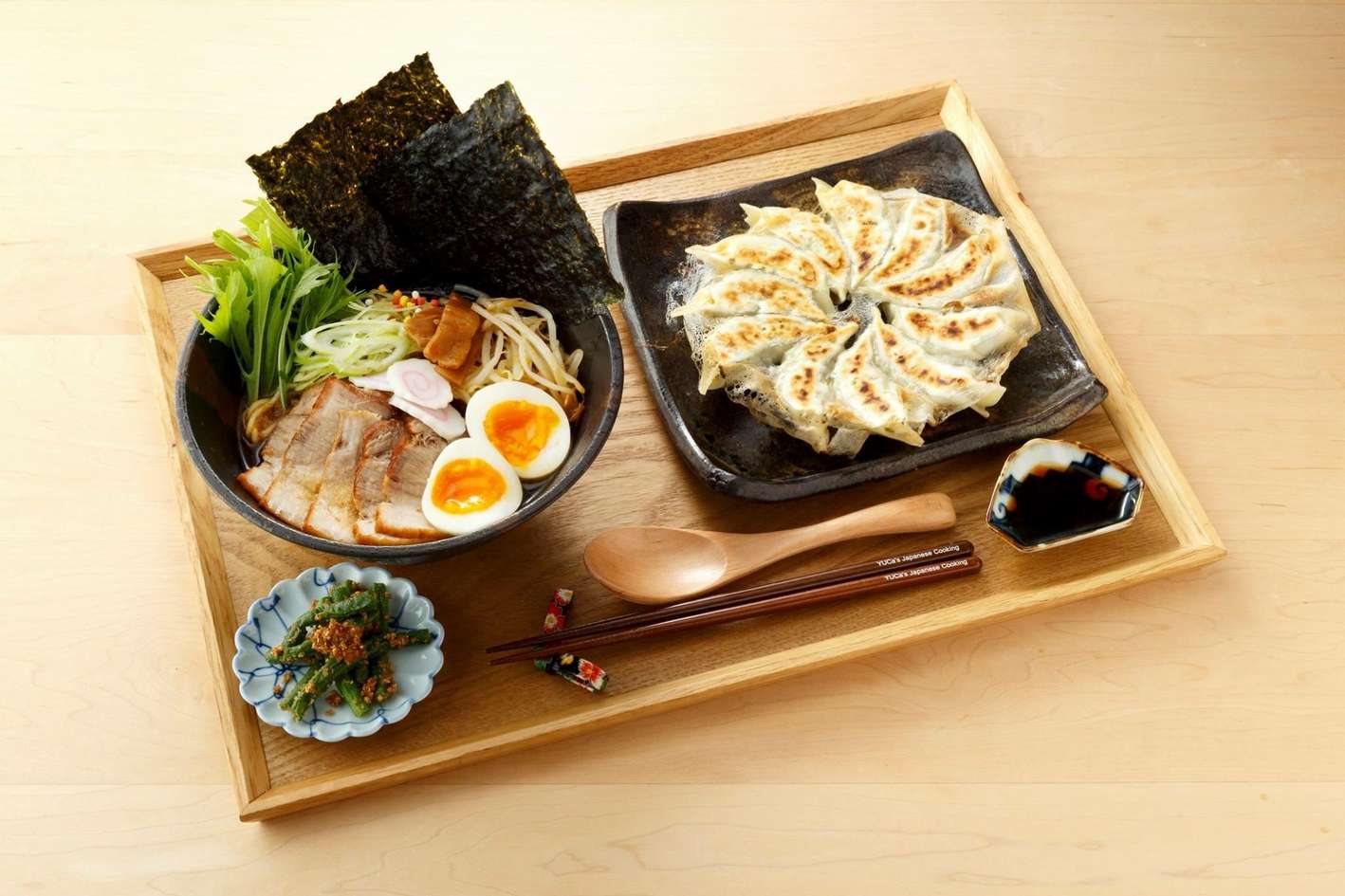
| The ramen | Spice ramen, plant-based, one of five tastings | Two small bowls plus two gyoza | A full Jiro-style bowl you built |
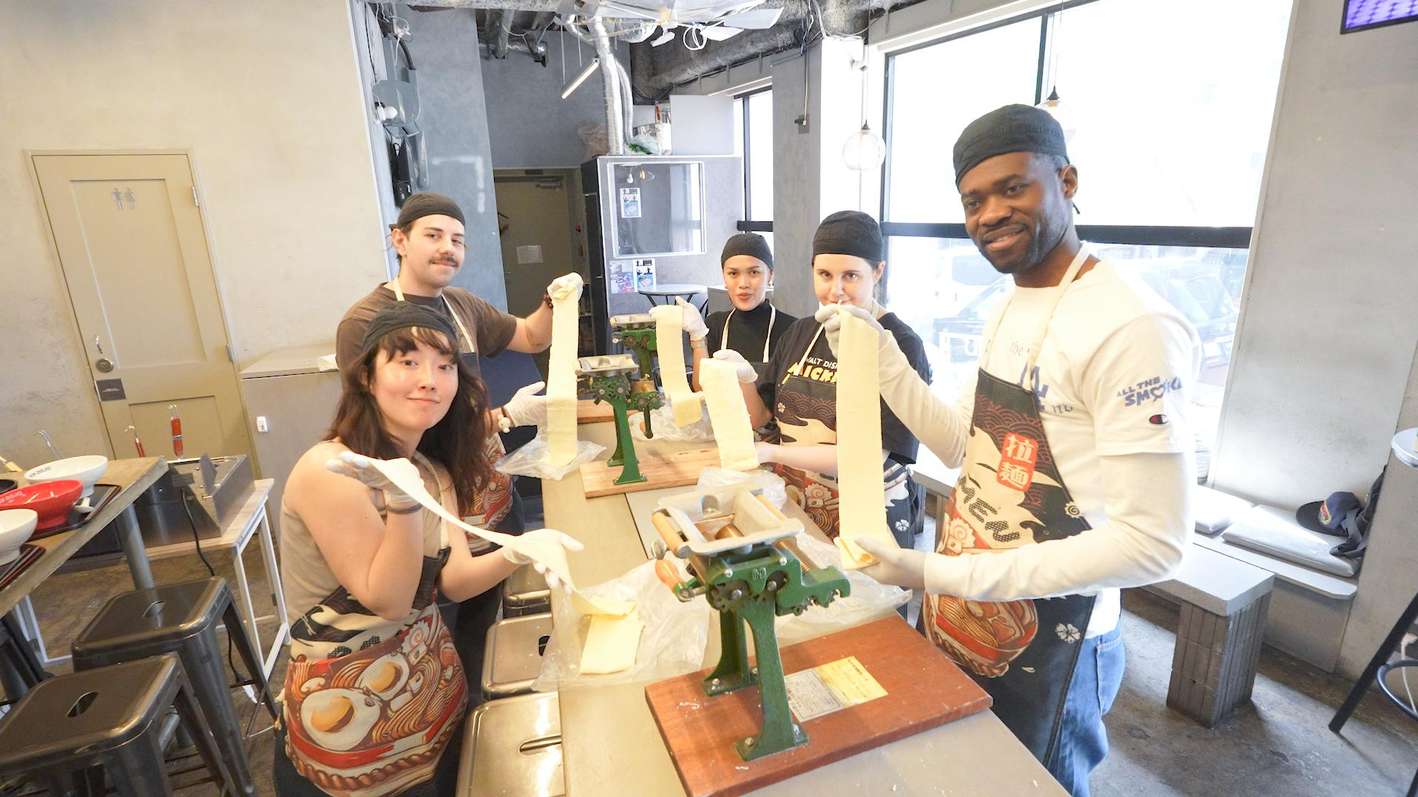
| Cooking involved | None | Help assembling a bowl behind the counter | The whole process, hands on |
| Time | 3 hours | 1 hour | 3 hours |
- What you do
- Walk Shimo-Kitazawa and taste five dishes
- The ramen
- Spice ramen, plant-based, one of five tastings
- Cooking involved
- None
- Time
- 3 hours
- What you do
- Step into a working ramen shop's kitchen
- The ramen
- Two small bowls plus two gyoza
- Cooking involved
- Help assembling a bowl behind the counter
- Time
- 1 hour
- What you do
- Make noodles, broth and chashu from scratch
- The ramen
- A full Jiro-style bowl you built
- Cooking involved
- The whole process, hands on
- Time
- 3 hours
The tour this page leads with, the Tokyo Vegan Food Tour, sits in the eating-and-walking column. If you would rather see a kitchen at work, one operator runs a behind-the-counter hour in a working ramen shop instead.
How filling a ramen food tour actually is
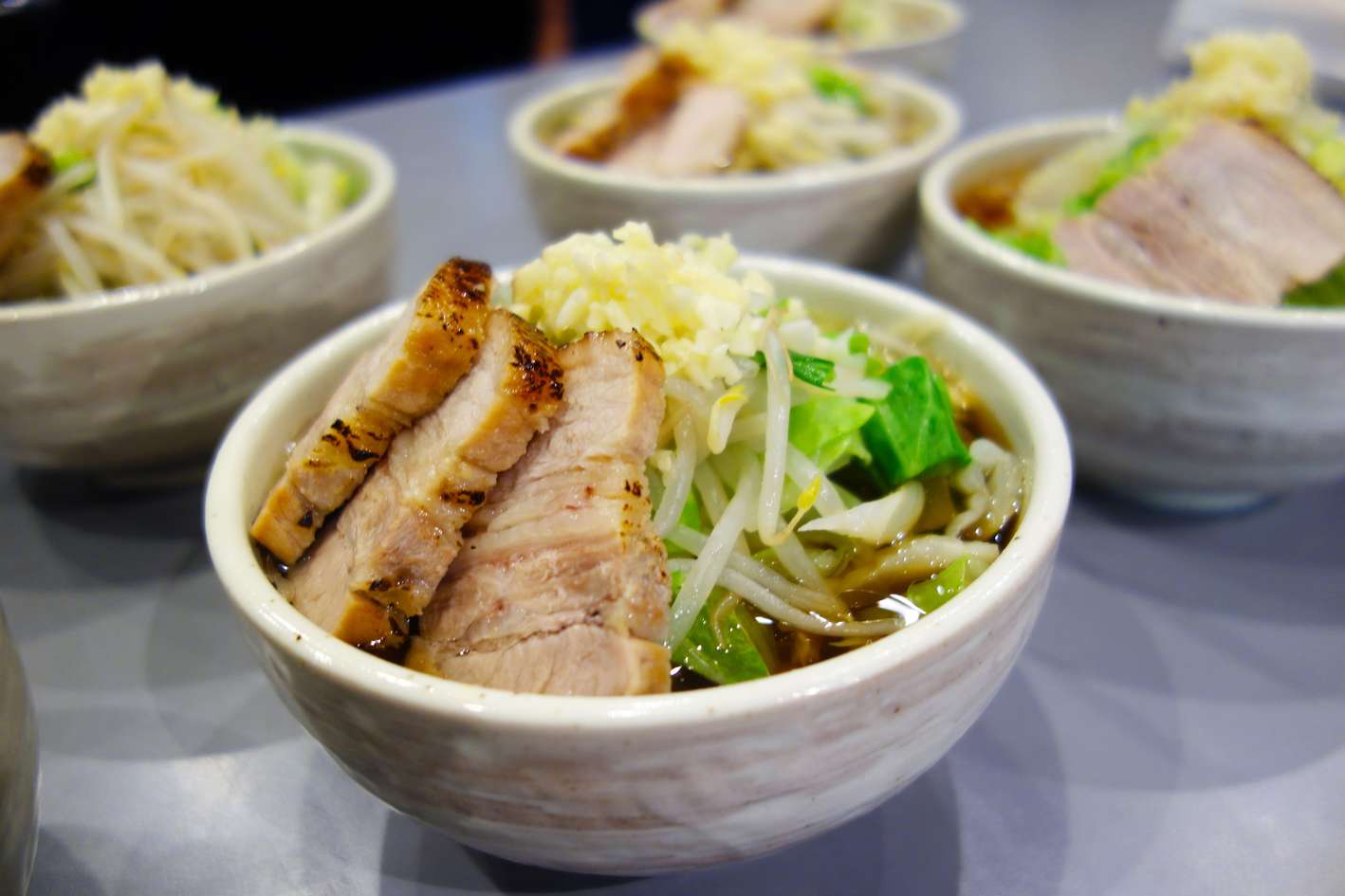
The worry at the third stop is always the same: five tastings sound like snacks, and dinner is still hours away. In practice the portions stack up faster than you expect.
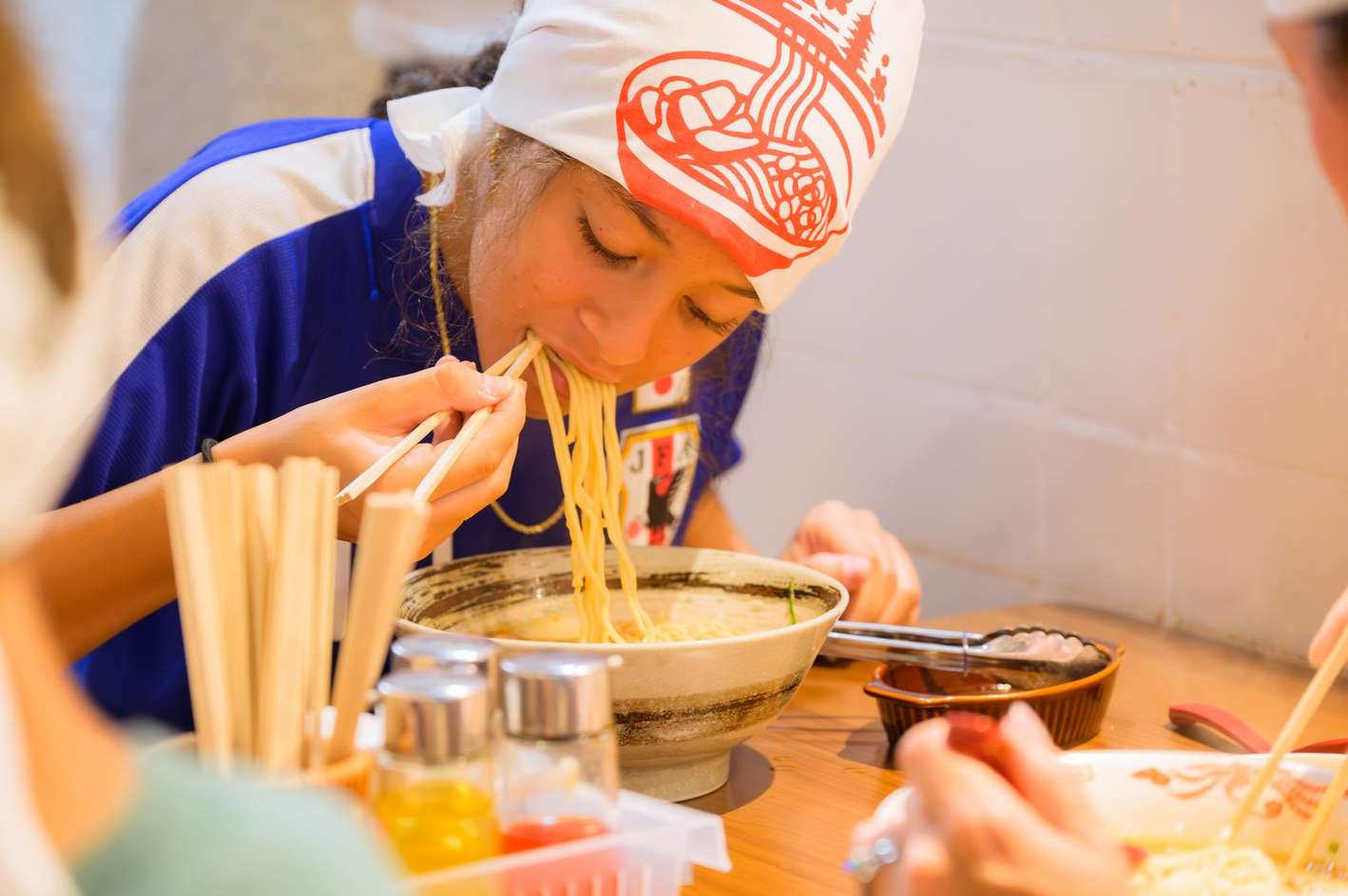
A regular restaurant bowl holds roughly 130 to 180 grams of noodles before cooking. Tasting bowls run about a quarter to a third of a full bowl, so three or four of them already equal one complete serving, before the gyoza, the onigiri and the sweets get a word in.
Daisy was knowledgeable and passionate about Japanese food, kind and upbeat even in awful rain. Each spot had its own signature dish, all yummy! Great for finding small vegan places with personality.
So plan the timing the way you would for a proper meal. A midday tour stands in for lunch, and an afternoon one covers dinner. Come hungry and skip the pre-tour snack, and you will finish the last stop comfortably full.

Best months for an outdoor ramen food walk in Tokyo
A ramen food tour lives outdoors between stops, so the month picks the day as much as the date does. July and August are the hard months: daytime highs sit around 32 to 33 degrees, and walking between shops turns into a slow, sweaty business.
Early June to mid-July brings the rainy season, humid and wet, and late August through October carries typhoon risk, worst in September and October.
September stays hot at about 29 degrees and stacks its rain into roughly 14 wet days. The comfortable windows are the cooler months, roughly October through May, with April and May pleasant but crowded by domestic travelers.
August: highs around 32.6°C. Daytime highs around 33°C make August the hottest month for walking, with typhoon-related rain risk also rising late in the month.
Tap a month to read it.
September: 202 mm of rain. Food walks remain hot at around 29°C, while typhoon risk and about 202 mm of rain make an indoor alternative useful.
Tap a month to read it.
May: rain on 14.8 days. Food walks are warmer at around 23°C, with rain on about 15 days.
Tap a month to read it.
January: 26.4 dry days. Food walks are cold, with daytime highs around 9°C, but January averages 26 dry days.
Tap a month to read it.
March: 5.6 windy days. Daytime highs around 15°C suit walking, but about 12 rainy days make rain protection useful.
Tap a month to read it.
Whatever the month, dress for the walking: breathable fabrics in summer, layers in the cooler seasons. If you have booked an outdoor walk into the worst heat or a stormy stretch, an indoor cooking experience is the sensible swap.
- Light, breathable clothingChoose loose fabrics for the heat and quick-drying clothes for rain; for cooking, wear something you do not mind splashing.
- Comfortable walking shoesKeep feet comfortable between shops; one cooking operator requires closed toes and bans sandals, flip-flops and heels.
- Compact umbrellaCarry it for rainy stretches between food stops.
- Drinking waterBring a refillable bottle for summer outings.
- Hat, sunglasses and sunscreenProtect yourself from strong summer sun while walking between shops.
- Small sweat towelKeep it handy for sweat in summer heat.
One more date check: Golden Week in late April and early May, Obon in mid-August, and New Year bring the heaviest domestic travel. Around those weeks, book further ahead and expect fuller trains.
Getting there and where the tour starts
Tokyo trains run on time, and the part that eats your buffer is the station itself. Budget 10 extra minutes to find your platform at Tokyo or Shinjuku, and 15 to 20 for a transfer at the biggest stations, longer with luggage.
Several routes into the western side of the city run without a transfer: the JR Yamanote Line from Shinjuku takes about 7 minutes, the Ginza subway line about 16 from Ginza and 33 from Asakusa.
On weekdays, the morning and evening peaks, roughly 7:30 to 9:30 and 5:30 to 7:30, deserve a 30-minute buffer on top of that, and 60 if your route crosses a major hub or you are dragging a suitcase.
One address trap catches first-timers: check the building itself before you leave. A cooking venue on the first floor of a craft beer bar stumped a traveler in July 2026, and the name on the street sign is not always the name on the booking.
What happens on a Tokyo ramen food tour, stop by stop
The outing opens at the meeting point, where the guide sets the route and the ground rules. From there the afternoon moves stop to stop through the neighborhood, a short walk between each, with the story of the dish coming before the dish.
At the ramen stop, expect the usual etiquette of a busy shop: every seated person orders something, and a non-eating companion asks before taking a seat in a small place. Shops also keep service windows.
One well-known Shinjuku shop serves 11:00 to 3 pm and 5 pm to 9 pm, and both that shop and another in Funabori stop when the soup runs out, so early beats punctual.
- 1Arrival windowMeet the guide and the group
Reach the meeting point with a few minutes to spare
- 2Between stopsWalk the neighborhood with the guide
Stops sit close together, on foot throughout
- 3The ramen tastingSpice ramen with a gentle kick
One of five tastings, served as a proper portion
- 4The other stopsGyoza, onigiri and sweets
Savory first, sweet finishes, one drink included
- 5The endFarewell in the neighborhood
You leave where the walking leaves you, near the shops
For infants there is a workable middle path: they can share food with the group, with separate portions arranged in advance if you want them.
Booking a guided ramen food tour or exploring on your own
Food courts and restaurant streets let you taste your way through Tokyo without a guide, and if you read Japanese menus comfortably, that works. Where the assembled version falls short is everything around the food: the ingredient checks, the ordering, the choosing.
Vegan eating shows the gap most clearly. Vegan meals sit inconveniently far from many itineraries, and ingredient checks and language barriers make each stop a small negotiation.
A guided tour removes those negotiations by pre-checking every stop. That is the case the Tokyo Vegan Food Tour makes: vegan food at all five stops, in a three-hour walk through Shimo-Kitazawa, with a drink included.
What nobody tells you
The food is findable; the stories, the back rooms and the vetted stops are not
Your dietary needs reach the kitchen before you do
A guide knows where each seated person must order and plans the group around it
The walk leaves you knowing the neighborhood as well as the food
If you already know your way around a Tokyo menu, book the tour for the neighborhood it opens up. If you do not, book it for the stops you would otherwise miss.
Finding vegan ramen in Tokyo and what to check
The bowl in front of you looks safely plant-based: noodles, vegetables, a clear broth. In Japan that proves less than it seems, because the broth itself can carry fish even when nothing on top does.
Apparently meat-free ramen can contain fish in the broth Ask about the broth specifically, not just the toppings; a vegan label alone is not enough in Japan
The same caution runs through the seasonings. Tofu and cooked vegetables need a check of their dressings before anyone counts them as vegan, and a dish with no visible meat or fish is not automatically plant-based.
Language is the practical fix. Carry a printed Japanese-language card listing exactly which ingredients you cannot eat, and show it rather than describing your diet in fragments. On the guided tour the checking is done for you at every stop, which is a fair part of what the booking buys.
Ramen with a severe food allergy in Tokyo
Ramen looks easy to de-risk: leave off the egg, skip the problem topping. The noodles undo that logic, because ramen dough can contain egg even when the bowl is never described as egg noodles. Removing the topping changes nothing about the noodles underneath.
Shared kitchens add the second layer. Flour hangs in the air where noodles are being made, and some classes exclude severe reactions outright: one Shibuya class cannot take guests with severe wheat, egg or soy allergies or a severe airborne flour sensitivity, and a Tokyo noodle-making experience excludes people with buckwheat allergies.
Two practices serve you well. Say what you cannot eat ingredient by ingredient rather than by diet label, and put it in writing before you pay, when there is still time to be turned away kindly instead of surprised at the counter.
A printed card covers the moments in between, at any shop along the route.
Bringing children to a ramen food outing
Families do well here, with one portion question to settle first. Infants on the vegan food tour, as on the small-plate kitchen experience in Bunkyo, can share food with the group; ask ahead if your child needs a separate serving.
For children old enough to try their hand, cooking classes split the tasks by age. Some welcome children as young as four with age-appropriate jobs and patient guidance.
The line sits at the sharp and hot end: at one Tokyo noodle-making experience, children working on their own must handle kneading and a large, heavy knife unaided, and the behind-the-counter kitchen experience means care around hot water and soup.
Alcohol has its own bright line. Japan prohibits drinking under the age of 20, and an operator running drinks with its class asks guests to carry ID, a copy of which is accepted. Any teenager ordering sake alongside the ramen should expect to be asked.
The practical upshot: a tasting walk suits nearly every age, and a cooking session rewards older children who can safely hold a knife and stand near steam.
When plans change - weather, cancellations and missed starts
Typhoon season is the big one. From July through October, especially August and September, strong wind and heavy rain can suspend Tokyo's trains, and services can stay disrupted after the wind dies down while crews check the tracks. Even an indoor booking depends on a train route that is running.
Food rules shape the rest. Freshly made ramen does not travel: one Tokyo tasting class allows no takeaway or leftovers at all, for food-safety reasons, so plan to finish what is served. And if you have booked a hands-on class while nursing a cold, sit that session out; food preparation is no place for one.
What happens if the day changes
| If this happens | What happens then |
|---|---|
| You cancel up to 24 hours ahead | A full refund, on the tours this page features |
| Typhoons suspend the trains | Wait for service to resume; disruption can outlast the storm itself |
| You arrive late to the Akihabara class | The guide departs without you and you travel to the kitchen studio directly, with no refund |
| The minimum group number is not met | The behind-the-counter kitchen experience refunds you in full |
Book with the 24-hour cancellation window in mind and the weather loses most of its power over your plans.
How to choose between Tokyo's ramen experiences
By now the formats separate cleanly. The choice worth pausing on is what you want to take home: a meal, or a skill. A workshop that teaches ingredients, recipes and techniques travels home with you; one that mainly demonstrates a commercial noodle machine does not, since a home kitchen has no such machine.
So read the fine print for what you actually make. One two-hour Tokyo class builds broth and gyoza but buys its noodles pre-made, while the restaurant-style class covers noodles from scratch, broth, toppings and a recipe book to take home.
- A guide with youLive tour guide
- Free cancellationCancel up to 24 hours in advance for a full refund
- Book now, pay laterReserve your place and pay closer to the date
- A small groupSmall group
- Hotel pickupNo, you meet at the start
- Your languageEnglish
The simple reading of that: a live guide, a small group and free cancellation are the baseline, and hotel pickup is off the list, so you plan your own route.
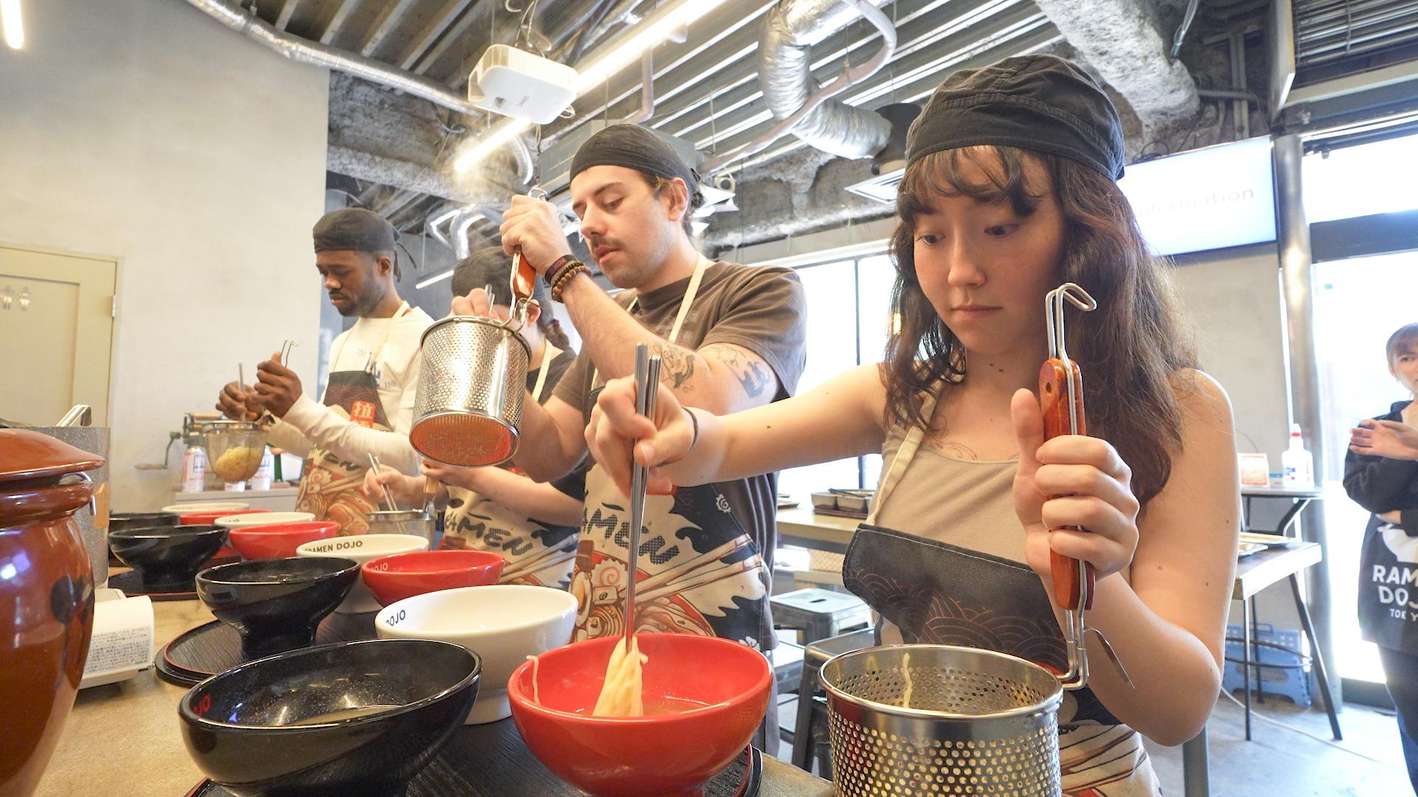
If cooking appeals at all, the Ramen Making from Scratch + Akihabara Tour pairs that skill with a walking tour of the electric town, a supermarket stop for ingredients, and a bowl of Jiro-style ramen you built from flour, broth and chashu.
Note it suits neither vegans nor vegetarians, and its meeting point is the central ticket gate at Akihabara Station.
What else to do near your ramen outing in Tokyo
The last bowl leaves you mid-neighborhood with an afternoon in hand, and each ramen district answers differently. Around Shibuya proper, the Hachiko Statue and the Scramble Crossing sit 3 minutes from the station, with Miyashita Park close behind.
Near the Shibuya cooking studio in Ohashi, the Japanese Folk Crafts Museum and Bunkamura are each about 15 minutes on foot. In Kabukicho, Hanazono Shrine is the closest stop at 164 meters, with the Sompo Museum of Art under 700 meters beyond it.
- 1Tokyo Baptist Churchtemple, shrine or church12 min walkDirections
- 2Japanese Folk Crafts Museummuseum15 min walkDirections
- 3Bunkamuramuseum15 min walkDirections
- 4Statue of Hachikōhistoric place18 min walkDirections
- 1Yoku Moku Museummuseum9 min driveDirections
- 2Yamatane Museummuseum10 min driveDirections
- 3Yoyogi National Stadiumpark or garden11 min driveDirections
- 4Meiji Shrine Inner Gardenpark or garden12 min driveDirections
- 5Shōin shrinetemple, shrine or church12 min driveDirections
- 6Indonesia Tokyo Mosquetemple, shrine or church13 min driveDirections
Akihabara pairs easily too: Kanda Shrine is a 7-minute walk from the Electric Town exit, with Yushima Seido and Holy Resurrection Cathedral nearby. Just check the clock against your booking, because one operator leaves the meeting point if you are more than 10 minutes late, and a shrine detour is no defense.
The habit worth keeping: match the sightseeing to the address you booked, since the neighborhood name and the venue can sit a train stop apart. A studio in Ohashi is in Meguro, a train stop short of Shibuya Station, and the afternoon reads very differently from there.
What to know before you book a food tour in Tokyo
Every experience on this page can be canceled up to 24 hours before it starts for a full refund. That makes it easy to hold a spot while you settle the rest of your Tokyo plans.
Two of these experiences need a minimum of two participants to run: the kitchen experience and the Akihabara walking and cooking class. If the minimum is not met for the kitchen visit, you get a full refund. A lightly booked session can also turn into a private lesson.
Each experience has its own start. The Akihabara class meets at the outside central ticket gate of Akihabara Station and leaves without you if you are more than 10 minutes late, and it ends at a kitchen studio in a different location. The kitchen experience takes place in a working ramen shop in Bunkyo.
The food tour is fully vegan, and non-vegan options can be arranged at the first three stops. The kitchen experience serves ramen that contains chicken, pork and fish. The Akihabara class offers no vegan or vegetarian options, so pick accordingly.
Ramen noodles can contain egg even when the egg topping is left off, and broth can hide fish ingredients. Disclose any allergy in advance where the experience asks for it, and carry a printed Japanese-language card listing exactly what you cannot eat.
The vegan tour includes five tastings, savory and sweet, plus a beverage.
Tasting bowls run about a quarter to a third of a regular bowl, so three or four add up to roughly one full bowl of the 130 to 180 g of noodles a restaurant bowl holds. The kitchen experience serves two small bowls and two gyoza.
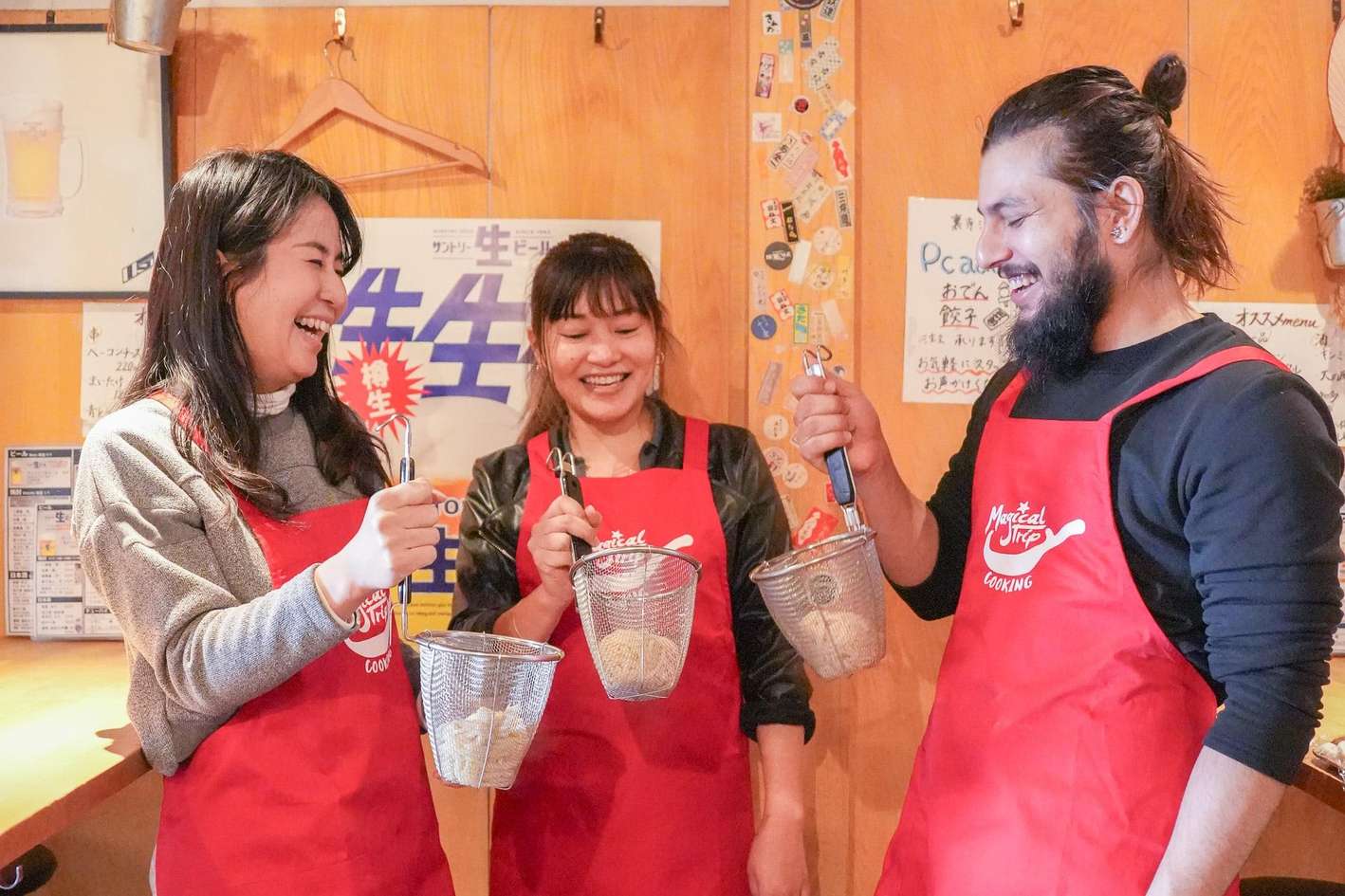
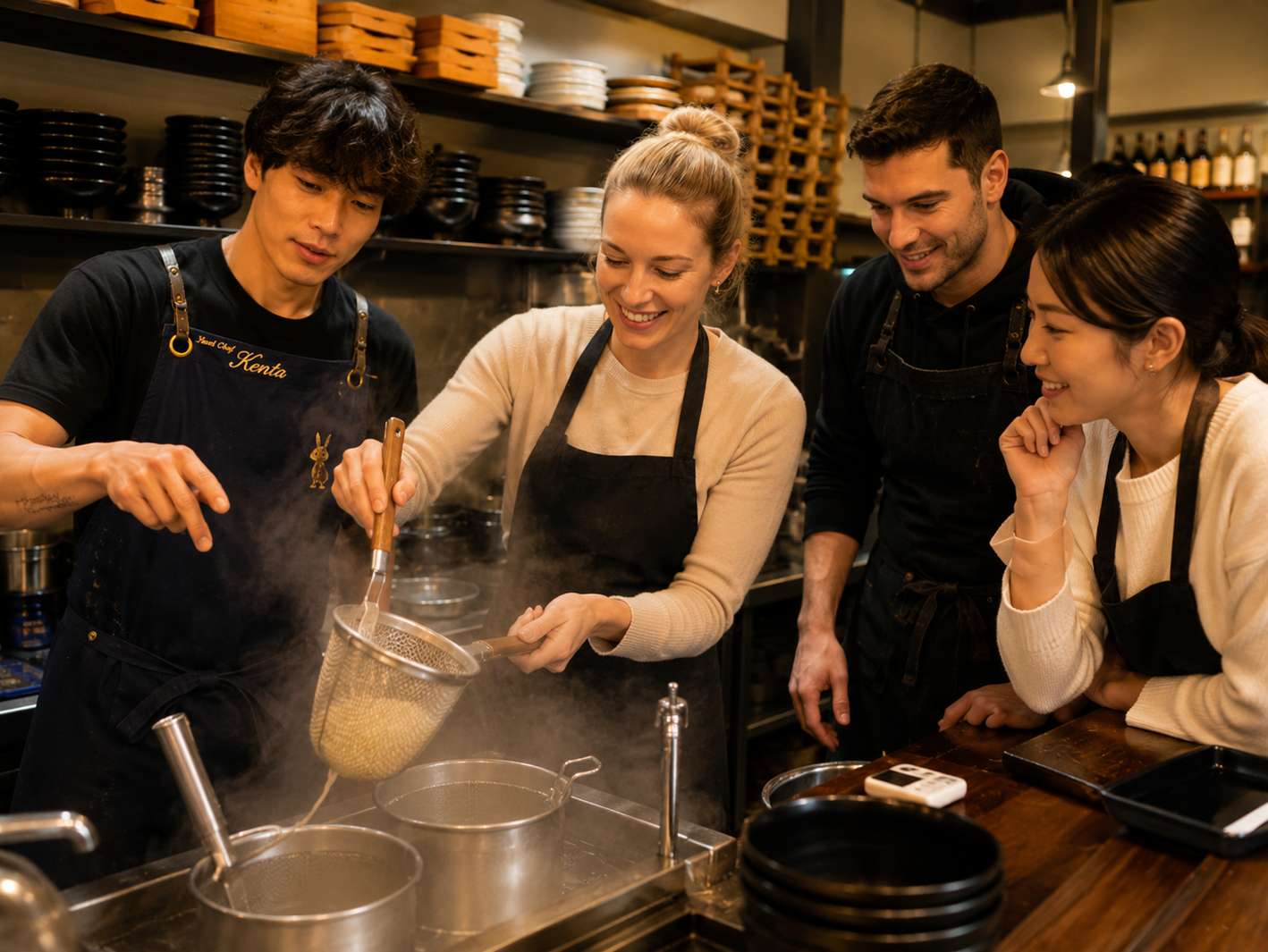
The three formats differ in what your hands do. On the food tour you eat and walk. The kitchen experience is a behind-the-counter visit where you assemble bowls and watch a working shop; even the broth alone takes ten hours. The Akihabara class has you making noodles, broth and chashu from scratch.
Infants join the food tour and the kitchen experience for free but share food with the group; ask ahead if you want them their own portions. The Akihabara class does not take children under 5 or strollers.
Check access before booking if mobility matters. The Akihabara class is not suitable for wheelchair users, and some ramen workshops sit upstairs in buildings with no elevator, which also rules out strollers.
July and August are the hardest months for a walking tour, with daytime highs around 32 to 33 degrees. Typhoon season peaks between August and October, and heavy rain can suspend trains. In the hottest or stormiest stretches, a kitchen-based experience is the safer pick.
Eat and walk, or roll up your sleeves
The Tokyo Vegan Food Tour is the outing this search describes: three hours, five plant-based tastings including spice ramen, and a neighborhood you leave actually knowing. Anyone who wants Tokyo explained between courses gets exactly that.
Readers who want their hands in the dough should look one column over, at the kitchen experience or the Akihabara cooking class.
Ramen food tour in Tokyo - your questions
What do I actually do on the Tokyo Vegan Food Tour?+
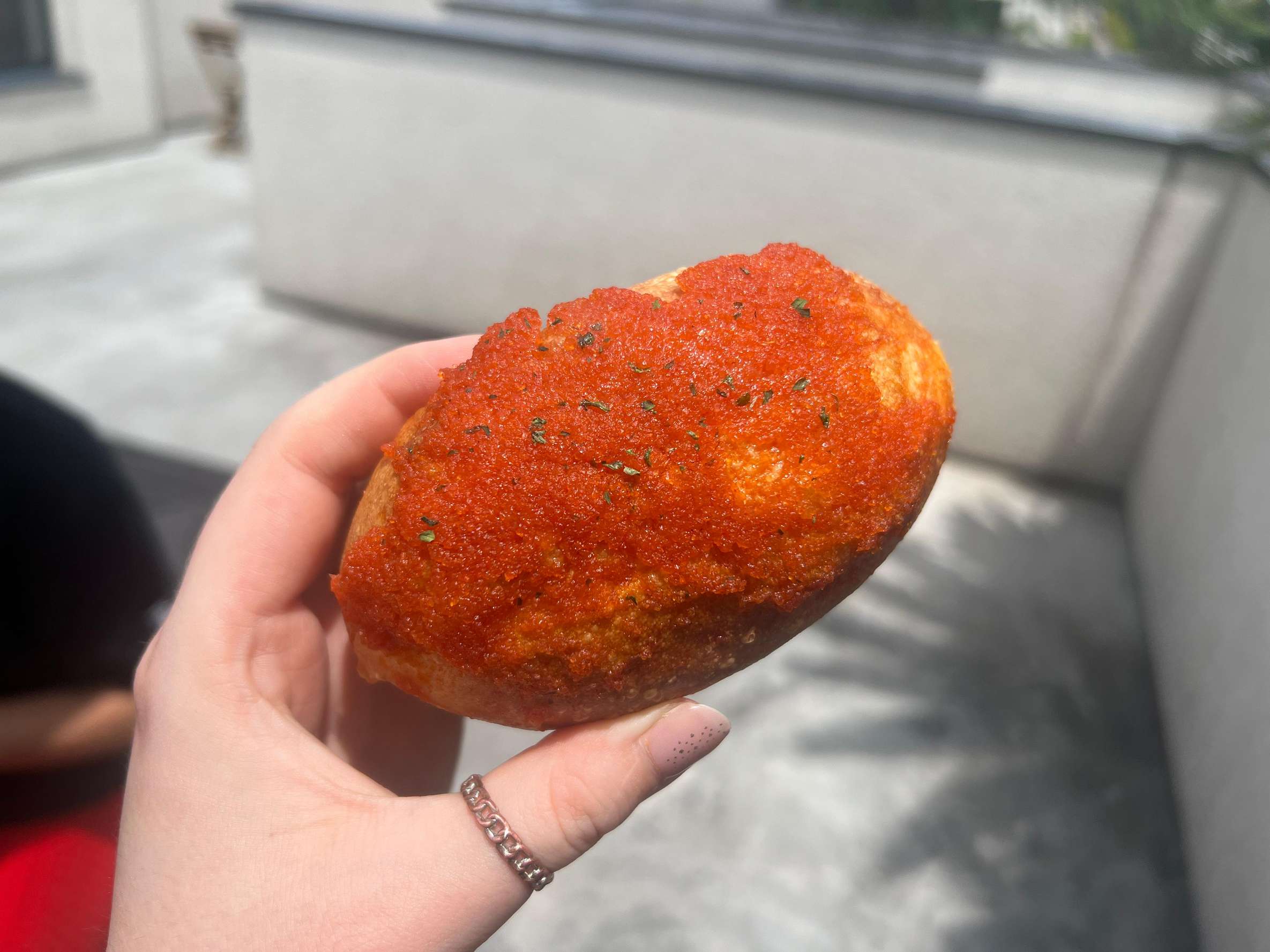
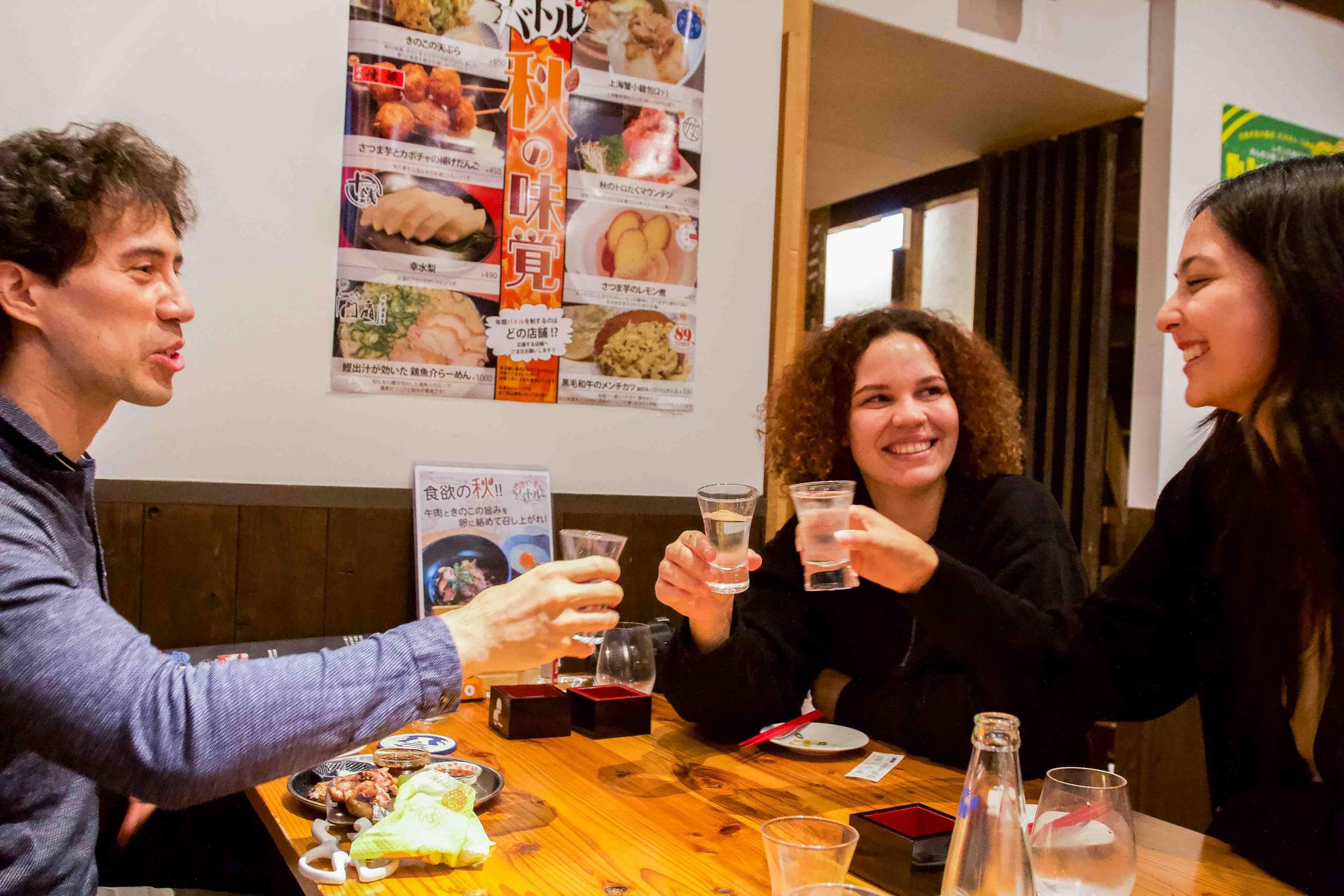
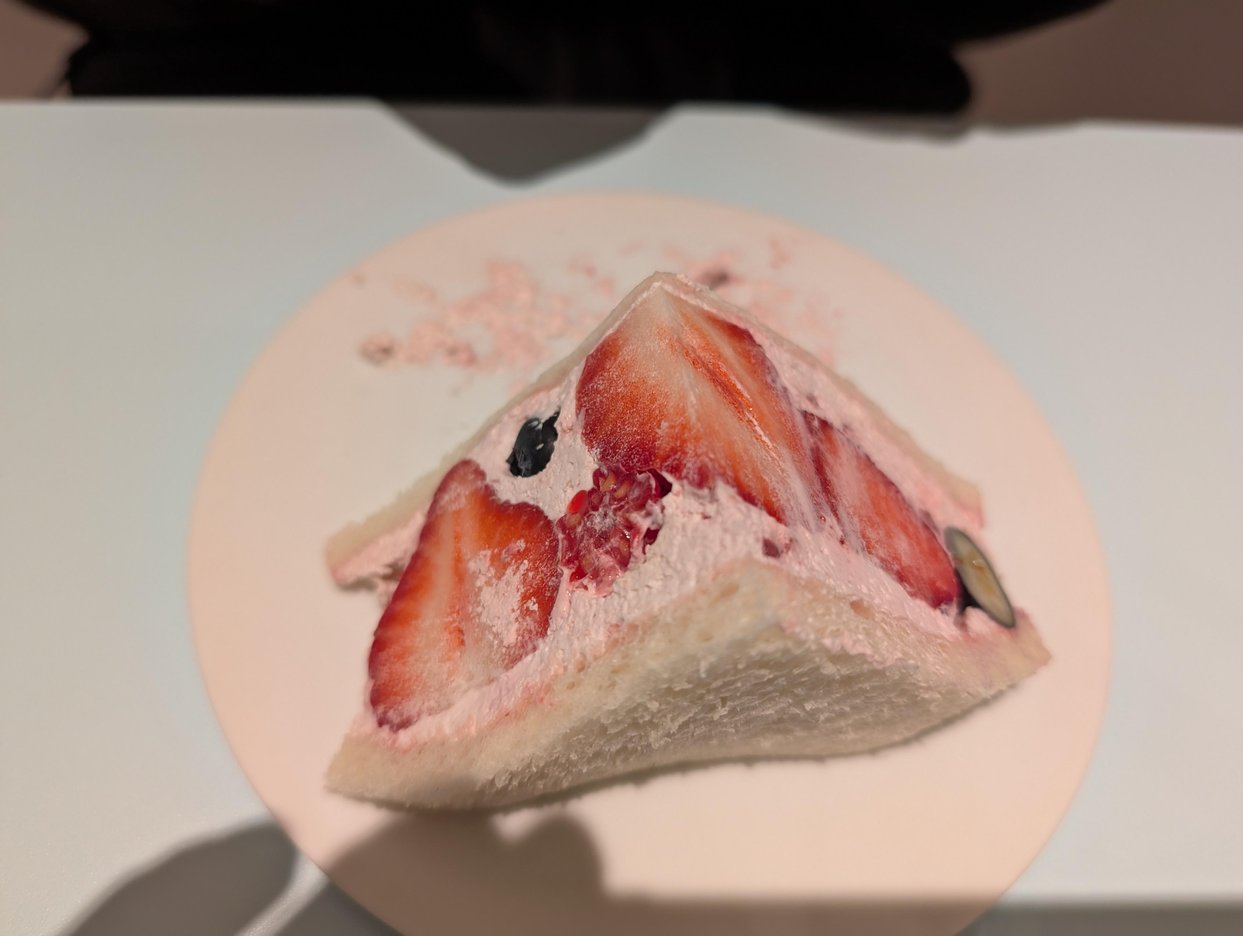
You walk Shimo-Kitazawa with a guide and taste five types of Japanese food, both savory and sweet, plus one drink. The stops include spice ramen with a gentle kick, vegan gyoza, handmade onigiri, soy milk pudding and plant-based takes on Japanese baked treats, with stories behind each dish along the way.
Do I have to be vegan to join?+
No. Everything served on the tour is vegan, and non-vegan options can be arranged at the first three stops, the ramen, gyoza and onigiri. You get the neighborhood walk and the tastings either way.
How is a food tour different from a ramen cooking class?+
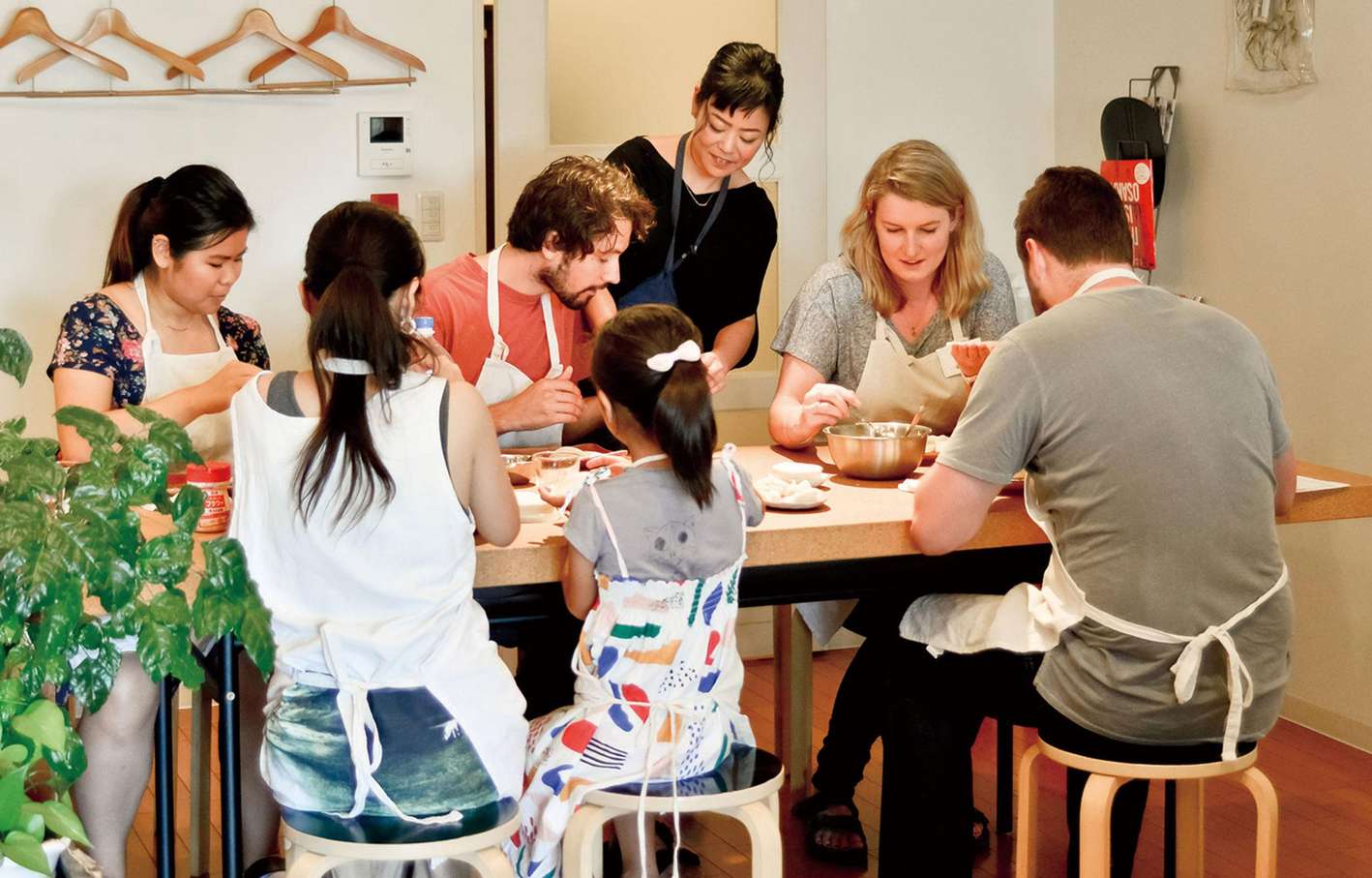
On a food tour you eat and explore, and the guide handles the ordering and the ingredient questions. In a class you knead dough, cut noodles and assemble your own bowl. Pick by how you want to spend the time, since both end with good food.
Is there something between eating and a full class?+
Yes. The Exclusive Tokyo Ramen Kitchen Experience in Bunkyo City takes you behind the counter of an award-winning ramen shop for an hour. You learn about the prep and ingredients, put bowls together, and eat two small ramen bowls plus two gyoza, all inside a working kitchen.
Can I combine sightseeing with ramen making?+
One class starts with a walking tour of Akihabara, including a supermarket stop to look at the ingredients, then moves to a kitchen studio to make Jiro-style ramen from scratch.
The class ends at the studio, which sits somewhere different from Akihabara Station where you meet. Arrive more than 10 minutes late and the group leaves without you.
Will a food tour fill me up?+
Come hungry, because five tastings of savory and sweet food add up to a proper meal. For a sense of scale, tasting portions run about a quarter to a third of a regular bowl, so three or four of them land near one full bowl of ramen.
Is a guided food tour worth it if I already order ramen fine on my own?+
It can be, because a good tour earns its place through the guidance and local insight, with the food as only part of it. In Tokyo, arranging stops yourself can also mean language barriers and ingredient checks, especially for plant-based eating.
How hard is it to find vegan ramen in Tokyo without a tour?+
You can do it, with some planning. Ingredient checks and language barriers complicate things, and vegan meal spots can sit inconveniently far from where you stay. Apps like HappyCow help you map options against your itinerary before you set out.
Can I bring a child who cannot finish a whole bowl?+
Yes. Infants join both the vegan food tour and the Bunkyo City kitchen experience for free, sharing food with the rest of the group. If you want them to have their own portions, tell the operator in advance and they will arrange it.